The Regulatory Cliff: Why 2026 Hospital HVAC is a Different Beast
I’ve spent 30 years in this trade, melting in attics and freezing on rooftops, and I’ve seen enough ‘sales techs’ try to push a shiny new condenser on a system that just needed a $20 capacitor. But when we talk about hospital HVAC zoning, we aren’t just talking about comfort; we’re talking about keeping people alive. As we stare down 2026, the industry is hitting a wall of new regulations, specifically with the move away from R-410A to A2L refrigerants. My old mentor used to scream at me in the middle of a 10-degree January, ‘You can’t cool what you can’t touch!’ He was talking about airflow. In a hospital, if that airflow isn’t precisely zoned and pressurized, you aren’t just looking at a high bill; you’re looking at cross-contamination. This isn’t your residential split system. This is high-stakes thermodynamics where HVAC duct sealing and static pressure determine whether a patient recovers or gets a secondary infection.
“Health care facilities must maintain pressure relationships as defined in ASHRAE Standard 170 to ensure infectious agents are contained.” – ASHRAE 170
Rule 1: Absolute Pressure Differential and the Myth of ‘Good Enough’
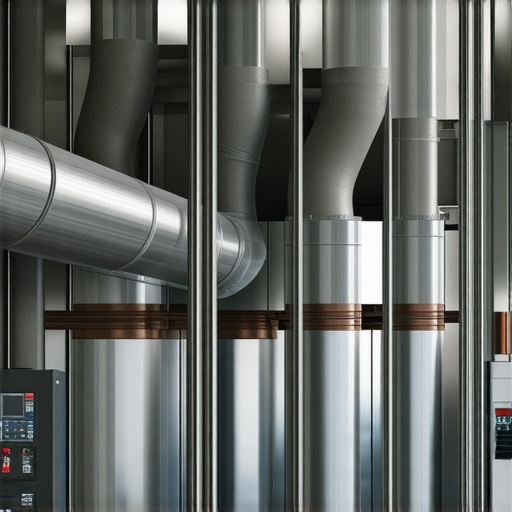
In the world of hospital HVAC zoning, there is no such thing as ‘close enough.’ We use ‘Pookie’—that’s mastic to the laypeople—not just to save energy, but to ensure that a negative pressure room stays negative. If your ductwork leaks, your pressure drops. In a 2026 compliant environment, every zone must have dedicated sensors that can talk to the Building Automation System (BAS) in real-time. This isn’t just about high-efficiency furnace installation for the lobby; it’s about the suction line feeling ‘beer can cold’ while the VAV boxes precisely modulate CFM to keep the pathogens where they belong. If you’ve ever smelled the acidic, sour stench of a compressor burnout, you know what happens when a system is pushed too hard because the static pressure was off. We can’t afford that in a surgical suite.
Rule 2: The A2L Transition and Latent Heat Management
By 2026, we are fully committed to SEER2 compliant upgrades and mildly flammable refrigerants like R-454B. This changes the game for hospital maintenance teams. Because these systems operate at different pressures and have new leak detection requirements, the zoning must be more granular. In the North, where we deal with the ‘Polar Vortex’ and the threat of ice blocking a heat pump’s defrost cycle, we also have to worry about latent heat—that’s the moisture in the air. A hospital is a ‘cold swamp’ if you don’t manage the dew point. This is why bypass humidifier repair and integration are critical. You can’t just slap in a unit and walk away. You need to understand the hvac repair secrets that actually boost efficiency without sacrificing the air changes per hour (ACH) required by law.
“The most expensive equipment in the world cannot overcome a bad duct system.” – Industry Axiom
Rule 3: Redundancy and the 24/7 Emergency Response Logic
A hospital never sleeps, and neither can the HVAC. We aren’t just talking about a 24/7 heating emergency response for a pilot light relighting on a boiler. We are talking about N+1 redundancy. For 2026, zoning rules require that if one chiller or furnace goes down, the remaining zones must be able to shift the load without losing pressure in critical areas like the ICU. I’ve seen ‘Tin Knockers’ build beautiful ductwork that failed because they didn’t account for the ‘Monsoon Effect’ of high-humidity days or the massive sensible heat loads of modern imaging equipment. Whether you’re doing multi-family heating upgrades or a wing of a hospital, you have to look at the math. Repairing a system for $500 might seem better than an $8,000 replacement, but if the heat exchanger is cracked and leaking CO into the return air, it’s a death sentence. Always check for flame rollout. If you’re still using a wood burning stove installation for backup heat in a professional setting, you’re living in the dark ages. We’ve moved to propane conversion services and high-output boilers that can handle the load. For more on keeping things running, check out this guide to heat pump maintenance.
The Physics of Airflow: Why SEER2 Isn’t Enough
A high SEER2 rating is just a number on a yellow sticker if the ‘Sparky’ didn’t wire the variable speed motor correctly or if the duct guy left a gaping hole in the plenum. In our climate, where we transition from 90-degree summers to -10 degree winters, the expansion and contraction of metal can destroy even the best HVAC duct sealing. We don’t just ‘top off the gas’—if the juice is low, you have a leak. Period. Finding that leak and ensuring the zoning dampers are calibrated is the difference between a safe patient and a liability. If you’re struggling with a unit that won’t keep up, you might want to look at mini-split troubleshooting or consult a pro who knows that comfort is a matter of physics, not magic. If you have questions about your specific setup, don’t hesitate to contact us.