![3 Reasons Church Heating Systems Fail in January [2026 Fixes]](https://chillyprohvac.com/wp-content/uploads/2026/01/3-Reasons-Church-Heating-Systems-Fail-in-January-2026-Fixes.jpeg)
The Sound of a Frozen Sanctuary: A Diagnosis
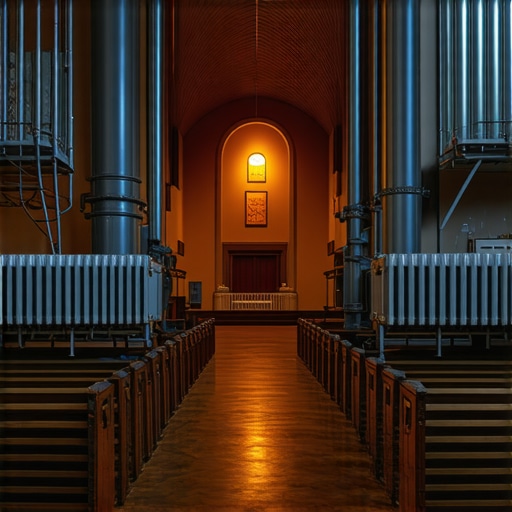
There is a specific, hollow silence that hits you when you walk into a stone-built church on a Tuesday morning in January and realize the boiler has been dead for forty-eight hours. It’s not just cold; it’s an oppressive, damp chill that sinks into the pews. My old mentor, a man who could smell a gas leak from the curb, used to scream at me, ‘You can’t cool what you can’t touch, and you can’t heat what you can’t move!’ He was a fanatic about the physics of air, and he was right. He taught me that a sanctuary isn’t just a room; it’s a massive thermodynamic battery. If your airflow isn’t mapped correctly, you’re just burning money to heat the rafters while the congregation shivers in the pews. Most of the ‘catastrophic’ failures I see in these old buildings aren’t because the equipment is ‘bad’—it’s because the physics were ignored by some tin knocker thirty years ago. In the North, where the polar vortex likes to park itself, the enemy is the cracked heat exchanger and the flame rollout. We aren’t just moving air; we are fighting a war against heat loss through stained glass and uninsulated masonry.
“The most expensive equipment in the world cannot overcome a bad duct system.” – Industry Axiom
1. The Thermal Mass Trap and Manual J Failure
The first reason these systems fail is pure math, or rather, the lack of it. Most churches were sized by ‘Rule of Thumb’—a dangerous game played by guys who didn’t want to do the paperwork. In 2026, with energy costs skyrocketing and the transition to R-454B refrigerants changing the landscape, we can’t afford to guess. This is where manual J calculations become the difference between a warm choir and a frozen pipe disaster. When you have a 40-foot ceiling, the sensible heat ratio is a nightmare. If the system is oversized, it short-cycles. The two-stage furnace installation is often the fix here because it allows the system to run at a lower, more consistent capacity to keep the thermal mass of the building stable rather than blasting it with 120-degree air that immediately rises to the ceiling and stays there. I’ve seen churches spend $50,000 on a new unit only to have it fail in three years because the static pressure was so high it cooked the blower motor. If you don’t understand the anatomy of your building’s airflow, you’re just throwing a bigger engine into a car with no wheels. You need to understand furnace repair myths before you sign a check for a replacement that won’t solve the underlying draft issues.
2. The ‘Empty Room’ Syndrome: Occupancy Sensor Installation
The second failure point is management. A church is a ghost town for six days a week and a stadium for one. Most old-school boiler repair services are called in because the system was left in ‘occupied’ mode all week, or worse, ‘unoccupied’ until 6:00 AM Sunday. By the time the parishioners arrive, the boiler is screaming, trying to overcome a 30-degree temperature delta in two hours. That’s how you crack a heat exchanger. The 2026 fix is occupancy sensor installation tied to inverter-driven compressors. These systems sense when the room is actually in use and modulate the output. Inverter tech is like a dimmer switch for your heating; instead of ‘all on’ or ‘all off,’ it sips the gas (or juice, if it’s a heat pump) to maintain a steady state. For smaller administrative wings or the rectory, a ductless mini-split installation is often a better play than trying to force the main boiler to heat three offices. If you’re dealing with a system that won’t start on a Sunday morning, you might need to check out this mini-split troubleshooting guide to see if it’s a sensor issue or a mechanical death rattle.
“Design of hydronic systems shall be based on the peak heating load of the building and the thermal characteristics of the emitters.” – ASHRAE Standard 90.1
3. Neglected Hydronics and Snow Melt Integration
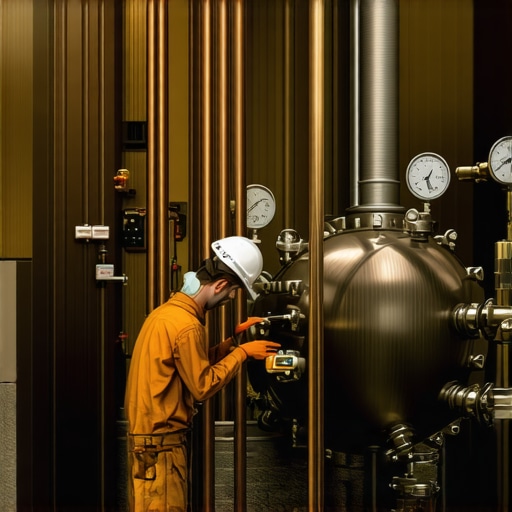
Third, we have the mechanical breakdown of legacy hydronics. I’ve walked into basements where the boiler was leaking ‘Pookie’ and the suction line was vibrating like a jackhammer. In cold climates, the snow melt systems installation is often tied into the main boiler loop. If the heat exchanger in that loop fouls, you lose the steps AND the sanctuary. You’re looking at a $10,000 repair because nobody checked the glycol levels in October. This is why warranty service plans are mandatory, not optional. A real tech—not a sparky trying to do HVAC work—will check the combustion analysis to ensure you aren’t leaking Carbon Monoxide into the nursery. If your church relies on a heat pump for supplemental heat, you need to be aware of the ‘Balance Point’—that temperature where the pump can no longer extract heat from the frozen outside air and switches to expensive ’emergency’ electric heat. For those struggling with these hybrid setups, I recommend reading the ultimate guide to heat pump maintenance. Don’t let a Sales Tech talk you into a wood burning stove installation as a primary source; it’s a liability nightmare for a public space. Stick to the physics: proper boiler repair services, clean coils, and balanced air. [image_placeholder]
The Forensic Diagnosis: Pulling the Plug or Patching the Leak?
When I’m standing in front of a 20-year-old cast iron boiler, I look for the ‘tells.’ Is there rust on the burner tray? Is the circulator pump screaming? If the repair is more than 50% of the replacement cost, it’s time to talk about a new two-stage furnace installation or a high-efficiency boiler. We are entering an era where the old refrigerants are being phased out, and the new 2025/2026 standards require leak detection sensors on larger units. If you’re still running on ‘luck and a prayer,’ you’re going to get hit with a repair bill that includes a ‘rush’ fee when the temperature hits -10°F. Maintenance isn’t a scam; it’s the only way to prevent the sparky from having to come out and fix a fried control board because your capacitor gave up the ghost. For those who want to get ahead of the curve, there are HVAC repair secrets that can extend the life of these aging systems by another five years if applied correctly. Remember, the ‘tin knocker’ can build the ducts, but only the tech who understands the psychrometrics can make the building breathe. If you need help sizing your system correctly or have questions about the 2026 regulations, reach out through our contact page. We don’t sell boxes; we solve physics problems.