The Silent Killer of Kitchen Margins: Why 2026 is Different
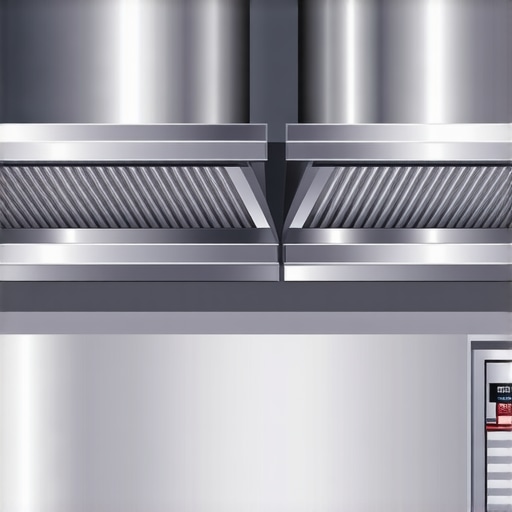
Listen, I’ve spent thirty years crawling through grease-slicked plenums and diagnostic nightmares on 130-degree rooftops. If there is one thing I’ve learned, it is that a restaurant is basically a giant, high-stress thermodynamic experiment. By 2026, the game is changing. If you are still running your kitchen on 2015 logic, you are bleeding money faster than a cracked heat exchanger. We are entering the era of A2L refrigerants and ultra-tight ASHRAE compliance, and your exhaust system is the heart of it all. Most owners think their HVAC is just about comfort; they don’t realize that in a commercial kitchen, airflow is the only thing keeping the health inspector and the fire marshal at bay. If your exhaust fails, your makeup air (MUA) unit starts fighting a losing battle, your commercial furnace repair bills skyrocket, and the whole building starts acting like a vacuum chamber.
The $15,000 Ghost: A Lesson in Sales Tech Deception
I followed a ‘Sales Tech’—you know the type, clean shirt, shiny truck, hasn’t touched a manifold gauge in years—to a bistro last month. He’d quoted the owner $15,000 for a brand-new Make-Up Air unit and a rooftop exhaust overhaul. He told her the motor was ‘electrically fatigued’ and the housing was ‘structurally compromised.’ I walked up there, pulled the service panel, and found a snapped $20 fan belt and a grease-caked pressure switch. That’s it. He was trying to sell a system to someone who just needed a priority service membership and twenty minutes of actual mechanical labor. This is why I tell people: understand the physics, or get ready to pay for someone’s vacation. If you aren’t tracking your system’s vitals, you’re an easy target for the ‘parts changers’ who don’t know the difference between sensible and latent heat.
“The most expensive equipment in the world cannot overcome a bad duct system.” – Industry Axiom
1. The ‘Sweet and Sour’ Sensory Warning
In 2026, we are dealing with high-efficiency motors that run hotter and tighter than the old iron-beasts of the 90s. If you walk into your kitchen and smell something that’s a mix of burnt sugar and old gym socks, you aren’t just smelling ‘cooking.’ You are likely smelling the beginning of a compressor burnout or an acidic electrical failure. When an exhaust fan starts dragging, it increases the static pressure on the entire line. The motors have to work harder to move that grease-laden air. This is where modulating furnace repair knowledge becomes vital; modern systems use variable frequency drives (VFDs) that try to compensate for the drag. If you smell that ‘sour’ ozone scent, your motor is screaming for help. Don’t wait until the bearings seize and the tin knocker has to replace the entire transition because the heat warped the metal. I’ve seen new construction heating design fail in under two years because the exhaust wasn’t sized for the actual BTU output of the line. You need to verify that your ‘gas’ or juice levels are correct and that your coils aren’t choking on grease.
2. The ‘Vacuum Door’ Phenomenon
Have you ever noticed your front door being hard to pull open, or slamming shut like a vault? That’s not a door closer issue; it’s a physics issue. It’s called negative pressure. Your exhaust is pulling more air out than your MUA is putting back in. In the humid South, this is a disaster. It pulls unconditioned, wet air through every crack in the building envelope. This causes ‘short cycling’ where your AC units cool the air fast but leave all the latent heat (humidity) behind. Suddenly, your dining room feels like a cold swamp. By 2026, many districts will mandate geofencing temperature control and smart MUA balancing to prevent this. If you are seeing moisture on your vents, you have a pressure imbalance. You might need to look into multi-family heating upgrades or commercial-grade balancing. For deeper insights on how to handle these efficiency traps, check out these hvac repair secrets.
“Ventilation systems shall be designed and installed so that the air being exhausted is replaced by an equal amount of conditioned or unconditioned makeup air.” – ASHRAE Standard 96
3. Harmonic Vibrations and the ‘Ghost in the Tin’
If your kitchen ceiling sounds like a helicopter is landing on it, you’ve got more than a loose screw. This is often ‘effluent carryover’—grease has built up unevenly on the fan blades, throwing the whole assembly out of balance. This vibration travels through the ductwork and can literally shake the ‘pookie’ (mastic) off your joints. When that happens, you lose static pressure. In 2026, with the move toward HEPA filter systems in dining areas to meet indoor air quality (IAQ) standards, these vibrations can actually damage sensitive filtration housings. If you’re hearing a rhythmic thumping, it’s time for a professional to look at the bearings. Ignoring it is how you end up needing emergency shop heater services or hotel boiler services in the dead of winter because the vibration cracked a gas line or a secondary heat exchanger. If you’re dealing with heat pumps in your commercial space, you should read the ultimate guide to heat pump maintenance and repairs to see how vibration impacts those sensitive reversing valves.
4. The 2026 Tech Gap: UV and Filtration Failures
Modern codes are pushing for UV light installation for HVAC inside kitchen hoods to break down grease at the molecular level. If you see ‘yellow smoke’ or excessive staining on the roof around your mushroom fan, your UV system or your grease filters are failing. In 2026, the EPA is cracking down on grease effluent. If your exhaust isn’t clean, you aren’t just a fire risk; you’re a regulatory target. This is where new construction heating design really shows its worth. A well-designed system uses the right delta-T calculations to ensure that air is moving fast enough to keep grease in suspension until it hits the filters, but not so fast that it blows past them. If you’re seeing grease on the ‘suction line’ of your AC units on the roof, you’ve got a massive cross-contamination problem that will eat your coils alive. If you are struggling with a system that just won’t stay balanced, you might be facing issues similar to what we see in smaller units; see our guide on mini split troubleshooting for how sensors and airflow interact in high-tech setups. If you’ve reached the point where the noise is too loud or the air is too thick, it is time to stop guessing and contact us for a real diagnostic, not a sales pitch.