The Sound of the Regulatory Cliff: Why 2026 Changes Everything
I’ve spent thirty years dragging my tool bag through fiberglass-filled attics and across commercial rooftops that could melt the soles off your boots. In that time, I’ve seen the industry go from R-22 ‘Freon’ to R-410A, and now we are staring down the barrel of the A2L transition. If you think a maintenance contract is just about a guy with a rag wiping down your condenser, you’re stuck in 1995. By 2026, the complexity of residential HVAC systems will rival a modern jet engine, and the price of ignoring them is skyrocketing. Most homeowners don’t realize that the juice we use today is being phased out for mildly flammable refrigerants like R-454B. This isn’t just about ‘cooling’ anymore; it’s about managing a high-pressure thermodynamic cycle that requires constant monitoring to remain safe and efficient.
“Design and installation of the HVAC system shall be in accordance with ACCA Manual J and Manual S to ensure equipment is sized for the actual load and verified for proper airflow.” – ACCA Standard 5
I recently followed a ‘Sales Tech’—one of those guys in a crisp white shirt who wouldn’t know a manifold gauge if it hit him in the face—who quoted a homeowner $14,500 for a total system replacement. He told her the gas furnace repair was impossible because the control board was ‘obsolete.’ I walked in, smelled the tell-tale ozone of a shorted 40VA transformer, and had her up and running for the cost of a service call and a $30 part. This is why I preach the gospel of preventative maintenance contracts. It’s the only way to keep the vultures away from your wallet while ensuring your system doesn’t turn into a 200-pound paperweight during a polar vortex. If you’re tired of being scammed, you might want to look at some real hvac repair secrets that actual techs use.
1. Advanced Leak Detector Integration & A2L Safety Monitoring
The new 2026-compliant systems are packed with leak detector integration. Because the new refrigerants are ‘mildly flammable,’ manufacturers are installing onboard sensors that will shut the whole system down if they detect even a whiff of a leak. Without a preventative maintenance contract, you’re essentially waiting for a sensor to lock you out of your own comfort. During a PM visit, we don’t just look for leaks; we calibrate these sensors. We check the suction line—making sure it’s ‘beer can cold’—and verify that the evaporator coil isn’t developing the microscopic formicary corrosion that leads to a ‘no-cool’ call. In the North, where we deal with heavy snow and freezing rain, these sensors are prone to moisture interference. A real tech will ensure the pookie (mastic) and insulation are intact so those sensors don’t give you a false positive and kill your heat at 3 AM.
2. Demand-Controlled Ventilation (DCV) & The MERV Filter Upgrades
In cold climates like Chicago or the Northeast, we have a saying: ‘A house that can’t breathe is a house that rots.’ We’re sealing homes so tight now that we’re literally poisoning ourselves with our own CO2. One of the hidden perks of a 2026 maintenance plan is the optimization of demand-controlled ventilation. This isn’t just a fan; it’s a system that monitors indoor air quality and pulls in fresh air only when needed, saving you a fortune on sensible heat loss. But there’s a catch: you can’t just slap a high-MERV filter into a standard return and call it a day. MERV filter upgrades require a deep understanding of static pressure. If you put a MERV 13 filter on a system designed for a fiberglass ‘rock-catcher,’ you’ll choke the blower motor, blow a transformer replacement, and potentially crack your heat exchanger. We use a manometer to ensure your ‘Airflow Architecture’ can handle the filtration without killing the compressor.
“Ventilation for acceptable indoor air quality is mandatory to prevent the accumulation of contaminants and maintain occupant health.” – ASHRAE Standard 62.1
3. The Thermodynamic Logic of Smart Thermostat & Voice Control Setup
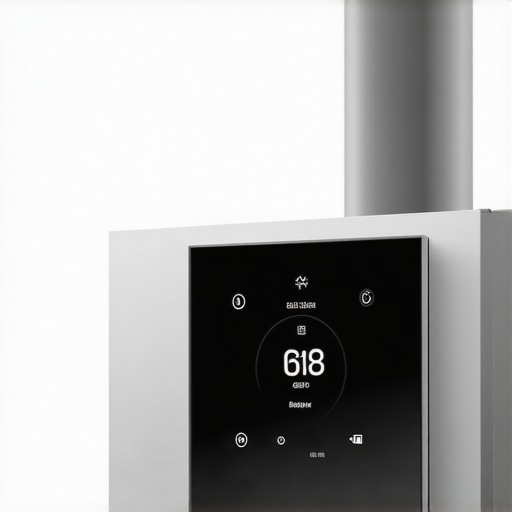
Voice control setup for Alexa and Google isn’t just a gimmick for lazy people; it’s a diagnostic tool. A 2026 preventative maintenance contract includes the smart thermostat setup and calibration. I’ve seen homeowners try to do a thermostat installation themselves, only to cross a ‘C’ wire and ‘R’ wire, sending 24 volts straight into the logic board. That’s an expensive mistake. When we integrate these systems, we’re setting up ‘smart alerts.’ If your system starts ‘short cycling’—turning on and off every five minutes—the thermostat will ping us before you even notice the house is getting chilly. This is critical for furnace repair myths; people think if the heat is on, everything is fine. But short cycling is a slow death sentence for your inducer motor and gas valve.
4. Preventing the ‘Sparky’ Call: Transformer & Contactor Audits
Every summer and winter, I see the same thing: a $10 contactor or a $30 transformer fails, and the homeowner thinks they need a new unit. In our 2026 PM audits, we look for ‘pitting’ on the electrical contacts. Think of a contactor like the spark plugs in your car; every time it slams shut to start that compressor, it creates a tiny arc of electricity. Over time, that carbon buildup creates resistance, which generates heat, which eventually melts the wire terminals. By catching a failing transformer replacement during a routine check, we save you from the emergency ‘Sparky’ (electrician) bill. We also check the capacitors. In the cold North, capacitors take a beating during the ‘defrost cycle’ of a heat pump. If you’re curious about how these cycles work, check our guide to heat pump maintenance. Preventing a blowout is always cheaper than reacting to one.
5. Gas Safety & Ventless Gas Heater Services Audit
In the North, we rely on gas. Whether it’s a central furnace or ventless gas heater services, the risk of Carbon Monoxide (CO) is real. A 2026 maintenance contract includes a combustion analysis. I’m talking about sticking a probe into the flue to measure the parts per million of CO. I don’t care if your unit is one year old or twenty; a cracked heat exchanger doesn’t care about the date on the sticker. We also look at the ‘flame envelope.’ A healthy flame is crisp and blue. If I see a lazy, yellow flame, I know we have a primary air problem or a dirty burner. This is where ‘Tin Knockers’ (duct guys) and service techs earn their keep—ensuring the venting is actually pulling those toxic gases out of your living space. If you’re running a mini-split for supplemental heat, you need to know when the logic board is failing versus a simple gas issue, which you can learn more about in mini-split troubleshooting.
Conclusion: Why Airflow is King
At the end of the day, HVAC is just physics. You can’t cool what you can’t touch, and you can’t heat what you can’t move. A preventative maintenance contract is the only way to ensure the ‘Airflow Architecture’ of your home remains balanced. From leak detector integration to complex voice control setup, the 2026 landscape is changing. Don’t be the person calling me on the coldest night of the year because you saved fifty bucks by skipping your tune-up. If you need help or have a system that’s acting up, don’t hesitate to contact us. We’re the ones who actually know how to use a multi-meter, not just a sales brochure.