The Invisible Strangler: Why Your 2026 HVAC System is Suffocating
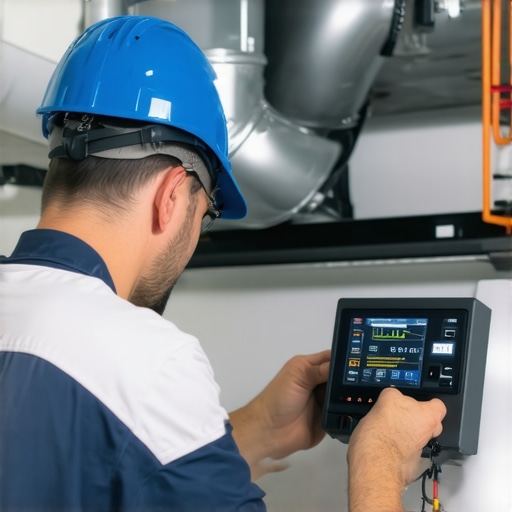
I remember a Tuesday in mid-January, wind chill hitting -15°F, when I climbed into a crawlspace that felt like a meat locker. The homeowner had just dropped twelve grand on a high-efficiency furnace installation, yet she was shivering in a parka. The blower motor was screaming—a high-pitched metallic whine that sounds exactly like money burning. I pulled out my dual-port manometer, tapped into the supply and return plenums, and saw a Total External Static Pressure (TESP) of 1.2 inches of water column. For those who don’t speak ‘Tin Knocker,’ that’s the mechanical equivalent of trying to run a marathon while breathing through a cocktail straw. The system wasn’t broken; it was being strangled by its own ductwork.
As we head into 2026, the stakes for airflow have never been higher. We aren’t just dealing with simple ‘on-off’ boxes anymore. We are dealing with cold climate heat pumps and variable-speed ECM motors that will literally work themselves to death trying to overcome a clogged filter or a crushed return. If your tech isn’t pulling out a manometer, they aren’t a technician; they’re a parts-changer. Static pressure testing is the only way to prove the physics of the install. Without it, you’re just guessing, and in the HVAC world, a guess is just a bill you haven’t received yet.
“The most expensive equipment in the world cannot overcome a bad duct system.” – Industry Axiom
1. Protecting the Heart: ECM Motors and the ‘Death Spiral’
In the old days, we had PSC motors. If the ductwork was restrictive, the fan just slowed down, moved less air, and eventually the heat exchanger would overheat. But the new high-efficiency motors—those fancy ECM (Electronically Commutated Motors)—are programmed to maintain a specific CFM (Cubic Feet per Minute). If they feel resistance from poor HVAC duct sealing or undersized vents, they ramp up their RPMs to compensate. This increases the ‘juice’ (amperage) and generates massive heat inside the motor windings. I’ve seen transformer replacement jobs become weekly occurrences because a system was running at double its rated static pressure. By 2026, these motors will be even more sensitive. Static pressure testing catches this ‘death spiral’ before the motor burns out, saving you a $1,500 repair bill that usually happens on the coldest night of the year.
2. The Thermodynamic Zoom: Why Velocity Matters for Latent Heat
Let’s talk about the physics of the evaporator coil. In a cold climate, we worry about the heat exchanger, but for those using cold climate heat pumps for year-round comfort, airflow velocity is everything. If the static pressure is too high, the air moves too slowly. This causes the coil temperature to drop below the dew point too aggressively. While that sounds good for dehumidification, in a heating cycle or a balanced cooling cycle, it leads to ‘flash freezing’ or inefficient heat transfer. We use combustion analysis to ensure furnaces aren’t cracking their exchangers due to low airflow, but on the heat pump side, static pressure ensures the refrigerant (the ‘gas’) can actually dump its heat into your home. If you want to understand how to keep these systems running, check out our ultimate guide to heat pump maintenance and repairs.
“Airflow shall be determined by measuring the external static pressure and comparing the results to the manufacturer’s fan-performance data.” – ACCA Manual J Standards
3. Hospital-Grade Precision: Zoning and Pressure Relief
Modern homes are moving toward hospital HVAC zoning. This isn’t just about having a thermostat in every room; it’s about bypass dampers and barometric relief. When one zone closes, the static pressure in the rest of the trunk line spikes. Without a tech performing wiring repair for heating systems and setting up demand-controlled ventilation, your ductwork will literally whistle. Static pressure testing allows us to calibrate the dampers so that the ‘Suction Line’ stays ‘beer can cold’ in the summer and the furnace doesn’t trip its high-limit switch in the winter. If you’re experiencing uneven temperatures, you might be falling for some furnace repair myths instead of addressing the actual airflow bottlenecks.
4. Validation of HVAC Duct Sealing and IAQ
Everyone wants a tight house, but a tight house needs to breathe. We use demand-controlled ventilation to pull in fresh air based on CO2 levels, but that system relies entirely on the ductwork’s ability to move air. If we apply HVAC duct sealing (using plenty of ‘Pookie’ or mastic) without checking static pressure first, we might actually be making the system’s ‘blood pressure’ worse. By sealing leaks, we force all that air through the existing registers. If those registers are too small, the pressure rises. A 2026-ready technician uses static pressure to find the balance between a leak-free system and a suffocating one. This is one of those hvac repair secrets that ‘Sales Techs’ never mention because it requires actual tools and time.
5. Bridging the Gap: Geofencing and App-Controlled Logic
We are in the era of geofencing temperature control and app-controlled heating systems. Your phone tells the HVAC to kick on when you’re five miles from home. That’s great, but if the system has high static pressure, it takes three times as long to reach the set point. The ‘Smart’ system sees the lag and assumes there’s a mechanical failure, often triggering a nuisance code. I’ve been called out for mini-split troubleshooting where the only ‘error’ was a dirty filter causing a static spike that the onboard computer couldn’t calculate. You can read more about mini-split troubleshooting here. Static pressure testing ensures that your high-tech sensors are getting accurate data, not just reacting to a ‘clogged artery’ in your vents.
The Verdict: Don’t Pay for Horsepower You Can’t Use
If you’re installing a 22-SEER2 system but your static pressure is 0.9″ i.w.c., you are effectively getting the performance of a 14-SEER unit. You’re paying for a Ferrari but driving it through a school zone. In 2026, as refrigerants transition and equipment costs climb, protecting your investment with a $150 static pressure test is the smartest move you can make. It’s the difference between a system that lasts 20 years and one that dies at year seven because the ‘Sparky’ or the ‘Tin Knocker’ didn’t check the vitals. Demand the manometer. If they don’t have one, send them packing.