The Sound of a Dying Farmhouse Furnace
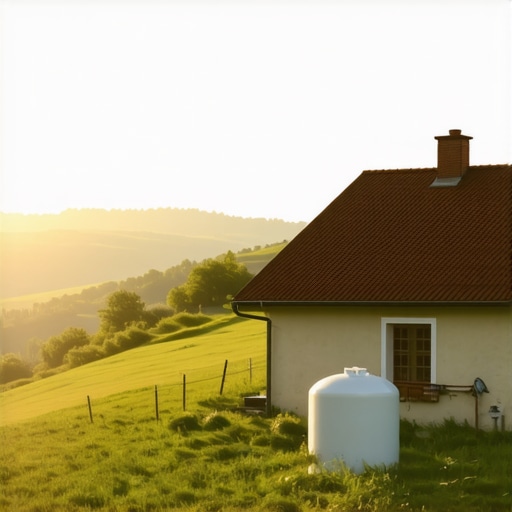
There is a specific kind of silence that happens in a rural home when the heat fails in February. It is not just quiet; it is heavy. I remember following a ‘Sales Tech’—one of those guys in a pristine white shirt who carries a tablet instead of a pipe wrench—out to a sprawling 1920s farmhouse near the county line. He had already quoted the homeowner, a retired schoolteacher, $15,000 for a total system replacement, claiming her ‘ancient’ furnace was a death trap. I walked in, smelled the lack of combustion, and saw the problem immediately. The unit was fine, but it was starving. The ‘tech’ didn’t even check the manifold pressure or the orifice sizes. He just saw an opportunity to hit a commission. I spent forty minutes performing a limit switch replacement and cleaning the burners, then explained that for a fraction of his ‘new system’ cost, a professional propane conversion service would give her more BTU density and better reliability than the failing electric baseboards she was relying on. I caught that scammer red-handed because I actually know how to use a manometer, and he only knew how to use a financing app.
“The most expensive equipment in the world cannot overcome a bad duct system.” – Industry Axiom
Thermodynamic Zooming: The Propane Advantage
In the HVAC world, we don’t just talk about ‘warm air.’ We talk about British Thermal Units (BTUs) and the latent heat of vaporization. For rural homeowners, the physics of propane are undeniable. Natural gas is a luxury of the grid, but propane is the king of the boondocks. Propane contains about 2,500 BTUs per cubic foot, while natural gas limps along at about 1,050. When we perform propane conversion services, we are essentially recalibrating your furnace to handle a higher-energy fuel source. This involves swapping out the brass orifices—the tiny nozzles that dictate gas flow—because propane requires a smaller opening due to its higher pressure and energy density. If you get this wrong, you get ‘sooting,’ which is basically the furnace choking on its own fuel. It’s why you never let a ‘handyman’ touch your gas train. You need a commercial furnace repair expert who understands that manifold pressure isn’t a suggestion; it’s a law of physics.
The North Climate Battle: Cracked Heat Exchangers and Ice
Since we are dealing with rural settings, we are likely in a climate where the wind-chill can peel paint off a barn. The enemy here is the ‘Polar Vortex’ effect. When a standard heat pump hits its balance point—usually around 30°F—it loses its mind. It starts sucking ‘juice’ (electricity) like a thirsty dog just to keep the coils from icing over. This is where propane conversion services shine. A propane-fired furnace provides ‘beer can cold’—wait, that’s for the suction line in summer—it provides ‘scorching hot’ supply air regardless of the outdoor temperature. However, you have to watch the venting. In older homes, we often see chimney liner installation needs because the acidic condensate from modern high-efficiency furnaces will eat through old masonry like a termite through a 2×4. I’ve seen chimneys literally crumbling from the inside out because some tin knocker slapped in a 90% AFUE furnace and didn’t line the flue.
The Airflow Manifesto: Static Pressure and Pookie
You can have a million BTUs, but if your static pressure testing shows a reading of 0.8 inches of water column on a blower motor rated for 0.5, you’re just killing your equipment. Static pressure is the ‘blood pressure’ of your HVAC system. Most rural homes have undersized return air ducts. This causes the furnace to overheat, leading to a premature limit switch replacement or, worse, a cracked heat exchanger. When I’m on a job, I’m looking at the ‘Pookie’ (mastic) on the plenum. If I see duct tape, I know a hack was there. Real pros use mastic to ensure every CFM (cubic feet per minute) of air reaches the rooms that need it. If you have a ‘dead zone’ in the house, we might look at ductless mini-split installation for that stubborn back bedroom, but usually, it’s a matter of fixing the ‘tin’ to handle the load. For more on this, check out our hvac repair secrets for boosting efficiency.
The Regulatory Cliff: Why Propane is a Hedge Against 2025
The industry is changing. We are seeing the death of R-410A refrigerant and the rise of A2L ‘mildly flammable’ gases. For rural homeowners, staying on the propane/gas side of heating avoids some of the massive price hikes hitting the heat pump market. However, you still need to modernize. We’re now recommending smart building management sensors even for residential farmhouses. Why? Because a sensor can tell you your MERV filter upgrades are actually choking your system before the compressor burns out. A MERV 13 filter is great for allergies, but it’s a brick for a weak blower motor. We test the pressure drop across the filter to make sure we aren’t trading lung health for a dead furnace. If you’re worried about myths in the industry, take a look at these furnace repair myths debunked to stay informed.
“Design for the worst-case scenario, and the best-case will take care of itself.” – ASHRAE Fundamentals
Ancillary Heating: Beyond the Central Furnace
In large rural shops or garages, a central furnace is overkill. That’s where infared heater installation comes in. These don’t heat the air; they heat the objects (like your tractor or your workbench) using radiant energy. It’s the same way the sun warms you on a cold day. For guest cabins or well-insulated additions, ventless gas heater services offer a quick solution, though I always warn folks: you need a carbon monoxide detector in every room with a ventless unit. I don’t care what the box says about ‘99% efficiency,’ I’m a cynic by trade, and I want a ‘Sparky’ (electrician) to wire a hard-wired CO alarm if you’re going ventless. If you are struggling with a complex setup, our ultimate guide to heat pump maintenance can help, or you can contact us for a real diagnostic, not a sales pitch.
The Final Forensic Verdict: Repair vs. Replace
If your furnace is 15 years old and the heat exchanger is intact, I’m going to tell you to fix it. A limit switch replacement and a propane conversion service might cost you $1,200, whereas a new high-efficiency system is pushing $10,000 these days. The ‘Sales Techs’ hate me because I value the physics over the commission. We look at the flame rollout, we check the gas pressure, and we perform static pressure testing. If the ‘bones’ of the unit are good, we keep it running. But if I see a crack in that heat exchanger, I’m pulling the plug. There’s no ‘patching’ a heat exchanger; that’s how people don’t wake up in the morning. For those in remote areas, propane is the most reliable, high-output, and cost-effective way to ensure that the silence of a winter night stays outside, where it belongs. If you’re having issues with smaller units, see our mini-split troubleshooting guide to see if it’s something you can handle or if you need to call a pro like me who isn’t afraid to get his hands dirty in a crawlspace.