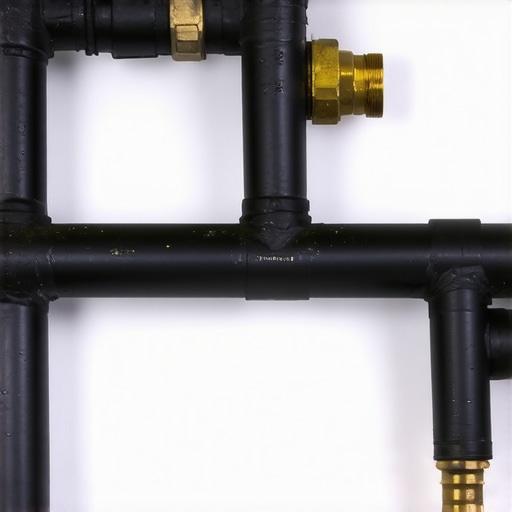
My old mentor, a grizzly veteran who smelled permanently of pipe dope and burnt contactors, used to scream at me whenever I reached for a wrench without thinking: ‘You can’t burn what you can’t feed, kid!’ He’d stand there in a freezing basement, pointing his crooked finger at a 1/2-inch black iron pipe trying to feed a 100,000 BTU furnace and a high-recovery water heater. This is the ‘Physics Lesson’ every homeowner—and most ‘Sales Techs’—fail to grasp. Airflow might be the king of comfort, but gas volume is the heart of the flame. If your gas line is undersized, you aren’t just losing efficiency; you are inviting a cracked heat exchanger and a visit from the fire department.
When we talk about gas lines, people confuse pressure with volume. They think because there is ‘gas at the valve,’ the system is fine. Wrong. Think of it like a straw. You can have all the pressure in the world, but if you’re trying to drink a milkshake through a cocktail straw, you’re going to struggle. In the HVAC world, that struggle manifests as ‘nuisance’ furnace repair services, strange booming sounds upon ignition, and the silent killer: carbon monoxide. Before you even think about AI-driven HVAC optimization or fancy zoning system installation, you have to ensure the fuel delivery system isn’t fundamentally broken.
“Gas piping must be sized to supply the maximum demand of all connected appliances without the loss of pressure at the inlet of any appliance exceeding the permitted values.” – NFPA 54: National Fuel Gas Code
The Forensic Diagnosis: Anatomy of a Starving Burner
Let’s get into the Thermodynamic Zooming. When your furnace calls for heat, the gas valve opens. In a perfect world, the manifold pressure hits exactly what the nameplate calls for—usually 3.5 inches of Water Column (WC) for natural gas. But if your garage heater installation was teed off a line that was already maxed out for the furnace and water heater, that pressure drops the moment both units fire up. This ‘voltage drop’ of the gas world causes the flame to become lazy. Instead of a crisp, blue cone of combustion, you get a yellow, flickering mess. That yellow flame is incomplete combustion. It creates soot. That soot acts as an insulator on your heat exchanger, causing it to overheat and eventually crack.
I’ve seen it a thousand times. A ‘Sales Tech’—those guys in the crisp white shirts who couldn’t find a transformer replacement if it bit them—sells a sweet family a high-efficiency 96% AFUE furnace. They swap the box but leave the old, undersized ‘gas juice’ line. The new unit has a more sensitive pressure switch. The first time it gets below zero and the furnace and water heater run together, the unit locks out. The homeowner thinks they bought a lemon, but the reality is the ‘Tin Knocker’ who installed it didn’t do the math. You need to verify the total BTU load. If your furnace is 80k BTUs and your water heater is 40k BTUs, your pipe needs to handle 120k BTUs at the furthest run length. If you add whole-home humidifiers or a garage heater later, that math changes instantly.
How to Verify Your Line Sizing (The Real Way)
To verify if you’re sized correctly, you need to look at the total equivalent length of the pipe. Every 90-degree elbow adds ‘frictional loss.’ It’s not just the straight pipe; it’s the resistance. If you see 1/2-inch copper or black iron running 50 feet to feed both a furnace and a water heater, you’re likely in trouble. Most modern furnaces require a dedicated 3/4-inch line if the run is over 20 feet. When I perform an annual heating inspection, the first thing I do is hook up my manometer. I want to see the ‘drop.’ If the standing pressure is 7 inches WC, but it drops to 4 inches when the burners kick in, that pipe is too small. No amount of refrigerant leak detection or HEPA filter systems will fix a starved fire.
“The most expensive equipment in the world cannot overcome a bad duct system—or an undersized fuel delivery line.” – Industry Axiom
If you’re worried about your setup, you need to check the ‘input’ rating on the stickers of all gas-burning appliances. Add them up. Then, consult a sizing chart based on the length of the run from the meter. If the math doesn’t check out, you’re living with a ticking time bomb of soot and inefficient heat. This is also why carbon monoxide detector installation is non-negotiable. An undersized line leads to poor venting, which leads to CO backing up into the house. If you suspect your system is ‘hunting’ for gas, contact us before the next cold snap hits.
The 2025 Reality: Why This Matters More Now
With the shift toward more complex systems, the margin for error has vanished. Old ‘atmospheric’ furnaces from the 80s were forgiving; modern, high-stage burners are not. If you are looking into hvac-repair-secrets-boost-efficiency-with-expert-tips, the biggest secret is simply giving the machine what it needs to breathe and eat. Don’t let a ‘Sparky’ or a fly-by-night contractor tell you ‘it’s been fine for 20 years.’ That was before you finished the basement and added a gas fireplace. Physics doesn’t care about your history; it only cares about the current load.
In northern climates where the ‘Polar Vortex’ is a yearly guest, your gas line is your lifeline. When the temp hits -10°F, your furnace will run for 40 minutes an hour. That is a massive amount of sensible heat transfer. If the gas flow is restricted, the heat exchanger doesn’t reach its design temperature, causing ‘slugging’ of acidic condensate in high-efficiency units. This eats the secondary heat exchanger from the inside out. You can read more about these common failures in our furnace-repair-myths-debunked-what-homeowners-need-to-know guide. The bottom line: If your ‘gas gas’ isn’t flowing, your ‘Pookie’ (mastic) and ductwork won’t matter. Fix the pipe, or prepare to replace the furnace long before its time.