The Ghost in the Ductwork: Why Your Furnace Sounds Like a Freight Train
My old mentor, a guy who had been a tin knocker since the Eisenhower administration, used to scream at me whenever I reached for my manifold gauges too quickly. ‘You can’t heat what you can’t touch!’ he’d bark, his voice raspy from decades of breathing in attic dust. He wasn’t talking about physical contact; he was talking about the molecular dance of airflow and heat transfer. If the air isn’t moving right, the physics of the furnace don’t matter. But even with perfect airflow, most homeowners are living with a mechanical beast in their basement that sounds like a 747 taking off every time the thermostat calls for heat. That noise isn’t just an annoyance; it’s the sound of inefficiency and primitive engineering. When we talk about modulating gas valves, we aren’t just talking about a fancy upgrade. We are talking about the difference between a sledgehammer and a scalpel.
“The most expensive equipment in the world cannot overcome a bad duct system.” – Industry Axiom
The Anatomy of the ‘Bang’: Traditional Burner Physics
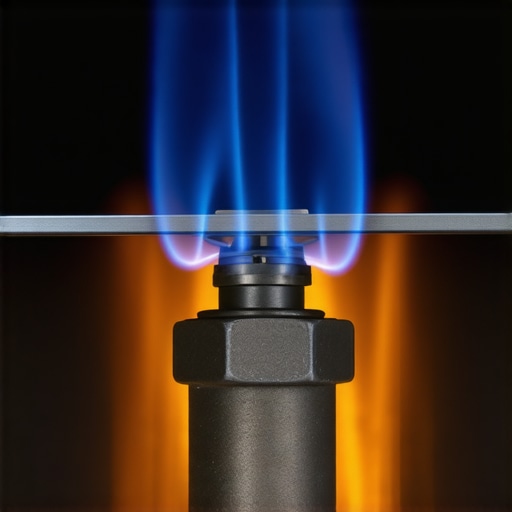
In a standard, single-stage furnace, the gas valve is a simple solenoid. It is either 0% or 100%. When that thermostat clicks, the valve slams open, the inducer motor ramps up to full scream, and the burners ignite with a whoomph that can shake the floorboards. This is the ‘bang-bang’ control method, and it’s about as sophisticated as a caveman’s campfire. In the North/Cold climate zones like Chicago or the Northeast, this cycle happens dozens of times a day. The constant expansion and contraction of the heat exchanger—metal moving against metal—creates those popping sounds that keep you up at night. Worse, that rapid heating can lead to stress fractures. I’ve seen emergency heating repair calls where the homeowner thought they just had a noisy unit, only to find a cracked heat exchanger leaking carbon monoxide because the thermal stress finally won the war.
Enter the Modulating Gas Valve: The Silent Stepper
A modulating gas valve doesn’t just slam open. It uses a stepper motor to adjust the gas flow in tiny increments, usually between 40% and 100% capacity. It’s the difference between flooring the gas pedal on your truck and gently cruising at the speed limit. When paired with a variable-speed inducer motor and a high-end blower, the furnace can maintain a constant, whisper-quiet stream of warm air. It removes the sensible heat spikes and provides a consistent discharge temperature. This isn’t just about comfort; it’s about airflow measurement services proving that lower, longer run cycles actually move air more effectively through the house, eliminating those annoying cold spots. If you’ve been misled by a ‘Sales Tech’ into thinking you need a whole new system when yours is just noisy, you need to understand furnace repair myths debunked before signing a contract.
The North Zone Reality: Polar Vortices and Heat Exchangers
Up here in the frozen zones, we deal with the The Enemy: Cracked Heat Exchangers and flame rollout. When a furnace is oversized—which 90% of them are—it short-cycles. It gets the house to 70°F in ten minutes, then shuts off. The ductwork cools down, the metal shrinks, and the cycle repeats. This is brutal on the equipment. A modulating system stays on longer at a lower firing rate. It prevents the ice blockages in the intake vents that often lead to emergency heating repair calls during a polar vortex. Because the burner is firing at a lower intensity, the combustion noise is almost non-existent. You don’t get that aggressive roar of gas hitting the crossover tubes. Instead, you get a gentle hum that you’d have to put your ear to the cabinet to hear. You might also want to check out our ultimate guide to heat pump maintenance and repairs if you are running a hybrid dual-fuel system.
“Design conditions for heating shall be based on the 99% or 97.5% column of the ASHRAE climate data.” – ACCA Manual J
The Sensory Experience of a Burnout
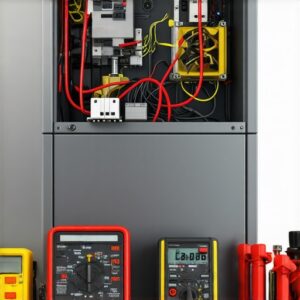
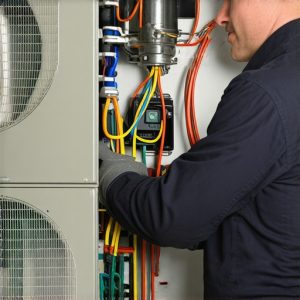
I’ve walked into basements where the air smelled like a mix of rotten eggs and scorched copper. That’s the smell of a system that’s been pushed too hard by poor control logic. While a modulating valve solves the noise, you still have to worry about the electrical side. I’ve replaced more capacitors on ‘high-efficiency’ units than I can count because the sparky who wired the house didn’t account for voltage drops. Our capacitor replacement services often go hand-in-hand with these noise complaints because a failing run capacitor makes the blower motor growl like a wounded animal. If you hear a high-pitched screeching, that isn’t the gas valve; that’s a dry bearing. We can integrate leak detector integration and refrigerant leak detection into smart building management systems to catch these failures before the system dies on a Saturday night in January.
Thermodynamic Zooming: Latent Heat and Airflow
Why does a quieter furnace feel warmer? It’s the thermodynamics of the air itself. When a furnace runs at a lower speed, the air spends more time in contact with the heat exchanger. The energy recovery ventilators (ERVs) can then work in tandem to swap out stale indoor air without losing that precious sensible heat. This is why airflow measurement services are vital. A tin knocker can build the best trunk line in the world, but if the gas valve isn’t modulating, you’re still pushing 1,200 CFM of air through a 10-inch pipe, creating turbulent noise (static pressure). By modulating the heat, we reduce the required air volume at any given moment, which lowers the friction in the ducts. No more whistling vents. No more rattling registers. Just silent, invisible heat.
When to Pull the Plug: Repair vs. Replace
Is it worth spending $1,500 to put a modulating valve on an old 80% AFUE furnace? Usually, no. These valves require a control board that can speak the same language. If your furnace sounds like a jet engine and you’re tired of the ‘Sales Tech’ quoting you $15,000 for a unit you don’t need, look at the math. A simple pellet stove repair or baseboard heater repair might fix a cold room, but it won’t fix the core issue of a primitive furnace. However, if your current unit is only 5 years old and making a racket, it might just be a matter of capacitor replacement services or adjusting the gas pressure. For those in older homes, sometimes the issue is actually the water heater; our hot water heater repair team often finds that the ‘furnace noise’ is actually a sediment-filled tank ‘bumping’ in the night. For a deeper look at keeping things running, check out hvac repair secrets to boost efficiency.
Conclusion: Physics, Not Magic
Comfort isn’t about how much juice is in the line; it’s about control. A modulating gas valve is the brain of a modern heating system. It eliminates the whoomph, the bang, and the roar by respecting the laws of physics. It keeps the heat exchanger at a steady temperature, extends the life of your equipment, and keeps your utility bill from looking like a car payment. If you’re dealing with a noisy unit, don’t let a ‘Sales Tech’ scare you. Get a real diagnosis. If you need help, contact us today. We believe in pookie, proper static pressure, and the truth about airflow. Anything else is just hot air.