The Sound of a Silent Furnace and the Battery Beneath Your Feet
The middle of February in the North doesn’t just bite; it chews. I remember a call at 3 AM where the homeowner was frantic because their high-efficiency furnace had locked out. No ‘juice’ was getting to the burners. Most green techs would have started swapping boards or looking for a faulty pressure switch, but I noticed the smell—not of gas, but of damp, metallic rot near the riser. My old mentor, Sarge, used to scream at us in the shop, ‘The earth is a giant battery, kid, and it wants to eat your pipes for breakfast! You can’t burn what you can’t deliver!’ He was talking about galvanic corrosion. That night, I found an old section of black iron pipe buried directly in the soil without so much as a lick of protection. It had pinholed so badly the pressure drop was triggering the furnace’s low-pressure cutout. This wasn’t just a furnace repair services issue; it was a fundamental failure of gas line physics.
“Gas piping buried underground shall be protected against corrosion by coating or wrapping with an approved material.” – NFPA 54: National Fuel Gas Code
The Physics of the Underground: Why Steel Dies in the Dirt
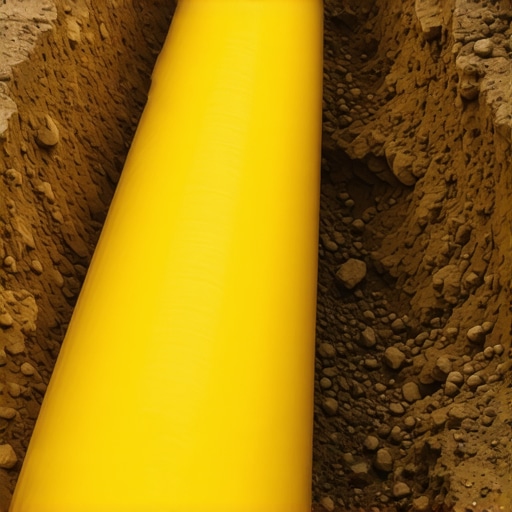
When you bury a metal pipe, you aren’t just putting it in the ground; you are completing a circuit. Soil is an electrolyte. Different soil compositions—clay, sand, loam—have different PH levels and moisture content. This creates an environment where electrons want to migrate from the metal pipe into the surrounding earth. This process, known as electrolysis, literally dissolves the pipe atom by atom. In our Northern climate, where the frost line moves and soil shifts, this process is accelerated by the constant mechanical stress on the pipe. If you’re running gas to ventless gas heater services in a detached garage or a pool heater, you cannot just throw ‘Pookie’ (mastic) on a joint and call it a day. You need a barrier that interrupts that electrical flow. This is why we use factory-applied plastic coatings or high-density polyethylene (HDPE) yellow pipe. HDPE is a Tin Knocker’s nightmare because it requires heat-fusion or specialized mechanical fittings, but it’s the only way to ensure the gas stays in the pipe and the dirt stays out.
The Anatomy of Corrosion Protection: Beyond the Pipe
It’s not just the pipe itself that’s at risk; it’s every transition point. The ‘Riser’—the part where the pipe comes out of the ground to meet the meter or the house—is a prime target for ‘crevice corrosion.’ We see it all the time during HVAC maintenance plans inspections. If that riser isn’t an anodeless design, the transition between the underground plastic and the above-ground steel becomes a weak point. I’ve seen Sparkies try to ground electrical panels to gas lines (a massive code violation), which only speeds up the rot. For commercial applications, especially in restaurant kitchen exhaust repair scenarios where high-volume gas demand is constant, we often employ sacrificial anodes. These are bags of magnesium or zinc buried near the pipe that ‘sacrifice’ themselves to the soil’s electrical hunger, leaving the gas line intact. It’s thermodynamic warfare, and the earth usually wins if you don’t fight back with the right materials.
“Protective coatings shall be applied to all underground metallic piping to mitigate the effects of external corrosion.” – ASME B31.8 Gas Transmission and Distribution Piping Systems
Modern Integration: From Pipes to Pixels
You might wonder what a buried pipe has to do with a voice control setup Alexa Google or programmable thermostat programming. It’s all about the ‘Demand Chain.’ A modern smart home relies on the furnace being ready to fire the second that programmable thermostat sends a signal. If your underground line is restricted by internal scaling or leaking due to external corrosion, the system’s static pressure drops. You can have the most advanced demand-controlled ventilation system in the world, but if the fuel delivery is compromised, your high-tech sensors are just expensive wall decorations. We see this often in large estates where duct design services have optimized every CFM of airflow, yet the gas pressure at the manifold is fluttering because the 20-year-old underground line is failing. Reliable heating starts under the grass, long before it reaches the heat exchanger.
The Solution: Professional Grade Protection
If you’re considering electric heater services as a backup, or looking into mini-split troubleshooting, don’t overlook the primary fuel source. A properly installed gas line should include a tracer wire—a thin copper wire buried alongside plastic pipe so that future Tin Knockers or excavators can find the line with a locator before they put a backhoe bucket through it. We also insist on furnace filter replacement as part of a total care package, but if you’re smelling that ‘sour’ metallic scent near your gas meter, you need to skip the filters and call for a pressure test immediately. Corrosion doesn’t sleep, and in a climate where a furnace failure means frozen pipes inside the house, you can’t afford a ‘Sales Tech’ guess. You need an Airflow Architect who understands that the integrity of the fuel line is just as critical as the pitch of the secondary heat exchanger. Don’t let your gas line become a battery; keep the ‘juice’ where it belongs.