The Sound of a Failing Institution: Why Your Boiler Quits in January
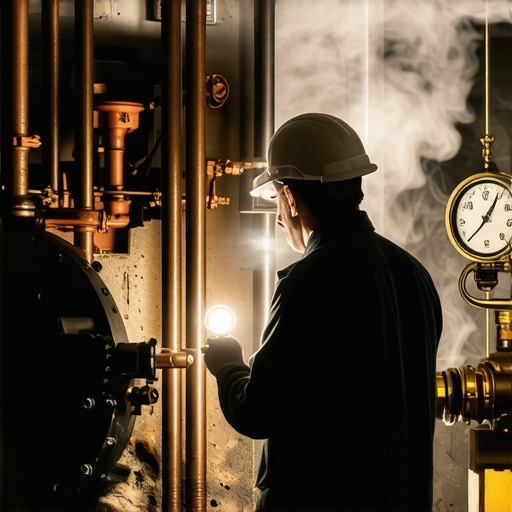
The smell of a commercial boiler room in mid-January is unmistakable. It is a thick cocktail of scorched dust, old grease, and that faint, metallic tang of iron pipes under stress. I once walked into a middle school in the middle of a polar vortex where the principal was vibrating with more anxiety than the vibrating pump motor in the basement. A so-called ‘Sales Tech’ had just left, leaving behind a quote for $85,000 to replace the entire cast-iron sectional boiler, claiming the heat exchanger was shot. I looked at the unit, saw the burner was locked out on a flame failure, and started digging. I found a $40 flame sensor caked in carbon because their last ‘maintenance’ was done by someone who probably couldn’t find the manifold pressure tap with a map. I cleaned the sensor, reset the controller, and the building roared back to life. That is the difference between a technician who understands thermodynamics and a salesman with a clipboard.
“The most expensive equipment in the world cannot overcome a bad duct system or improperly sized hydronic loops.” – Industry Axiom
The Forensic Diagnosis: Anatomy of a Mid-Year Meltdown
When a school boiler fails, it is rarely a sudden act of God. It is usually a slow-motion car crash that started months ago. In Northern climates, where the mercury spends weeks hiding below zero, these systems are the lungs of the building. We are talking about sensible heat transfer on a massive scale. If your boiler repair services do not involve checking the expansion tank’s pre-charge or the pH of the system water, you are not getting a tune-up; you are getting a haircut. A common culprit is the low-water cutoff (LWCO). These devices are designed to keep the boiler from turning into a bomb if the water level drops. Over time, sediment builds up in the float chamber. If the ‘Tin Knocker’ or the maintenance crew isn’t flushing those lines, the switch sticks. The burner keeps firing, the cast iron cracks, and suddenly you have an emergency that closes school for a week.
Manual J Calculations and the Myth of ‘Bigger is Better’
I see it every day: oversized equipment. School boards love to buy the biggest unit available because they think it provides a safety margin. In reality, an oversized boiler short-cycles. It fires up, hits the high-limit setting in six minutes, and shuts down before the furthest radiator in the science wing even gets warm. This constant expansion and contraction of the heat exchanger sections lead to premature metal fatigue. This is why Manual J calculations are not just for residential bungalows; they are the bedrock of commercial furnace repair and boiler sizing. If you do not calculate the heat loss of the building envelope, you are just guessing with other people’s money. Proper duct design services and pipe sizing ensure that the energy the boiler produces actually reaches the classrooms instead of just heating the basement ceiling.
“Designers shall use the procedures outlined in the ASHRAE Handbook—Fundamentals or an equivalent computation procedure to determine the design heating and cooling loads.” – ASHRAE Standard 90.1
Thermodynamic Zooming: Latent Heat and Airflow Mastery
In a hydronic system, we are moving BTUs through water, but the principles of HVAC repair remain the same: energy transfer. When we talk about furnace filter replacement in the air handling units that work alongside the boiler, we are talking about maintaining the delta-T (temperature difference). If the filters are plugged, the airflow across the coils drops. The heat stays trapped in the coil, the boiler water returns too hot, and the high-efficiency condensing boiler you spent a fortune on never actually condenses. You lose the latent heat recovery, and your efficiency drops from 95% to 80% instantly. It is like driving a Ferrari in first gear. This is why priority service memberships are vital; they ensure a set of eyes actually looks at the capacitor replacement services needed for the blower motors before they seize up on a Friday night.
The Tech Revolution: App-Controlled Heating Systems
We are moving away from the days of the ‘Sparky’ just wiring a thermostat and walking away. Modern app-controlled heating systems allow facility managers to see the system’s static pressure and return water temperatures in real-time. If a circulator pump starts pulling high amperage, the system sends an alert. We can catch a failing bearing before it turns into a ‘no-heat’ emergency call at 3 AM. However, technology is only as good as the technician calibrating it. You can have the smartest boiler in the world, but if the furnace tune-up services skipped the combustion analysis, you are likely wasting 15% of your fuel up the chimney. We use digital manometers and combustion analyzers to ensure the ‘Gas’ (fuel) is burning at peak stoichiometric ratios.
Preventive Maintenance vs. The Scam Tune-Up
Most HVAC repair companies offer a ‘tune-up’ that is basically a guy with a rag wiping off the cabinet. A real inspection involves checking the heat exchanger for hairline cracks using infrared cameras or borescope inspections. It involves testing the flame rectification signal in microamps. If your tech doesn’t know what a microamp is, find a new tech. For those managing smaller satellite buildings or portables, mini-split troubleshooting becomes part of the mid-year grind. Those systems are even more sensitive to airflow; a little ‘Pookie’ (mastic) on a leaky duct or a dirty blower wheel can shut them down. Whether it is a massive school boiler or a small heat pump, the physics don’t change. You need clean coils, proper ‘Juice’ (refrigerant) levels, and unobstructed airflow. If you want to avoid the mid-year crisis, check out our ultimate guide to heat pump maintenance and repairs for the auxiliary units, or contact us to get a real professional on your roof. Don’t fall for the furnace repair myths spread by sales-heavy shops; rely on the physics of the trade.