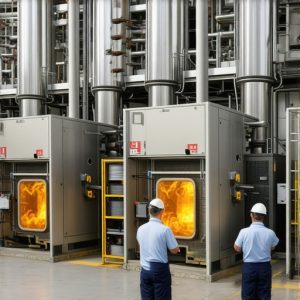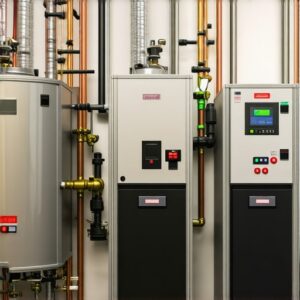
Listen, if you are managing a multi-family complex or a boutique hotel, you are currently standing on the edge of a regulatory cliff, and the ground is crumbling. I have spent thirty years crawling through mechanical rooms that smell like old grease and scorched dust, and I am telling you right now: the industry is changing faster than a contactor snaps on a call for cooling. We are entering the era of the A2L transition, where the ‘juice’ we’ve used for decades—R-410A—is being sent to the graveyard in favor of low-GWP refrigerant retrofits. If your current HVAC ‘partner’ hasn’t mentioned R-454B or the new sensor requirements for mildly flammable refrigerants, they aren’t a tech; they’re a liability.
The ‘Sales Tech’ Sabotage: A Multi-Family Case Study
I remember walking into a 50-unit complex last February. The ‘comfort consultant’ from a big-box franchise had just left, leaving the property manager with a $250,000 quote to replace ten rooftop units. He told her the heat exchangers were ‘compromised’ and showed her a blurry cell phone picture of a rust spot. I grabbed my combustion analyzer and a mirror. There wasn’t a single crack. The ‘failed’ units just had dirty flame sensors and one inducer motor that was starting to scream like a banshee because of a bad bearing. A $1,200 repair saved her a quarter-million-dollar capital expenditure. That is the difference between a Tin Knocker trying to meet a quota and a technician who understands the physics of a two-stage furnace installation. Don’t let a slick polo shirt talk you into a replacement when a proper commercial furnace repair is all you need to bridge the gap to the 2025 mandates.
“The most expensive equipment in the world cannot overcome a bad duct system.” – Industry Axiom
The Physics of the Regulatory Cliff: 2025 and Beyond
We are moving toward high-efficiency, but efficiency in a multi-family setting isn’t just about a SEER2 rating on a sticker. It’s about inverter-driven compressors that can ramp down to 25% capacity instead of slamming on and off like a screen door in a hurricane. When you have 40 units short-cycling, you aren’t just burning electricity; you are killing compressors through oil migration and high head pressure. This is why low-GWP refrigerant retrofits are becoming the focal point of every mechanical room I audit. The new refrigerants operate at different pressures, and the leak detection systems required by code are going to add a layer of complexity that your average ‘Chuck in a truck’ isn’t prepared for. [image_placeholder_1]
The Airflow Manifesto for Property Managers
If you have tenants complaining that the third floor is a sauna while the lobby is a meat locker, you don’t have a ‘broken AC’; you have a static pressure nightmare. Most multi-family buildings are choked out by undersized return air paths. I see it every day: a 5-ton unit trying to breathe through a 2-ton return. The evaporator coil drops below the dew point, freezes into a block of ice, and then the ‘Sales Tech’ tells you the ‘gas’ is low. No, the airflow is dead. You need a deep dive into demand-controlled ventilation (DCV) to ensure you aren’t heating and cooling empty hallways while the corner units are suffocating. This is especially critical in hotel boiler services, where the balance between make-up air and exhaust can make or break your energy bill. Proper thermostat installation with remote sensing is the only way to stop tenants from cranking the heat to 85 degrees while leaving the windows open.
“Design for the 99% design temperature, but maintain for the 100% reality of human error.” – Adapted from ASHRAE Standards
The Multi-Family Efficiency Checklist
- Check the Heat Exchangers: Before the first frost, get a real tech to check for flame rollout. If the flame is dancing or ‘licking’ the cabinet, you have a CO risk. Read more about furnace repair myths to avoid being scammed.
- Verify Static Pressure: Make sure your ‘Tin Knockers’ didn’t kink the flex duct in the attic spaces. If the static is over 0.5 inches of water column, your blower motor is on a suicide mission.
- Evaluate Heat Pump Financing: With the new federal incentives, financing for heat pump installs has never been more aggressive. Transitioning away from gas in multi-family units can often pay for itself in three years through reduced maintenance and energy credits.
- Inspect the Radiant Systems: For older buildings, a radiant floor heating installation can be a godsend for efficiency, but only if the boiler loops are flushed of sludge. Magnetic dirt separators are a must, not an option.
When to Pull the Plug: Repair vs. Replace
I get asked every day: ‘When do I stop dumping money into this old boiler?’ The math is simple but brutal. If your repair costs exceed 50% of the unit’s value and you’re still running R-22 or even early R-410A, you are throwing good money after bad. We can help with 24/7 heating emergency response, but the goal should always be a planned replacement rather than a 2 AM crisis. If you’re dealing with individual units, heat pump maintenance is the key to longevity. Don’t wait for the compressor to ground out and turn the oil into acid. Once that ‘sour’ smell hits the nostrils, the system is toast. If you’re seeing high bills and low comfort, contact us for a real forensic audit of your mechanical systems. We don’t sell ‘boxes’; we sell thermodynamic solutions that actually work in the real world, where Pookie and physics matter more than a sales pitch.