My old mentor, a grizzled master tech named ‘Lefty’ Miller, used to whack me on the back of my head with a nut driver if I ever looked at a furnace before checking the static pressure. ‘You can’t cool what you can’t touch, and you can’t heat a house if the air is stuck in the tin!’ he’d bark. He wasn’t talking about the equipment; he was talking about the physics of the delivery. He taught me that the furnace is just a heart, but the ductwork is the circulatory system. If your toes are freezing while the thermostat says 72 degrees, your ‘circulatory system’ is likely hemorrhaging heat into the crawl space dirt. Most homeowners think they need a bigger heater, but throwing a bigger furnace at a cold floor is like trying to fill a bucket with a hole in the bottom by using a larger fire hose. You’re just wasting juice.
“The most expensive equipment in the world cannot overcome a bad duct system.” – Industry Axiom
The Thermodynamic Cold Trap: Why Your Floors Are Ice
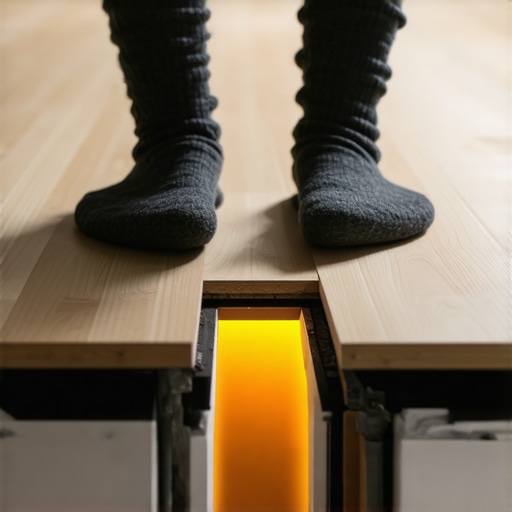
In the North, where the polar vortex likes to park itself every January, the crawl space becomes a massive heat sink. We’re talking about basic conduction. Heat always moves toward cold. When you have an unconditioned crawl space, that subfloor is sitting on a reservoir of 40-degree air. The heat in your living room isn’t just ‘leaving’ through the windows; it’s being sucked through the floorboards. This is why crawl space heating solutions are the most overlooked part of residential comfort. If you aren’t addressing the thermal boundary between the dirt and your feet, you’re fighting a losing battle. A common mistake is thinking that ‘insulating the floor’ is enough. Fiberglass batts in a crawl space eventually sag, trap moisture, and become a five-star hotel for rodents. To truly fix ‘cold toes,’ you have to stop treating the crawl space like a ventilated cave and start treating it like part of the house.
The Mechanical Fix: Two-Stage Furnace Installation and Airflow
If you’re still running a single-stage furnace, you’re part of the problem. A single-stage unit is either at 100% blast or it’s dead silent. In a cold climate, it fires up, satisfies the thermostat in ten minutes, and shuts off. The second that blower stops, the heavy, dense cold air in your crawl space begins its assault on your floor. This is where two-stage furnace installation and variable speed furnace services come into play. A two-stage unit can run at a lower capacity (about 60-65%) for much longer cycles. This constant, low-velocity airflow keeps the air moving and prevents the stratification where heat hangs at the ceiling while your feet freeze. When combined with smart building management sensors at the floor level, the system can adjust the blower speed to ensure the temperature gradient between your head and your toes stays within a couple of degrees. You can find more about these technical nuances in our hvac repair secrets guide.
The Flame Sensor and the ‘Sales Tech’ Scam
I’ve followed behind enough ‘Sales Techs’ to know how they work. They see a furnace that won’t stay lit, and they immediately quote $15,000 for a new system because the ‘heat exchanger is probably cracked.’ Nine times out of ten, the unit just needs a furnace flame sensor cleaning. The flame sensor works through flame rectification—a process where the flame itself completes an electrical circuit, converting AC to DC. If that sensor is coated in carbon or silica, the control board can’t see the flame and shuts the gas off for safety. It’s a $0 part fix that takes five minutes with some emery cloth, yet people are sold entire systems over it. Don’t fall for the hype. If your unit is cycling on and off rapidly, check the sensor before you sign a financing deal. You should also check out our furnace repair myths debunked to see what else those guys are trying to pull on you.
“Design heat loss shall be calculated in accordance with ACCA Manual J to ensure equipment is sized for the actual load of the structure, including below-grade spaces.” – ACCA Standards
Static Pressure and ‘Pookie’: The Tin Knocker’s Secret
Airflow is king. If your ducts are leaking, you’re heating the worms under your house. I don’t care about ‘silver tape’; that stuff is for temporary fixes. Real HVAC pros use Mastic—or ‘Pookie’ as we call it in the trade. It’s a thick, gooey paste that you brush over every joint in the ductwork. It creates a permanent, airtight seal. If your crawl space is cold, it’s likely because the return air ducts are sucking in freezing air through unsealed joints. This increases the ‘static pressure’ of the system, making the blower motor work harder and eventually burn out. High static pressure is the silent killer of variable speed furnace services. If the ‘Tin Knocker’ who installed your ducts didn’t seal the plenums with Pookie, you’re losing 15-20% of your efficiency right there. We also see this in pool heater repair and large-scale boiler systems where the venting isn’t properly sealed—it’s all about the pressure differentials.
The Safety Check: Portable Heaters and Leak Detectors
When people get cold toes, they often resort to space heaters. Stop right there. Portable heater safety checks should be your first priority because those things are fire hazards, especially in older homes with outdated wiring. Instead of a temporary fire trap, consider leak detector integration for your gas lines and a permanent heating solution for the crawl space. This might involve UV light installation for HVAC to keep the air in that damp space from growing mold, which then gets sucked into your living area. If you’re dealing with a larger property, smart building management can alert you to gas leaks or frozen pipes in the crawl space before they become a catastrophe. If your system is old and you’re considering a transition, look into our ultimate guide to heat pump maintenance and repairs to see if a dual-fuel setup is right for your climate.
Final Verdict: Conditioning the Space
The fix you haven’t tried? Encapsulate the crawl space and add a small supply air duct to ‘condition’ the area. By bringing the crawl space into the home’s thermal envelope, you eliminate the temperature delta between the dirt and your floor. No more cold toes, no more frozen pipes, and your furnace won’t have to work nearly as hard. It’s pure physics. If you’re tired of the ‘Sales Tech’ runaround and want a real furnace repair or a legitimate assessment of your airflow, contact us today. We don’t sell you what you don’t need; we just fix the air. “