The Death of the Heavy Iron: Why Modern Commercial HVAC is Abandoning Heating Oil
Walk into the basement of any commercial property built before 1990, and you will smell it before you see it: that heavy, unmistakable scent of heating oil, soot, and slow decay. For decades, massive hydronic heating systems relied on these cast-iron beasts to pump steam or hot water through miles of structural pipe. But the writing is on the wall. Commercial property managers are realizing that keeping an old oil boiler alive is a losing battle against both thermodynamics and operating budgets.
The Physics Lesson: Why Airflow and Heat Transfer Defeat Heavy Iron
My old mentor, a legendary boiler technician who spent forty years covered in soot, used to scream at me, “You can’t cool what you can’t touch, and you can’t heat what you block with soot!” He was obsessed with heat transfer surfaces. In an old oil boiler, even a 1/16-inch layer of soot insulating the heat exchanger drops heat transfer efficiency by over 10 percent. Heating oil is a dirty fuel; its combustion produces high concentrations of particulate matter that bakes onto the internal surfaces, choking the thermal transfer from the flame to the hydronic loop. When we analyze modern commercial conversions, we are looking at a fundamental shift in how thermal energy is generated and distributed. By switching to natural gas or integrating a modern dual fuel heat pump system, buildings eliminate this soot barrier completely, ensuring consistent, direct heat transfer without the constant thermal degradation.
“The overall efficiency of a heating system is heavily dictated by the accumulation of combustion byproducts on heat-exchanger surfaces, where even minor fouling results in exponential thermal resistance.” — ASHRAE Handbook of HVAC Systems
The Climate Context: The Cold Zone Battle Against Thermal Inertia
In cold northern climates, where winter temperatures plunge below zero, commercial buildings suffer from extreme thermal inertia. Old oil boilers take hours to “warm up” and fill the hydronic lines with steam or hot water. This lag time makes precise climate control impossible. If the outdoor temperature suddenly drops, the boiler takes hours to catch up. Conversely, when the sun comes up and warms the building, the massive cast-iron radiator loops continue radiating heat for hours, forcing occupants to crack windows in the middle of January. This is a massive waste of energy. Modern natural gas systems, especially when paired with an inverter-driven compressor or a high-efficiency gas furnace, react almost instantly to building demand. We can integrate advanced digital controls and get predictive maintenance alerts that tell us exactly when a component is starting to drift out of calibration, rather than waiting for a massive boiler failure on a freezing Monday morning.
[image_placeholder_1]
The Blueprint: Forensic Anatomy of an Oil to Gas Conversion
When we look at converting a commercial building from oil to gas, we aren’t just swapping out a burner; we are re-engineering the building’s thermal envelope. Let us break down the mechanical reality of this transition and why it saves property owners thousands of dollars every single month.
1. The Burner Swap vs. Full System Replacement
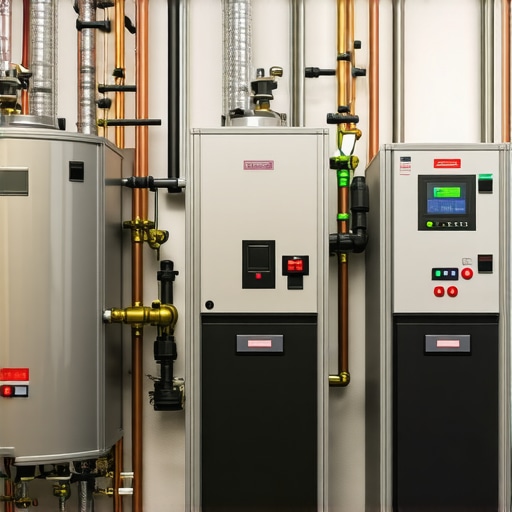
Some cheap contractors will tell you that you can just slide a gas power burner into an old oil boiler shell. That is a trap. While it saves money upfront, you are still left with an oversized, inefficient cast-iron body designed for a different era of fuel combustion. A true modernization involves removing the old boiler and installing a modular, condensing gas boiler system or transitioning parts of the facility to decentralized heating. For new construction heating design, relying on multiple small, modular condensing boilers or dual-fuel systems allows for staging. If one unit needs a gas furnace repair or simple maintenance, the other three units keep running, keeping the tenants warm and preventing a total building freeze.
2. The Elimination of Fuel Storage and Environmental Liability
Let’s talk about the giant metal tank buried under the parking lot or sitting in the basement. Fuel oil tanks are environmental ticking time bombs. Insurance companies hate them. If an underground oil tank leaks, you are looking at tens of thousands of dollars in EPA cleanup costs, soil remediation, and potential lawsuits. Natural gas is delivered on-demand through utility pipes. No storage tanks, no delivery schedules, no paying for fuel before you actually burn it, and absolutely zero risk of a catastrophic basement oil spill that leaves the entire building smelling like an oil refinery.
“Combustion equipment shall be selected and sized to match the calculated heating load of the building to minimize cycling losses and maximize seasonal performance factors.” — ACCA Manual N (Commercial Load Calculation)
3. The Math: Operational Costs and Payback Periods
Is it worth the capital expenditure? Let’s look at the raw numbers. Heating oil is highly volatile in price, tied directly to global crude oil markets. Natural gas has remained historically cheaper and far more stable. Combine that fuel cost differential with the efficiency jump—moving from a dirty 65% AFUE oil boiler to a 95%+ condensing gas system or an advanced heat pump replacement—and most commercial properties see a complete return on investment within 3 to 5 years. Plus, you eliminate the constant maintenance fees. No more oil filters to change, no more nozzles to replace, no more soot to brush out of the heat exchanger, and no more dealing with an oily mess when a fuel pump seal blows.
Why Airflow and Modern Ventilation Complement Gas Upgrades
When we convert a building to gas, we often re-evaluate the entire air distribution system. Many old hydronic buildings suffer from terrible indoor air quality and dry air because they lack mechanical ventilation. During a conversion, it is the perfect time to install a bypass humidifier repair or a new centralized humidification system integrated with modern ductwork. Properly designed air distribution systems eliminate the hot and cold spots that plague older buildings, ensuring that every office, retail space, or apartment unit stays at a comfortable temperature without relying on tenants bringing in dangerous space heaters.
We also look at the control side. Many old buildings are still controlled by ancient pneumatic thermostats that leak air and drift ten degrees out of calibration. Replacing these with digital smart thermostats allows for precise scheduling, remote monitoring, and zone control. You can stop heating empty conference rooms at 10 PM and save thousands of dollars on your monthly utility bills.
Don’t Let “Sales Techs” Sell You a Band-Aid
If your old oil boiler is struggling, some “Sales Tech” will inevitably roll up in a clean uniform, look at the unit for five minutes, and tell you that you need to spend a fortune on a brand-new, identical oil boiler because “gas hookups are too difficult.” That is lazy engineering. Converting to natural gas or integrating advanced heat pumps is a permanent solution that increases your property value, lowers your carbon footprint, and slashes your operating costs. It is pure physics and economics, not sales magic. Stop pouring expensive fuel oil down a drafty chimney and make the switch to a cleaner, more efficient fuel source.