The Airflow Manifesto: Why Your High-Efficiency Unit is a Liar
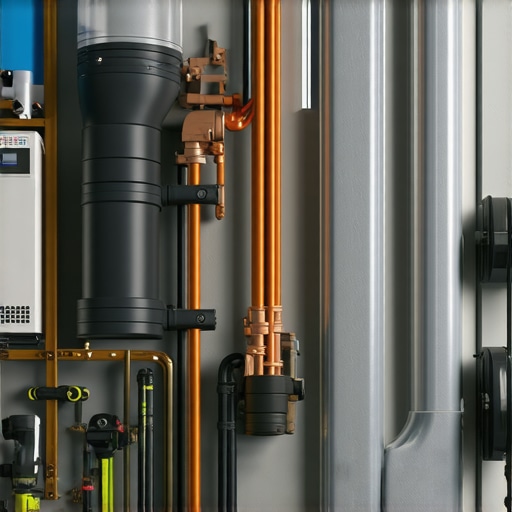
Listen closely. Do you hear that? That faint, high-pitched whistle coming from your hallway vent? To a homeowner, it’s background noise. To me, after thirty years of crawling through fiberglass-filled attics and dodging angry raccoons in crawlspaces, that sound is the scream of a dying budget. Most people think HVAC is about the ‘box’ outside—the shiny compressor with the fancy nameplate. They’re wrong. HVAC is about airflow, and in 2026, if you aren’t obsessed with your ductwork, you’re just lighting hundred-dollar bills on fire to stay warm. I’ve seen ‘Sales Techs’—those guys who look like they’ve never touched a manifold gauge in their lives—try to sell $20,000 systems to fix a ‘cooling problem’ that was actually just a detached return air plenum. I remember following one of these ‘Comfort Specialists’ into a job in the dead of winter. He’d told this couple their furnace was ‘structurally compromised’ and needed immediate replacement. I crawled under the house and found a four-inch gap where the tin knocker from twenty years ago had missed a connection. The furnace was fine; it was just heating the local mole population. A bucket of Pookie (mastic) and some zip ties fixed it in twenty minutes. That’s the reality of this trade that the big companies don’t want you to know: The most expensive equipment in the world cannot overcome a bad duct system.
“The most expensive equipment in the world cannot overcome a bad duct system.” – Industry Axiom
1. The Static Pressure Nightmare: Why ‘The Squeeze’ is Killing Your Blower
In a North/Cold climate, we deal with extreme temperature deltas. When it’s -5°F outside and your furnace is cranking, your blower motor is fighting a war against friction. This is ‘Static Pressure.’ Think of it like blood pressure for your house. If your ducts are leaking or poorly sized, that motor has to ramp up its RPMs to move the same volume of air. This doesn’t just raise your electric bill; it cooks the capacitors and thrashes the bearings. In 2026, with the push toward higher AFUE ratings and ECM (Electronically Commutated Motors), these components are more sensitive than ever. If your ducts aren’t sealed, you’re creating a pressure drop that forces the system to work twice as hard for half the result. We often see this when people ask for duct design services because their master bedroom is a meat locker while the kitchen is a sauna. It’s not a capacity issue; it’s a delivery issue. You can’t move 1,200 CFM (Cubic Feet per Minute) through a hole the size of a soda straw, and you certainly can’t do it if half that air is escaping into the rim joists before it hits the register. This is why hvac repair secrets often start with a simple pressure test, not a new compressor.
2. IAQ and the Pressure Differential: Stop Breathing Your Attic
Here’s the gross part they don’t tell you in the brochures. HVAC systems operate on a closed loop. Or at least, they should. When you have leaks in your return ducts—the ones that ‘suck’ air back to the furnace—you aren’t just losing ‘juice’ or efficiency. You are creating a vacuum. That vacuum doesn’t care where the air comes from. It will pull air from your crawlspace, your attic, or even back-draft carbon monoxide from your water heater vent if the pressure is wrong. This is where furnace repair myths get dangerous. People think their air filter is protecting them, but if the leak is after the filter cabinet, you’re bypassing your filtration entirely. In cold climates, this also means pulling in bone-dry, unconditioned air that makes your skin crack and your nose bleed. This is why dehumidification services and bypass humidifier repair are often band-aids for a duct system that is basically acting like a giant straw with holes in it. By sealing those joints with high-grade mastic, you ensure the only air you breathe is the air you’ve actually paid to heat and clean. We’ve even started seeing leak detector integration within smart systems that can alert you when static pressure shifts, signaling a potential duct failure.
“Duct leakage in unconditioned spaces can increase heating and cooling loads by as much as 20 to 40 percent.” – ASHRAE Fundamentals
3. The 2026 Regulatory Cliff: Why Your Old Ducts Can’t Handle the New Gas
The industry is changing. We’re moving away from R-410A to A2L refrigerants like R-454B. These new systems are designed for tighter tolerances and higher efficiencies. If you try to slap a new 2026-compliant heat pump onto a leaky, uninsulated duct system from 1994, you are going to have a bad time. The suction line won’t stay ‘beer can cold’ because the heat transfer is all wrong. Furthermore, the government is throwing money at homeowners through rebate application assistance programs for energy efficiency upgrades. But here’s the kicker: many of those rebates require a duct leakage test (Blower Door or Duct Blaster test). If your ‘Tin’ is leaking more than 10% of its air, you might get disqualified from thousands of dollars in savings. Whether you’re looking at a ultimate guide to heat pump maintenance and repairs or installing a new wall furnace installation, the efficiency numbers they print on the box are based on a perfectly sealed lab environment. Your drafty basement is not a lab. Sealing your ducts is the only way to bridge the gap between ‘Rated Efficiency’ and ‘Actual Performance.’
4. Smart Tech Synergy: Your Thermostat is Only as Smart as Your Airflow
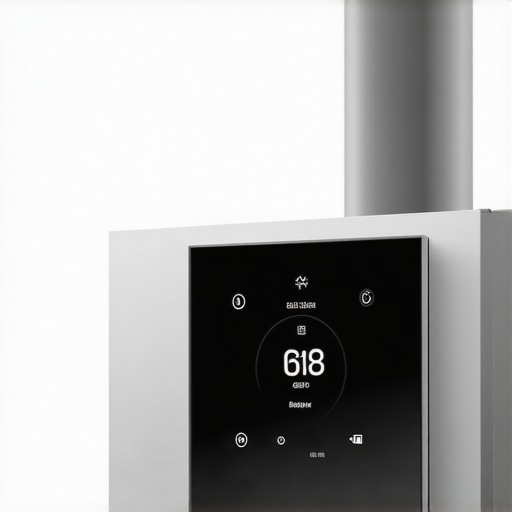
I see it every day: a homeowner spends $400 on a smart thermostat setup or WiFi thermostat integration, thinking it will magically lower their bills. They love the remote thermostat access, but they’re still calling me because the furnace is short-cycling. If your ducts are leaking, the thermostat is getting false readings. It thinks the house is satisfied because the hallway is warm, while the bedrooms are freezing. Or worse, the furnace is hitting its high-limit switch because the air isn’t moving fast enough to strip the heat off the exchanger. This is why pellet stove repair and auxiliary heating become necessary—because the primary system is failing at the delivery stage. When we perform a proper smart thermostat setup, we also look at the duct design. We ensure the sensors are placed in ‘representative zones.’ If the air is leaking before it reaches those zones, the smartest computer in the world won’t save you from a $500 gas bill in January. You need to treat the system as a whole organism—from the Sparky who wired the 240V line to the duct sealer who stopped the leaks in the plenum. If you’re struggling with a system that just won’t perform, mini split troubleshooting might be an option for those ‘impossible’ rooms, but for a central system, mastic is your best friend. Comfort isn’t magic; it’s physics. And physics says that if you don’t control the air, you don’t control the temperature. Check your privacy policy for any service contracts, then get a pro out there to pressure test your ‘Tin’ before the next polar vortex hits.