
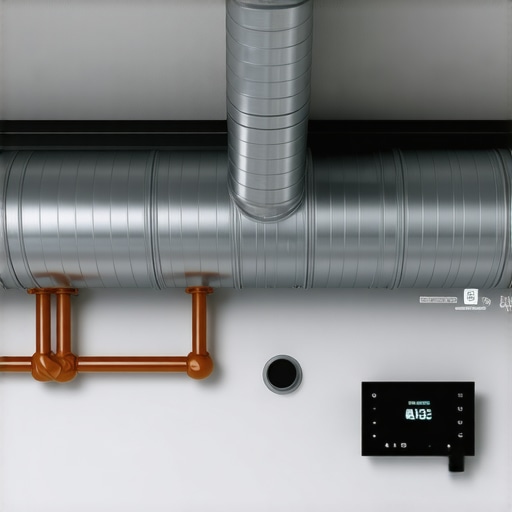
The Airflow Manifesto: Why Your High-Efficiency Furnace is a Paperweight Without Sealed Ducts
I’ve spent thirty years crawling through blown-in insulation and dodging rusty nails in crawlspaces, and if there is one thing I’ve learned, it’s that homeowners are obsessed with the wrong thing. They want the shiny new 28 SEER2 heat pump or a fancy two-stage furnace installation, thinking the box on the pad is a magic wand. It’s not. My old mentor, a grizzly veteran who could smell a refrigerant leak from the driveway, used to hammer this into my head: “You can have the most powerful heart in the world, but if your arteries are leaking, you’re still going to die.” That is exactly what your ductwork is—the circulatory system of your home. If you are in a cold climate like Chicago or the Northeast, where the winter wind howls and the frost-line is deep, those leaks aren’t just an inconvenience; they are a direct assault on your wallet and your safety.
“The most expensive equipment in the world cannot overcome a bad duct system. Air will always take the path of least resistance, which is usually through a gap in the supply plenum rather than the register in your bedroom.” – Industry Axiom (ACCA Manual D Principles)
In 2026, as we transition fully into the R-454B and A2L refrigerant era, the cost of heating is only going up. If you’re still relying on old, gray duct tape (which, ironically, should never be used on ducts) to keep your heat pump installation running efficiently, you’re throwing money into the void. Here is the technical reality: your HVAC system is a closed-loop pressure vessel. When the blower motor kicks on, it creates static pressure. If that pressure escapes through unsealed joints into an unconditioned attic or crawlspace, the system has to run longer to meet the thermostat’s demand. This is particularly dangerous for baseboard heater repair scenarios or older homes where the two-stage furnace installation wasn’t balanced correctly. Let’s look at the five forensic signs that your home is hemorrhaging BTUs.
1. The “Ghost Breeze” and Pressure Imbalance
Have you ever walked past a power outlet or a light switch and felt a tiny draft of cold air in the dead of winter? That’s not a ghost; it’s a physics lesson. This is often caused by the “stack effect” or poor return-air duct sealing. If your return ducts are sucking air from the wall cavities instead of the rooms, it creates a vacuum that pulls freezing outdoor air through every crack in your home’s envelope. This often leads people to think they need propane conversion services or a bigger unit, when they actually just need a bucket of pookie (mastic) and some fiberglass mesh. In hospital HVAC zoning, we call this a failure of pressurization. Your home should be slightly positive, but leaky ducts make it negative, sucking in dust, pollen, and cold.
2. The Attic Is Warmer Than Your Living Room
In the North, we fight the constant battle of the “Cracked Heat Exchanger.” If your ducts are leaking in the attic, you are essentially heating the squirrels while your family shivers. During a portable heater safety check, I often find homeowners using space heaters because their master bedroom is 62 degrees while the furnace is screaming at 100% capacity. If you climb up there and it feels like a tropical oasis, you’ve found your problem. The delta-T (temperature difference) between your supply air and the room air is being lost before it ever reaches the boot. This is where remote thermostat access can actually trick you; the app says it’s 70 degrees because the sensor is in the hallway, but the bedrooms are freezing because the “tin knocker” who built the house thirty years ago didn’t seal the elbow joints.
“Standard duct leakage in residential construction often exceeds 20% of total airflow, leading to significant sensible heat loss and degraded indoor air quality.” – ASHRAE Standard 62.2
3. Excessive Dust and the Humidifier Struggle
If you find yourself constantly dusting or if your humidifier installation doesn’t seem to be helping your dry skin, look at your returns. Return-side leaks are the vacuum cleaners of the HVAC world. They pull in attic insulation, fiberglass particles, and basement dampness. This bypasses your filter and coats your evaporator coil in a layer of muck. This is why I tell people that dryer vent cleaning and duct sealing go hand-in-hand for air quality. If you’ve recently had a heat pump installation, that dirty coil will kill your efficiency, causing the system to “short cycle” and fail to remove latent heat in the summer or provide enough sensible heat in the winter.
4. The Whistle of High Static Pressure
Do your vents hiss or whistle when the gas kicks on? A lot of “Sales Techs” will try to sell you a new blower motor or a whole new 15-grand system. Don’t fall for it. Often, whistling is a sign of restricted airflow combined with leaks. When air is forced through a tiny gap at high velocity, it creates noise. Proper sealing combined with baseboard heater repair or duct resizing is the only fix. If you’re looking into mini-split troubleshooting, you’ll find that those systems avoid this by being ductless, but for central air, the tin knocker’s skill is the difference between a quiet home and one that sounds like a jet engine. Check out our HVAC repair secrets for more on how to spot these airflow bottlenecks.
5. Sky-High Utility Bills Despite New Equipment
This is the big one. If you’ve just invested in a high-AFUE two-stage furnace installation and your bills haven’t dropped, your ducts are the culprit. The juice (refrigerant) and the gas can only do so much. If 30% of your heated air is dumping into the crawlspace, you’re effectively paying a 30% tax on every breath you take. Before you call for refrigerant leak detection, check your static pressure. Sealing ducts with mastic—or “pookie” as we call it in the truck—is the single most cost-effective upgrade you can do in 2026. It’s not sexy, it’s not a smart gadget, but it’s the physics of comfort. If you’re confused about whether your furnace is the issue or the ducts, read up on furnace repair myths to see how much of a role airflow really plays.
The Solution: Mastic, Mesh, and Professional Sealing
Don’t let a “Sparky” or a general handyman slap some silver tape on your ducts and call it a day. Real duct sealing requires a forensic approach. We use pressure testing to find the leaks and then apply professional-grade mastic. Unlike tape, mastic doesn’t dry out and peel off when the attic hits 130 degrees or drops to sub-zero. It stays flexible and airtight for decades. If you are planning any major upgrades this year, like a humidifier installation or a new heat pump installation, make duct sealing part of the contract. For expert help, you can always contact us to get a real tech, not a salesman, out to your house. Remember, comfort isn’t about the temperature on the wall; it’s about the movement of air through the house. Stop wasting heat and start sealing your system. Your wallet will thank you when the January freeze hits.


This post really hits home about the importance of duct sealing. I’ve seen firsthand how small leaks can cause huge inefficiencies in home heating—especially in older houses. I recently had my ducts professionally sealed after noticing that my upstairs rooms never seemed as warm as the lower floors, despite running the furnace at high capacity. The technician used pressure testing and mastic, and the difference was remarkable. Utility bills dropped noticeably within a month, which was a pleasant surprise.
One thing I wonder about, especially with the focus on sealing and mastic, is the longevity of these solutions in the face of temperature extremes. Has anyone experienced issues with duct sealant deteriorating over time, or does the quality generally hold up well for decades? Also, are there specific signs that indicate it’s time for re-sealing, beyond the obvious ones like increased bills or drafts? Understanding these indicators could help other homeowners catch problems early before significant energy waste occurs.