
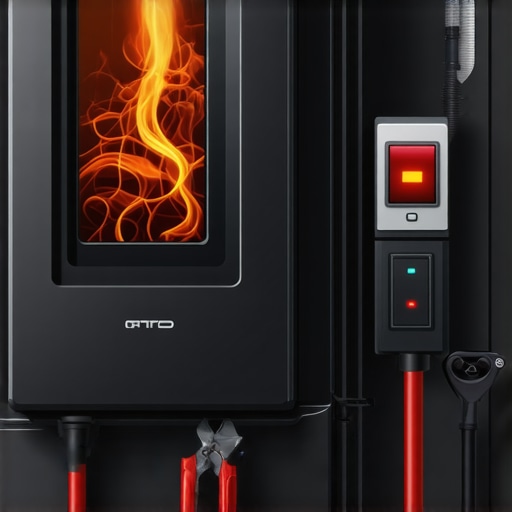
The Mechanical Click of Death: Why Your Furnace is Short Cycling
You know the sound. You’re lying in bed on a January night in Chicago, and you hear the furnace kick on. The draft inducer motor whirs, the igniter glows, and then—click. The flame dies, but the blower keeps running like a panicked animal. That’s not a ghost; that’s your high-limit switch screaming for help. In my thirty years crawling through crawlspaces and dodging ‘Sparky’ (the local electrician who forgets to ground his work), I’ve seen more limit switches swapped by ‘Sales Techs’ than I have actual solved problems. Most of those parts were fine; the system was just choking to death. My old mentor used to scream at me until his face matched the color of a glowing heat exchanger: ‘You can’t cool what you can’t touch, and you can’t heat what you can’t move!’ This is why airflow matters more than horsepower. If your furnace is overheating, you aren’t looking for a magic part; you are looking for a physics failure. We are going to perform a forensic diagnosis on your heating system for the 2026 season, focusing on the limit switch—the safety cop of your furnace—and why it’s probably not the part that’s actually broken.
“The most expensive equipment in the world cannot overcome a bad duct system.” – Industry Axiom
The Anatomy of an Overheat: Thermodynamic Zooming
When we talk about a furnace ‘overheating,’ we are talking about the heat exchanger exceeding its designed temperature threshold. Inside that steel box, combustion gases are roaring. The job of your blower motor is to strip that heat off the metal and push it into your living room. If that heat isn’t removed fast enough, the metal expands too much, risking a cracked heat exchanger—a one-way ticket to carbon monoxide poisoning. The limit switch is a bimetallic disc or a sensor that breaks the electrical circuit to the gas valve when things get too hot. It is the last line of defense. But here is the kicker: if you just replace the switch without fixing the airflow, the new one will fail in a month, or worse, the heat exchanger will crack under the stress. We need to look at system performance testing to see the Delta-T—the temperature difference between the return air and the supply air. If that gap is too wide, you’re cooking your components. Before you call for professional help, you need to understand the ‘why’ behind the ‘what.’
Tip 1: The HEPA Filter and the Static Pressure Trap
By 2026, everyone wants a HEPA filter system. They want the air in their house to be cleaner than a surgical suite. But here is the trade-off: high-efficiency filters are thick. They have high resistance to airflow, which we call ‘static pressure.’ If you take an old furnace designed for a cheap fiberglass filter and slap a high-MERV HEPA filter in there, you are essentially putting a pillow over its face. The blower can’t pull enough air across the heat exchanger, the temperature spikes, and the limit switch trips. I’ve seen homeowners go through three furnace filter replacements in a season, thinking they have a dust problem, when they actually have an airflow volume problem. If you’re going high-HEPA, you likely need a larger return air drop or a dedicated media cabinet to increase the surface area. Otherwise, you’re just paying for a service call to have a tech tell you your ‘fancy filter’ is killing your furnace. Don’t be the guy who buys a Ferrari and puts a cork in the exhaust pipe.
Tip 2: The Draft Inducer and the Combustion Path
If your furnace starts and immediately dies, people often jump to pilot light relighting or furnace flame sensor cleaning. Those are important, but they don’t cause ‘overheating’ trips. If the limit switch is opening, you need to look at the draft inducer motor repair. The inducer isn’t just there to vent the exhaust; it ensures the flame is pulled through the heat exchanger correctly. If that motor is dragging or the venting is restricted by a bird’s nest, the heat builds up in the combustion chamber instead of moving through the system. I’ve been on rooftops in a polar vortex where the vent pipe was iced over. The furnace would run for five minutes, the heat would back up, and the limit switch would pop. This isn’t a ‘part’ issue; it’s a ‘breathing’ issue. You can find more about these common failures in our furnace repair myths debunked guide. Always check the exhaust and the inducer before you start blaming the switch.
“A furnace shall be installed so that the heated air displacement shall be such that the temperature rise through the furnace is within the range specified on the nameplate.” – NFPA 54 / ANSI Z223.1
Tip 3: The 2026 Limit Switch—Testing vs. Tossing
In 2026, we are seeing more sophisticated ‘Smart’ limit switches that communicate with the control board. You can’t just bypass these with a jumper wire unless you want to fry a $600 board or burn your house down. To test a limit switch, you need a multimeter to check for continuity. If the switch is ‘open’ (no continuity) while the furnace is cold, it’s bad. But if it only opens while the furnace is running, it’s doing its job! That means you have an airflow issue. Check your capacitor replacement services too; a weak capacitor on your blower motor will cause the fan to spin slower than it should, failing to remove enough heat. If the motor isn’t hitting its rated RPMs, the heat exchanger turns into a toaster oven. We often recommend UV light installation for HVAC to keep the internal coils clean—even on a furnace-only setup—because mold and ‘dirty sock syndrome’ can actually coat the secondary heat exchanger in high-efficiency furnaces, adding more resistance to the air path.
The Forensic Conclusion: Repair or Replace?
When I find a tripped limit, I’m looking for the ‘smoking gun.’ Is it pookie (mastic) blocking a return? Is it a dead draft inducer motor? Is it a furnace flame sensor that’s so dirty it’s causing weird ignition delays? If your furnace is over 15 years old and the limit switch is tripping constantly, you are likely dealing with a secondary heat exchanger that is clogged with ‘goop’ from improper combustion. At that point, you’re looking at a $2,000 repair on an $8,000 machine. That’s when I tell homeowners to stop throwing good money after bad. We do system performance testing to give you the hard numbers on your AFUE (Annual Fuel Utilization Efficiency). If you’re losing 30% of your heat out the chimney because the system is scaled up, it’s time to upgrade. Whether it’s electric heater services or a new high-efficiency gas unit, make sure the ‘Tin Knocker’ who installs it actually sizes the ducts. For more technical deep dives, check out our hvac repair secrets to keep your system running through the next decade.
This article really highlights the importance of understanding airflow dynamics when diagnosing furnace issues. I’ve had a similar experience where replacing a limit switch didn’t solve the problem because the real culprit was a clogged vent pipe. It’s a good reminder that many seemingly small parts are part of a larger system that needs to be functioning correctly. I especially appreciate the focus on system performance testing and the Delta-T measurement; it’s such a crucial diagnostic tool. In cold climates, I’ve seen homeowners overlook the importance of proper venting, thinking it’s a minor issue, but it can have serious consequences like overheating and damage to the heat exchanger. I’m curious, has anyone here used UVC sterilization systems to keep the coils clean? I’ve read that mold and dust buildup can add resistance and contribute to overheating, so maintaining clean coils seems like a preventative step that’s worth considering. What other maintenance routines have you found effective in preventing overheat trips?