The Mentor’s Scream: Why Airflow is King in the Warehouse
My old mentor used to scream at me until his face was the color of a cherry-red heat exchanger: ‘You can’t heat what you can’t touch!’ He was a 40-year tin knocker who could smell a cracked cell from the parking lot, and he knew that BTU ratings don’t mean a lick if the air is sitting ten feet above your head. In a warehouse, where you’ve got 30-foot ceilings and roll-up doors that leak air like a sieve, this physics lesson is the difference between a profitable 2026 and going broke paying the utility company. We aren’t just moving air; we are fighting the stack effect, where the ‘juice’ you pay for is floating at the ceiling while your pickers are freezing on the floor. Most ‘Sales Techs’ will try to sell you a bigger box, but a bigger box just wastes more gas if the distribution is garbage. We need to look at the mechanical anatomy of your facility like a living organism.
“The most expensive equipment in the world cannot overcome a bad duct system.” – Industry Axiom
The 2026 Regulatory Cliff: The Death of R-410A and the Rise of A2L
Before we look at specific hardware, you need to understand why your energy bills are about to spike. We are standing on a regulatory cliff. By 2026, the industry is moving fully into A2L refrigerants like R-454B. This transition isn’t just a label change; these are ‘mildly flammable’ gases that require entirely different sensors and safety protocols. If you are still limping along with a 20-year-old chiller or a rooftop unit (RTU) that’s leaking R-22 or R-410A, you are pouring money into a black hole. Repairing these old dinosaurs will become astronomically expensive as ‘gas’ supplies dwindle. Choosing the right high-efficiency furnace installation now is a hedge against the inflation we know is coming to the HVAC supply chain.
1. High-Efficiency Furnace Installation & Two-Stage Combustion
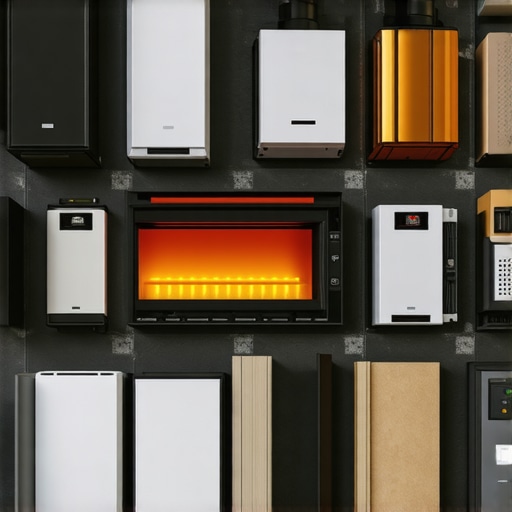
In the cold North, where the wind bites through warehouse corrugated steel, a standard furnace is a dinosaur. I’m talking about two-stage furnace installation. A single-stage furnace is either 100% on or 100% off. It’s like driving a car with the pedal floored or the brakes locked. A two-stage system, however, spends 80% of its time in a lower, more efficient gear. It captures more latent heat through a secondary heat exchanger. We’re talking about AFUE ratings hitting 96% or higher. When we do these installs, we often find the old flue pipe installation was handled by someone who didn’t understand drafting, leading to moisture buildup and acidic rot. If you’re venting into an old masonry stack, a chimney liner installation is mandatory to keep those combustion gases from eating your building from the inside out. For more on why your old unit might be lying to you, check out these furnace repair myths debunked.
2. Dual Fuel Heat Pump Systems: The Best of Both Worlds
For large-scale warehouses, dual fuel heat pump systems are the smartest play for 2026. This setup marries an electric heat pump with a gas furnace. When the temp is above 35°F, the heat pump handles the load efficiently. Once the ‘polar vortex’ hits and the ambient temp drops below the heat pump’s balance point, the gas furnace kicks in. It’s the ultimate backup. The physics here is simple: moving heat is always cheaper than creating it, until it gets too cold for the refrigerant to boil. I’ve seen warehouses slash their mid-season bills by 40% just by letting the ‘Sparky’ wire up a proper dual-fuel controller. You can learn more about the longevity of these systems in this ultimate guide to heat pump maintenance.
3. Ductless Mini-Split Installation for Office Pods and Loading Docks
Why are you heating 100,000 square feet to 72 degrees when your employees are only in the shipping office and the breakroom? This is where ductless mini-split installation shines. By zoning your warehouse, you can keep the inventory at 55 degrees (to prevent pipe freezes) and the people at a comfortable temp. These units use inverter technology to sip power rather than gulp it. If you’ve ever felt the screech of a failing bearing on a massive central blower, you’ll appreciate the silence of a mini-split. But don’t DIY this; I’ve followed too many ‘handymen’ who didn’t vacuum the lineset properly, leaving moisture that turns the oil to acid. If your system is acting up, see this mini-split troubleshooting guide.
4. Attic Insulation for Heating & Thermal Retention
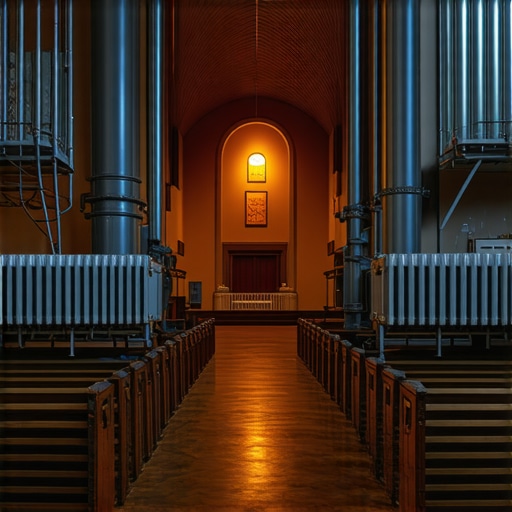
In church heating systems and high-ceiling warehouses, the roof is your biggest enemy. You can have the best furnace in the world, but if your attic insulation for heating is non-existent, you are just heating the clouds. Heat rises via convection, and without a proper thermal break, that expensive air is gone. I’ve been in attics where the ‘Pookie’ (mastic) on the ducts was cracked and dry, blowing hot air directly into the rafters. Sealing your envelope and beefing up insulation is the ‘un-sexy’ part of HVAC that actually yields the highest ROI. It’s about static pressure and thermal resistance. If your ducts are leaking, you’re losing 20-30% of your blower’s capacity before it even reaches the floor.
“Standard practice for commercial buildings requires a minimum ventilation rate to maintain indoor air quality, but uncontrolled leakage is not ventilation.” – ASHRAE Standard 62.1
5. UV Light Installation for HVAC & Airflow Velocity
You might think UV light installation for HVAC is just for hospitals, but in a warehouse with dust and cardboard fibers, your coils get ‘carpeted’ fast. A dirty coil increases static pressure, forcing your blower motor to work harder and draw more amps. UV lights kill the organic growth that acts as a glue for dust. When those coils stay clean, the heat transfer is seamless (wait, I mean efficient). Better heat transfer means shorter run times. Shorter run times mean a lower bill in 2026. If you’re dealing with an aging system, sometimes a baseboard heater repair in a small office is a better stop-gap than replacing a whole unit, but for the main floor, airflow is your only savior. For more technical deep dives, check out these HVAC repair secrets.
The Verdict: Don’t Be a Victim of ‘Sales Tech’ Logic
When the 2026 bills arrive, the warehouse managers who invested in two-stage furnaces and dual-fuel tech will be the ones keeping their margins. Don’t let a ‘Sales Tech’ talk you into a ‘cheap’ 13-SEER unit that will be obsolete and unrepairable in five years. Look at the physics, check your static pressure, and remember that if you can’t touch the air, you can’t heat it. If you’re ready to stop the bleeding, you can contact us for a real diagnosis from someone who actually knows what a manifold gauge is for. { “@context”: “https://schema.org”, “@type”: “HowTo”, “name”: “How to Lower Warehouse Heating Bills”, “step”: [ { “@type”: “HowToStep”, “text”: “Conduct a static pressure test to ensure your current ductwork can handle high-efficiency airflow.” }, { “@type”: “HowToStep”, “text”: “Upgrade to a two-stage furnace or dual-fuel heat pump system to adapt to varying outdoor temperatures.” }, { “@type”: “HowToStep”, “text”: “Install ductless mini-splits in high-occupancy areas like shipping offices to allow for localized climate control.” }, { “@type”: “HowToStep”, “text”: “Seal and insulate the building envelope, focusing on attic spaces and dock doors to prevent heat loss.” }, { “@type”: “HowToStep”, “text”: “Implement UV light systems on evaporator coils to maintain peak heat transfer efficiency and lower blower motor amp draw.” } ] }