The Airflow Manifesto: Why Your 2026 Comfort Depends on 2024 Physics
My old mentor, a man who smelled perpetually of PVC glue and burnt electrical contactors, used to scream at me until he was purple: ‘You can’t cool what you can’t touch, and you can’t heat what you can’t move!’ He’d be pointing a greasy finger at a frozen evaporator coil or a soot-covered heat exchanger. He wasn’t just being a cranky old tin knocker; he was preaching the gospel of thermodynamics. Most homeowners think their HVAC system is a magic box that produces ‘cold’ or ‘heat.’ It isn’t. It’s a heat transfer machine, and if the airflow is restricted, the physics of the system collapses. As we head into the 2026 regulatory landscape, where refrigerants like R-410A are being phased out for A2L alternatives, the margin for error is shrinking to zero. Predictive maintenance isn’t a luxury anymore; it’s the only way to keep your house from becoming a high-priced refrigerator or a walk-in oven.
“The most expensive equipment in the world cannot overcome a bad duct system.” – Industry Axiom
1. Real-Time Static Pressure Testing and Blower Health
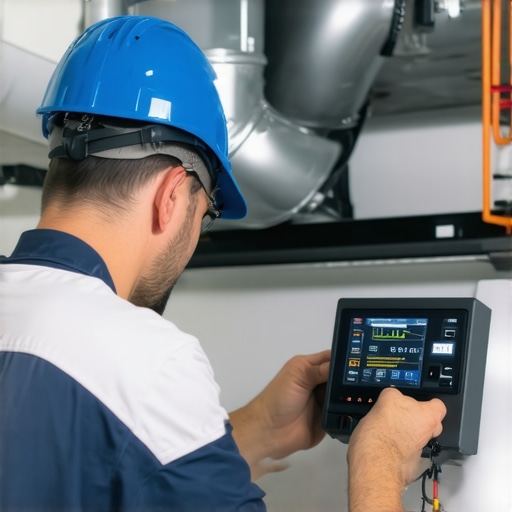
In the North, where the wind bites through your jacket and the furnace repair services are backed up for weeks in January, the biggest killer of equipment is high static pressure. Think of static pressure like blood pressure for your ducts. If your static pressure testing reveals a reading above 0.5 inches of water column, your blower motor is working overtime, screaming like a banshee until the bearings seize. Predictive maintenance alerts in 2026 will use integrated sensors to monitor this pressure constantly. Instead of waiting for the ‘death squeal,’ the system sends a geofencing temperature control alert to your phone the moment it detects a 10% rise in resistance. This usually means a humidifier installation has scaled over or a filter is clogged. By catching this early, you avoid the $900 blower motor replacement and the frantic search for furnace repair myths debunked that lead people to believe a simple reset button will fix a mechanical failure. Proper airflow ensures the heat exchanger doesn’t overheat and crack, a common cause of carbon monoxide leaks that I’ve seen turn a cozy home into a death trap.
2. Wiring Repair for Heating Systems and Geofencing Logic
Most wiring repair for heating systems happens after a component has already fried. A loose terminal block or a pitted contactor creates resistance, which generates heat. In a 2026 predictive setup, voltage drop monitoring becomes the standard. If the system sees the inducer motor drawing 15% more amperage than its baseline, it knows the motor is failing or the vent is obstructed. This is critical for ventless gas heater services and pellet stove repair, where improper combustion can lead to soot buildup. By using geofencing temperature control, the system doesn’t just manage your comfort; it manages its own lifespan. When you leave the house, the system scales back, but more importantly, it monitors the ‘recovery time.’ If it takes longer to heat the house than the algorithm predicts based on outdoor ambient temps, it flags a loss of efficiency—often a sign that you’re losing juice (refrigerant) or your infrared heater installation is failing. Understanding these hvac repair secrets allows you to schedule a pro before the system locks out during a blizzard.
“Design of the air distribution system shall be based on the calculated heat loss and heat gain of the space to be conditioned.” – ACCA Manual J Section 1-4
3. Managing the A2L Transition and Latent Heat
We are entering the era of ‘mildly flammable’ refrigerants. This isn’t a scare tactic; it’s a reality of the 2025/2026 EPA mandates. These new systems require sophisticated leak detection sensors. Predictive maintenance alerts will be the first line of defense, monitoring the suction line temperature and the saturation point of the evaporator coil. In our cold northern climate, we also deal with massive swings in humidity. If your humidifier installation isn’t calibrated, or if your heat pump is short cycling because it’s oversized, you’ll end up with ‘cold icky air’ or dry, static-filled rooms. Predictive alerts can tell if the coil is staying ‘beer can cold’ for too long, which indicates a liquid floodback issue that will eventually kill the compressor. Whether you are looking for evaporative cooler services in the fringe seasons or warranty service plans to cover these high-tech sensors, you need to realize that the old days of ‘set it and forget it’ are over. If you’re running a heat pump, you should check our ultimate guide to heat pump maintenance and repairs to understand why these alerts are your best friend. A sparky might be able to fix a breaker, but only an airflow architect can balance the delicate dance of sensible and latent heat in a modern home.
When the Physics Fails: The Cost of Ignorance
I’ve walked into too many houses where the owner spent $12,000 on a high-efficiency unit but refused to spend $200 on a warranty service plan or a decent static pressure testing. They end up with a Ferrari engine connected to a lawnmower exhaust pipe. The ductwork is the lungs of the house. If you don’t use pookie (mastic) to seal those leaks, you’re just heating your attic or crawlspace. The 2026 failures won’t be because the machines are bad; they’ll be because the installation ignored the physics of the home. If you’re noticing weird smells—like that acidic, sour stench of a compressor burnout—or if your pellet stove repair technician is on speed dial, it’s time to stop reacting and start predicting. For complex setups like mini-splits, don’t DIY the electronics; see our guide on mini-split troubleshooting before you blow a control board. In the end, comfort is a matter of science, not luck. If you want to stay warm when the mercury drops to zero, listen to the sensors, respect the airflow, and don’t let a ‘sales tech’ talk you into a new unit when all you need is a balanced system and a clean coil. Contact us today to get ahead of the 2026 curve.