The Physics of Voice Control: Why Your Mentor Was Right About Airflow
My old mentor used to scream, ‘You can’t cool what you can’t touch!’ This was thirty years ago, long before we were talking to cylinders on our kitchen counters to change the temperature. He’d be hunched over a galvanized return plenum, slapping on Pookie with a chip brush, reminding me that all the horsepower in the world won’t save a system if the static pressure is climbing like a cat on a screen door. As we move into 2026, linking Alexa or Google Voice Control to your HVAC system isn’t just about convenience; it’s about managing the complex thermodynamics of the new A2L refrigerants and SEER2 compliant upgrades that have changed the game for every homeowner from Maine to Minnesota.
“The most expensive equipment in the world cannot overcome a bad duct system.” – Industry Axiom
The Regulatory Cliff: Why 2026 Changes Everything
We are currently standing on the edge of the R-410A sunset. If you’ve had a heat pump installation recently, you’re likely dealing with R-454B or R-32. These are ‘mildly flammable’ refrigerants. Don’t panic—it just means the industry has finally caught up to the reality of global warming potentials. But here is the kicker: these new systems require refrigerant leak detection sensors integrated directly into the furnace or air handler’s logic board. When you link your Alexa or Google Home in 2026, you aren’t just asking for ’72 degrees.’ You are tapping into a system that monitors the saturation temperature of the juice in your coils. If a leak is detected, the smart integration doesn’t just send a predictive maintenance alert to your phone; it can actually shut down the ignition sequence or the compressor to prevent a hazardous concentration of gas. This is a massive shift from the old days of ‘topping it off’—a practice that was always a scam since HVAC is a sealed system, but is now practically impossible with modern sensor arrays.
[IMAGE_PLACEHOLDER]
Thermodynamic Zooming: How Smart Logic Handles Latent Heat
In the cold North, we deal with a specific monster: the polar vortex. When you’re running a geothermal heat pump system or a high-efficiency air-source unit, the defrost cycle is everything. If you’ve integrated your system with Google Voice, you might notice the ‘Aux Heat’ kicking in more often. This isn’t a glitch. The smart logic is calculating the ‘balance point’—that specific outdoor temperature where the heat pump can no longer extract enough sensible heat from the sub-zero air to overcome the heat loss of your structure. By using predictive maintenance alerts, your system now communicates with local weather stations via the cloud. It knows the blizzard is coming before the first flake hits the ground, pre-heating your home to use the thermal mass of your drywall and furniture as a battery.
The Tin Knocker’s Revenge: Airflow and MERV Upgrades
I’ve seen too many ‘Sparkies’ try to wire up a Nest or an Ecobee without understanding the Tin Knocker side of the equation. You can have the slickest voice-controlled interface in the neighborhood, but if you’ve shoved a 5-inch MERV filter upgrade into a rack designed for a 1-inch fiberglass throwaway, you’re strangling the beast. High-efficiency filters increase static pressure. When the static pressure goes up, the blower motor (usually an ECM motor in 2026) has to ramp up its RPMs to maintain the CFM (Cubic Feet per Minute) required to keep the heat exchanger from cracking. This is where dehumidification services become critical. In the summer, if the air moves too fast over that evaporator coil, it doesn’t stay below the dew point long enough to strip the latent heat—the moisture—out of the air. You end up with a house that’s 70 degrees but feels like a damp basement. Your Alexa integration should be programmed to prioritize ‘Dehumidification Mode,’ which slows the blower down to let that coil get ‘beer can cold’ and pull the water out of your air.
“Properly sized equipment is the first step toward achieving the design intent of a high-performance home.” – ACCA Manual J Standard
Linking the Hardware: A Step-by-Step for 2026
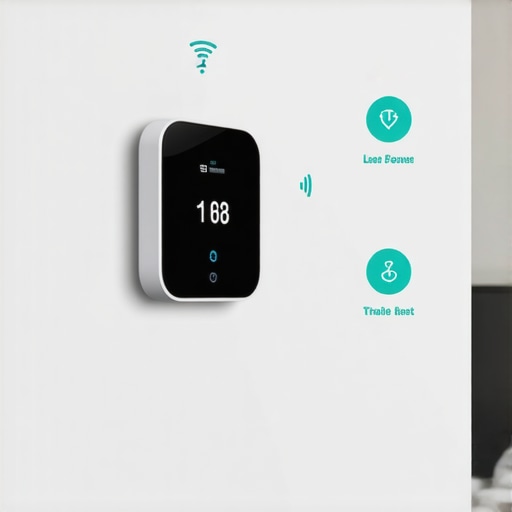
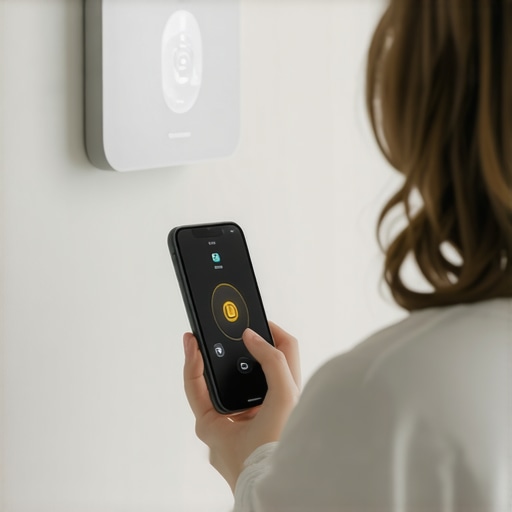
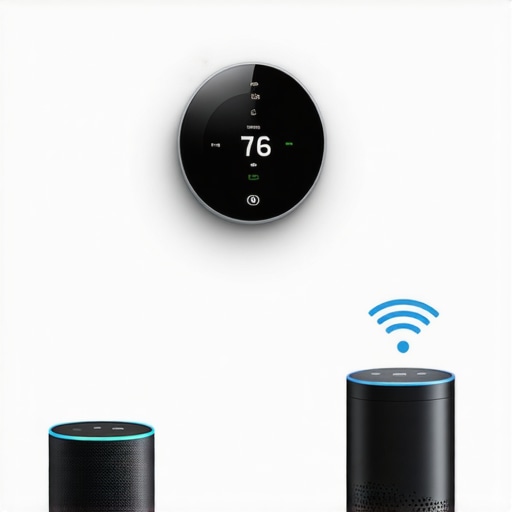
To get your voice assistant talking to your mini-split or central air, you first need to ensure your 24V transformer can handle the load. Many old-school furnaces only have a 40VA transformer, which won’t cut it when you add a smart bridge and multiple sensors. First, install the manufacturer’s proprietary gateway—this is the ‘handshake’ between your HVAC’s logic board and your Wi-Fi. Second, within the Alexa or Google Home app, enable the specific ‘Skill’ for your brand (Carrier, Trane, Mitsubishi, etc.). Third, and this is the part people miss, calibrate your temperature offsets. Most thermostats are mounted 5 feet up on a wall, but you live at 3 feet. Tell your voice assistant to prioritize the remote sensors in your bedroom to ensure the heat pump installation is actually delivering comfort where you sleep, not just where the thermostat hangs. If you’re struggling with a unit that won’t respond, check out this mini-split troubleshooting guide for some technical deep dives.
The Garage and Beyond: Specialized Heating
In our climate, garage heater installation is no longer a luxury—it’s a necessity for protecting electric vehicle batteries and home workshops. Modern ventless gas heater services now offer Wi-Fi modules that link to the same ecosystem. You can tell Google to ‘set the garage to 55 degrees’ an hour before you go out to work on the car. However, safety is paramount. Ensure your smart integration includes a carbon monoxide listener that can kill the gas valve if the sensors trip. For those looking to maximize every ounce of efficiency, I recommend reading these hvac repair secrets. Don’t let a ‘Sales Tech’ tell you that you need a whole new system just because your smart thermostat won’t connect. Often, it’s just a blown 3-amp fuse on the control board or a loose C-wire. If you are ready to modernize your home with SEER2 compliant upgrades, you can always contact us to get a real tech out there, not a guy in a suit with a clipboard. Keeping your system running isn’t magic; it’s physics. Whether it’s a geothermal heat pump system or a standard split, the goal is always the same: moving heat from where you don’t want it to where you do, and doing it efficiently enough that the power company doesn’t end up owning your house. For more on keeping your system alive, see our ultimate guide to heat pump maintenance. Stay warm, keep your filters clean, and stop closing your vents—it doesn’t save money; it just kills your blower.