The Sound of a Service Tech Reaching for Your Wallet
I followed a ‘Sales Tech’ into a basement in a drafty neighborhood last November. This guy, decked out in a crisp white uniform with a ‘Comfort Advisor’ patch, had just finished telling a young couple that their 1950s cast-iron radiator system was a ‘death trap’ and needed a $18,000 replacement. He’d even written up a quote for a shiny new air handler and a heat pump setup that wouldn’t have survived a week against the static pressure of their existing undersized ductwork. I took one look at their unit. The burner wasn’t firing because of a $15 thermal couple and a clogged orifice. This is the reality of the HVAC world as we crawl toward 2026: companies are training salesmen, not technicians. They want to sell you a 10-year warranty plan that isn’t worth the digital paper it’s signed on if they can’t even diagnose a basic flame sensor issue. If you’re looking to protect your home without getting fleeced, you need to understand how the physics of steam boiler repair and modern refrigerant shifts are changing the warranty game.
The 2026 Regulatory Cliff: Why Your Old Warranty Is Changing
We are currently standing at the edge of the R-410A phase-out. By 2026, the industry will have fully pivoted to A2L refrigerants like R-454B and R-32. These are ‘mildly flammable’ gases, and they require a whole new set of sensors, spark-proof contactors, and mitigation boards. If you buy a service plan today for a system being installed in 2026, you aren’t just paying for ‘the juice’ (refrigerant). You’re paying for the specialized training a tech needs to handle these systems without blowing a hole in your wall. The thermodynamic zooming here is simple: these new refrigerants have a lower Global Warming Potential, but they are more sensitive to moisture and non-condensables. A ‘hack’ install that doesn’t pull a proper vacuum to 500 microns will kill these new compressors in half the time it took to kill an old R-22 beast.
“The most expensive equipment in the world cannot overcome a bad duct system.” – Industry Axiom
1. Demand a Real Static Pressure Test in the Contract
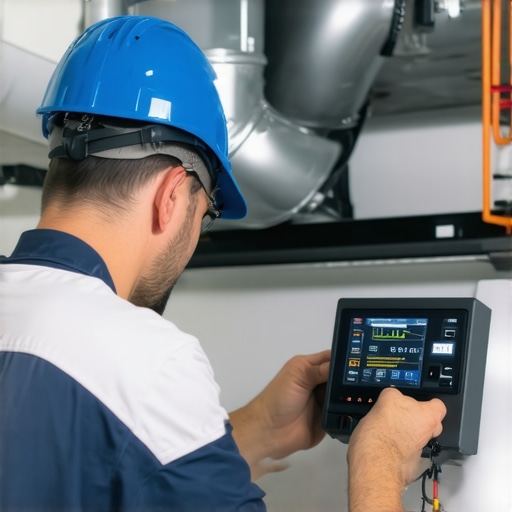
Most homeowners think a warranty covers ‘parts and labor,’ but read the fine print. Most manufacturers—Carrier, Trane, Lennox—will deny a compressor claim if the failure was caused by ‘improper installation.’ In 2026, the biggest loophole for companies is static pressure testing. If your air handler repair involves a tech just swapping a motor without checking the TESP (Total External Static Pressure), they are doing you a disservice. High static pressure is like trying to breathe through a cocktail straw while running a marathon. It overheats the windings and kills the capacitor. If your service plan doesn’t include an annual static pressure check to ensure your heat pump isn’t choking on its own return air, you are overpaying for a plan that won’t actually pay out when the big iron dies. Check out these HVAC repair secrets to see how airflow dictates the life of your machine.
2. The Steam Boiler and Radiator Trap
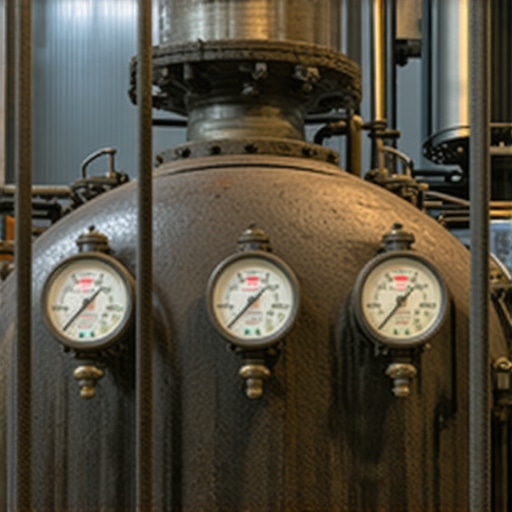
If you live in a cold climate zone like the Northeast or Chicago, you likely have a boiler. Whether it’s baseboard heater repair or a full radiator replacement, 2026 service plans are getting stingy with ‘hydronic’ coverage. Here’s the technical truth: steam is a different animal. You aren’t just moving air; you are managing a phase change. When water turns to steam, it expands 1,600 times in volume. A bad service plan will treat a boiler like a furnace. It’s not. You need boiler maintenance services that specifically cover the ‘low water cut-off’ and the ‘pressuretrol.’ If your technician doesn’t know the difference between a one-pipe and a two-pipe steam system, they shouldn’t be touching your steam boiler repair. I’ve seen ‘modern’ techs try to bleed a steam radiator—which is impossible—because they were never taught the physics of latent heat. Make sure your warranty explicitly covers the heat exchanger and the specific circulator pumps used in solar thermal heating integration if you’ve gone green. For more on this, read our furnace repair myths debunked guide.
3. Verify 24/7 Heating Emergency Response Reality
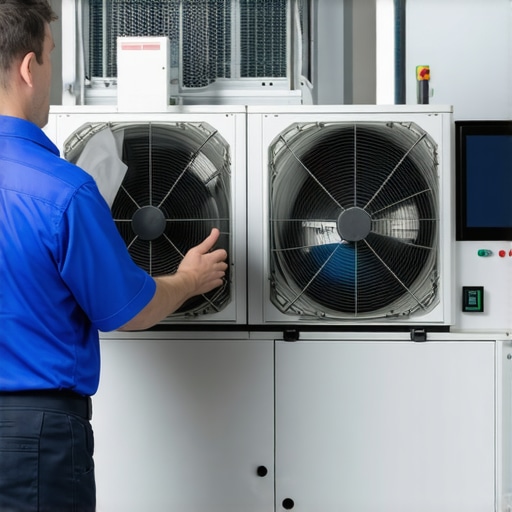
Every company puts ‘24/7’ on their truck, but as a guy who has spent many 2 AMs on a frozen rooftop, I can tell you that ‘available’ doesn’t mean ‘covered.’ In 2026, labor rates for emergency calls are projected to hit $300/hr in major metros. Most warranty plans have a ‘standard hours’ clause. If your boiler dies on Christmas Eve, you might find that your ‘comprehensive’ plan only covers the $50 part, leaving you with a $900 labor bill. When evaluating HVAC repair plans, ask specifically about the ‘holiday and after-hours multiplier.’ If you have a heat pump in a cold climate, you are at risk of the ‘Polar Vortex effect’ where the defrost cycle fails and the unit turns into an ice block. You need a plan that guarantees a tech on-site within 4 hours, not 48. This is especially critical if your primary source of heat is a high-efficiency air handler repair dependent system. You can learn more about managing these units in our ultimate guide to heat pump maintenance.
4. The ‘Pookie’ and Ductwork Exclusion
I’ve seen it a thousand times: a customer buys a top-tier service plan, but their house is still uncomfortable. The tech comes out, sees the unit is ‘fine,’ and leaves. The problem is the ‘Tin Knocker’ (duct guy) who installed the system 20 years ago didn’t use enough ‘Pookie’ (mastic) on the joints. Your warranty covers the box, not the pipes. By 2026, with energy codes getting stricter, you should look for service plans that include ‘duct integrity checks.’ If you’re losing 30% of your conditioned air to the attic, your boiler maintenance services won’t save your utility bill. If a tech isn’t looking at your ‘Suction Line’ (it should be ‘beer can cold’) and checking for duct leaks, the warranty is just a placebo.
“The most expensive energy is the energy you leak into your crawlspace.” – ASHRAE Standards
When to Pull the Plug: Repair vs. Replace
As we head into 2026, the math of radiator replacement vs. repair is shifting. If your system is over 12 years old and uses R-410A, a major leak repair (the ‘Gas’ or ‘Juice’) could cost you $2,000 just in refrigerant. That’s when the warranty becomes a burden rather than a benefit. Don’t let a ‘Sales Tech’ scare you into a new system if yours is mechanically sound, but don’t dump ‘good money after bad’ if the compressor has a sour, acidic smell—that’s a burnout, and the acid will eat any new parts you put in. If you find yourself in a pinch with a specialized system like a ductless unit, you might want to check mini-split troubleshooting before calling the pros. In the end, comfort isn’t magic; it’s physics. Your service plan should reflect the reality of your climate zone and the technical needs of your specific iron, not just the sales goals of a corporate office.