The $22,000 Ghost and the Dead Capacitor
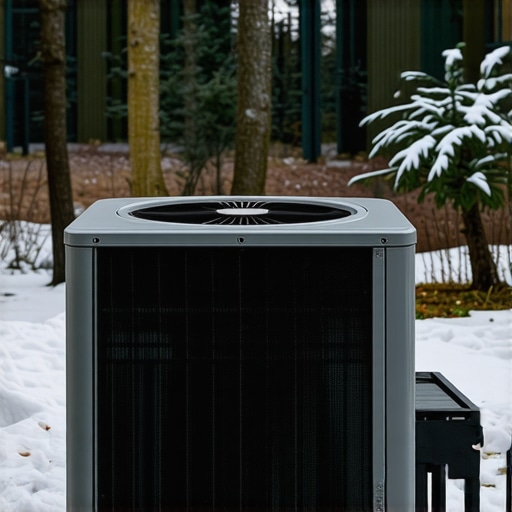
I followed a ‘Comfort Advisor’—which is just a fancy name for a salesman in a clean polo shirt—to a job last November in a drafty suburb where the wind howls off the lake. He’d quoted this family twenty-two grand for a full system replacement, claiming their old heat pump was ‘leaking lethal gas’ and the heat exchanger was ‘about to blow.’ I walked in, smelled the familiar, faint ozone of a struggling motor, and pulled the service panel. The system wasn’t leaking ‘lethal gas’; it was a tripped limit switch replacement waiting to happen because they hadn’t changed their filter in a year, and the airflow was so choked the system was cooking itself alive. I charged them for a service call and a $50 part. That ‘Sales Tech’ is exactly why homeowners are walking into the 2026 R-454B refrigerant transition services blindfolded. They aren’t being told the truth about the physics; they’re being sold a panic.
“Equipment shall be sized according to the heating and cooling loads calculated using ACCA Manual J or another approved methodology.” – EPA Section 608 / ACCA Standard
We are standing at the edge of a regulatory cliff. By 2026, the ‘juice’ we’ve used for two decades, R-410A, is being phased out for new equipment. The replacement, R-454B, is what we call an A2L refrigerant. In plain English? It’s ‘mildly flammable.’ Don’t let that scare you—your propane grill is way more dangerous—but it changes the engineering of every dual fuel heat pump system and geothermal unit we install. If your tech doesn’t understand the ‘why’ behind the ‘how,’ you’re going to pay for their education out of your own pocket.
1. The Static Pressure Reality Check
Most ductwork in this country was thrown together by a tin knocker who was more interested in getting to lunch than calculating friction loss. When we move to R-454B systems, the tolerances for airflow become even tighter. If your ductwork is undersized, your new high-efficiency heat pump will ‘short cycle,’ meaning it turns on and off so fast it never hits the dew point. In the summer, that means your house stays a cold, sticky swamp because you aren’t removing latent heat. Before you sign a contract for a new system, you must demand static pressure testing. This measures the resistance to airflow. If the static pressure is too high, that fancy new compressor will be dead in five years from liquid slugging—where liquid refrigerant migrates back to the compressor because it didn’t have enough ‘air’ to evaporate properly in the coil.
2. The A2L Sensor Requirement and Safety Checks
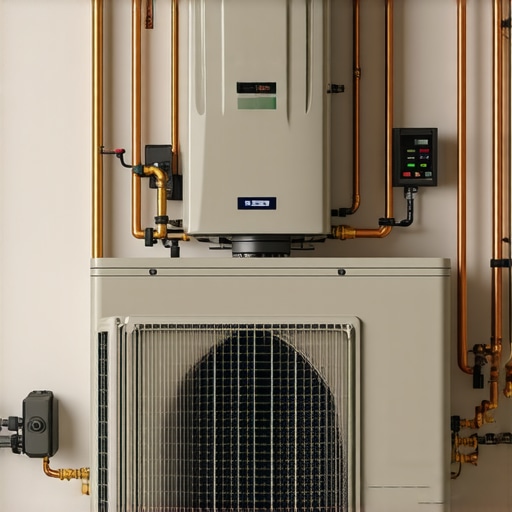
Because R-454B is an A2L refrigerant, the new 2026 units require integrated leak sensors. If a sensor detects a leak in the evaporator coil, it’s designed to shut the system down and kick on the blower to dilute the gas. This is a massive shift in how we handle heat pump maintenance. You can’t just have some ‘sparky’ or a fly-by-night handyman slap these in. If those sensors aren’t calibrated or if the wiring is botched, your unit will lockout in the middle of a blizzard. Speaking of blizzards, I see too many people relying on portable heater safety checks during transition months. If you find yourself plugging in five space heaters because your heat pump can’t keep up, you don’t have a heater problem; you have a zoning system installation or a duct leakage problem. Check out our ultimate guide to heat pump maintenance and repairs to see why these small issues cascade into total system failure.
3. Rebate Application Assistance and The ‘Dual Fuel’ Hedge
The cost of these new R-454B units is going to be 20% to 30% higher than what we’re seeing now. To offset this, the government is throwing money at geothermal heat pump systems and high-efficiency dual fuel setups. But here’s the kicker: the paperwork for rebate application assistance is a nightmare. Most homeowners miss out because their contractor didn’t provide a certified AHRI match-up sheet. A dual fuel system—pairing a high-efficiency gas furnace with an electric heat pump—is the smartest hedge against rising energy costs. It uses the heat pump when temps are above 35°F and kicks over to the ‘gas’ when the polar vortex hits. If you’re struggling with uneven temps, you might also need bypass humidifier repair to keep the air from becoming a static-filled desert, which actually makes you feel colder than the thermostat says.
“The most expensive equipment in the world cannot overcome a bad duct system.” – Industry Axiom
I’ve spent 30 years smelling burnt-out compressors that died because nobody checked the suction line to see if it was ‘beer can cold’ or if the subcooling was actually within spec. Don’t let a salesman talk you into a ‘game-changer’ system without checking your static pressure first. If you’re hearing a whistle in your vents or your unit is screaming like a banshee, it’s time to stop guessing. You can find more hvac repair secrets here or read about furnace repair myths before you spend a dime. If the ‘juice’ is leaking, find the leak—don’t just top it off. Real pros use pookie (mastic) to seal ducts and gauges to verify physics, not sales scripts. If you’re ready for a real diagnosis, contact us today.