The Sound of a Dying Mechanical Heart
If you are hearing a rhythmic thumping or a high-pitched metallic screech coming from your attic or basement, your HVAC system isn’t haunted—it’s failing. After thirty years of dragging my tool bag through crawlspaces and over scorching rooftops, I’ve learned that a rattling unit is the machine’s final plea for mercy before the compressor takes a permanent vacation. Most ‘Sales Techs’ will walk into your mechanical room, hear that rattle, and immediately start filling out a financing form for a $15,000 replacement. They’ll tell you the ‘juice’ is low or that the ‘flux capacitor’ is shot. It’s all smoke and mirrors. As a veteran Airflow Architect, I know that noise is usually a symptom of a physics problem, not a sales opportunity.
My old mentor used to scream, ‘You can’t cool what you can’t touch!’ He would stand there in a grease-stained uniform, pointing at a vibrating blower motor, and explain that airflow matters more than horsepower. If the air isn’t moving across that evaporator coil at the exact CFM (cubic feet per minute) required by your Manual J calculations, you aren’t just losing efficiency—you are killing the machine. In 2026, with the move toward smart building management and complex app-controlled heating systems, the basics of mechanical vibration are more critical than ever. We are dealing with tighter tolerances and higher static pressures that can turn a minor loose screw into a catastrophic failure.
“The most expensive equipment in the world cannot overcome a bad duct system.” – Industry Axiom
The Forensic Diagnosis: Anatomy of the Rattle
Before we touch a wrench, we have to understand the thermodynamic zooming of the situation. Your air handler is essentially a giant lung. When it rattles, it’s like a human wheezing. The noise often originates from the blower assembly—the ‘squirrel cage’—which is the heart of the air distribution system. In our cold Northern climates, where we rely on high-efficiency furnace installation and two-stage furnace installation to survive the polar vortex, the blower works overtime. If that wheel is out of balance by even a few grams, the centrifugal force at 1,200 RPM will shake the entire chassis. This doesn’t just make noise; it creates harmonic resonance that can crack the heat exchanger or vibrate wiring repair for heating systems loose, leading to a potential fire hazard or a complete system lockout.
Fix 1: The Blower Wheel Balance and ‘Pookie’ Intervention
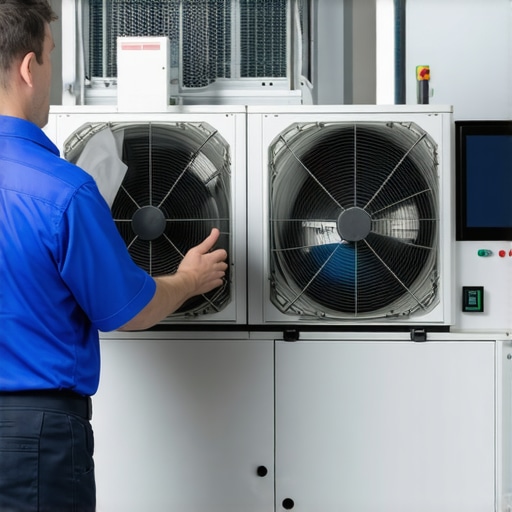
The first place I look when I hear a rattle is the blower wheel. Over time, dust and pet hair bypass even the best filters and collect on the leading edge of the fins. This changes the weight distribution. A ‘Tin Knocker’ (duct specialist) knows that even a thin layer of grime reduces the ‘bite’ the fan takes out of the air, forcing the motor to work harder. Fix: Shut down the power, pull the blower assembly, and clean those fins with a stiff brush and a vacuum. If the housing itself is vibrating against the plenum, it’s time for the ‘Pookie’ (mastic). Applying a thick bead of professional-grade mastic or vibration isolation strips can dampen the sound. While you’re in there, check the motor mounts. Rubber grommets dry out and crack in the dry heat of a high-efficiency furnace, and replacing these $5 parts can save you a $600 motor replacement later. For more on keeping things running smooth, check out these hvac repair secrets.
Fix 2: Resolving Static Pressure and Ductwork ‘Oil-Canning’
Sometimes the rattle isn’t in the unit; it’s in the ducts. This is known as ‘oil-canning,’ where the thin metal of the supply duct pops in and out due to pressure changes. This is a classic sign of poor Manual J calculations. If the duct is too small for the blower’s output, the static pressure spikes. It’s like trying to blow a gallon of air through a cocktail straw. This is especially common in hospital HVAC zoning or large residential smart building management systems where dampers are constantly opening and closing. Fix: You may need to add a bypass damper or increase the size of the return air drop. If you have app-controlled heating systems, you can sometimes recalibrate the variable speed motor to a lower CFM, provided it doesn’t drop the airflow so low that the coil freezes. If the system is a heat pump, ensure you’re following the ultimate guide to heat pump maintenance to avoid these pressure spikes.
“Equipment must be sized according to Manual J to ensure proper moisture removal and heat exchange.” – ACCA Manual J
Fix 3: Electrical Component Resonance and Smart Thermostat Setup
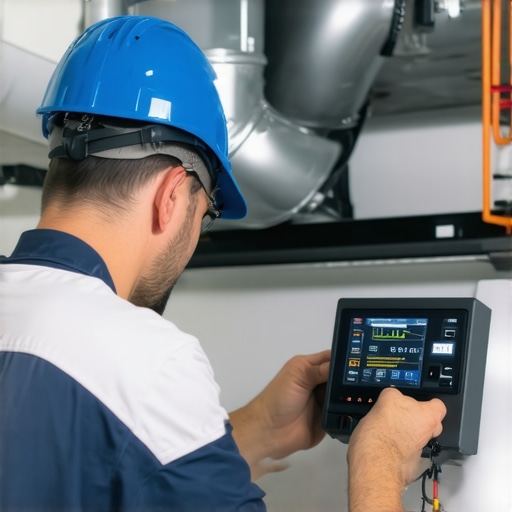
I’ve seen cases where a ‘rattle’ was actually the rapid-fire chatter of a contactor. If your smart thermostat setup isn’t sending a clean 24V signal to the air handler, the relay can hum or vibrate, creating a sound that resonates through the metal cabinet. This is often caused by wiring repair for heating systems that wasn’t done to code, or a common wire that’s ‘bleeding’ voltage. Fix: Use a multimeter to check the voltage at the transformer and the contactor coil. If you’re seeing 18V instead of 24V, your transformer is failing or you have a high-resistance connection. In the era of electric heater services and complex smart building management, these low-voltage issues are rampant. Don’t let a ‘Sparky’ tell you it’s a mechanical issue if the contactor is buzzing like a nest of angry hornets.
Fix 4: The Loose Internal Baffle and Heat Exchanger Check
In 2026, many units use thin-gauge materials to meet SEER2 efficiency standards. Internal baffles or heat shields can vibrate loose. In a furnace, this is dangerous because it can interfere with the flame rollout or indicate a crack. Don’t fall for furnace repair myths that suggest a little noise is normal; it’s usually a sign of metal fatigue. Fix: Inspect the heat exchanger with an infrared camera or a snake-cam. If the rattle is just a loose heat shield, use self-tapping screws and high-temp silicone to secure it. If the rattle occurs during the ‘off’ cycle, it might be the electric heater services components cooling down and contracting—a normal sound—but if it happens while the blower is at full tilt, you have a mechanical looseness that needs addressing immediately.
The Math: Repair vs. Replace in the A2L Era
By 2026, we are fully into the A2L refrigerant transition. If your air handler is more than 12 years old and the repair bill for a major component like a blower motor and a control board exceeds $1,200, it might be time to pull the plug. However, with rebate application assistance available for high-efficiency furnace installation and heat pumps, the sting of a new system is lessened. Always ask for a Manual J calculation before a new install; if a contractor tries to size your unit based on ‘square footage,’ show them the door. They aren’t technicians; they’re salesmen in work boots. Real HVAC work is about physics, static pressure, and the relentless pursuit of perfect airflow. If your unit is rattling, it’s not just a nuisance—it’s an invitation to understand the thermodynamics of your home before the system quits when you need it most. [HowTo: Fixing a Rattling Air Handler 1. Turn off power at the breaker. 2. Remove the blower access panel. 3. Inspect the blower wheel for debris or imbalance. 4. Tighten motor mount bolts. 5. Apply vibration dampening mastic to loose panels. 6. Check ductwork for ‘oil-canning’ and reinforce if necessary.]