The Physics of Survival: Why Your Heat Exchanger is Dying in Silence
My old mentor used to scream, ‘You can’t cool what you can’t touch!’ and he’d yell even louder when it came to heating: ‘You can’t transfer heat through a wall of garbage!’ This is the foundational law of thermodynamics that every ‘Sales Tech’ in a clean uniform forgets the second they try to sell you a 15 SEER2 unit you don’t need. Heat transfer is a contact sport. In a furnace, that contact happens at the heat exchanger—the metal lungs of your home. If those lungs are choked with soot, scale, or dust, your furnace isn’t just inefficient; it’s a ticking time bomb of metal fatigue and potential carbon monoxide. As we barrel toward 2026, with shifting refrigerant mandates and rising equipment costs, keeping your current heat exchanger clean is the only way to avoid a five-figure ’emergency’ replacement.
“The most expensive equipment in the world cannot overcome a bad duct system or a neglected heat transfer surface.” – Industry Axiom
In the cold climates of the North, where the frost line stays deep until April, your furnace isn’t a luxury; it’s life support. Whether you’re running a traditional gas furnace or a sophisticated dual fuel heat pump system, the heat exchanger is the primary point of failure. When it gets dirty, the Delta T—the temperature difference between the return air and the supply air—goes haywire. The furnace runs longer to satisfy the geofencing temperature control, causing the metal to expand and contract far beyond its design limits. This is how hairline cracks start. This isn’t magic; it’s metallurgy.
Sign 1: The ‘Sour Dust’ Aroma and the Soot Ghost
If you walk near your registers and catch a scent that smells like burnt metallic vinegar, your heat exchanger is crying for help. This is often the smell of accumulated dust—or worse, biological growth—slowly baking onto the heat exchange surfaces. In my 30 years of melting in attics, I’ve seen ‘Tin Knockers’ install units in ways that practically invite dust into the cabinet. If your dryer vent cleaning hasn’t been done lately, that lint often finds its way back into the furnace intake. This debris creates an insulating layer. Instead of the heat transferring to your air, it stays trapped in the metal, leading to ‘hot spots’ that cause the heat exchanger to glow cherry red and eventually pop. If you see ‘soot ghosts’—dark streaks on your walls near vents—that’s not just dirt; it’s unburnt fuel particles, a sign that your combustion is incomplete because the exchanger is too fouled to breathe.
Sign 2: The ‘Laziness’ of the Flame (The Visual Diagnosis)
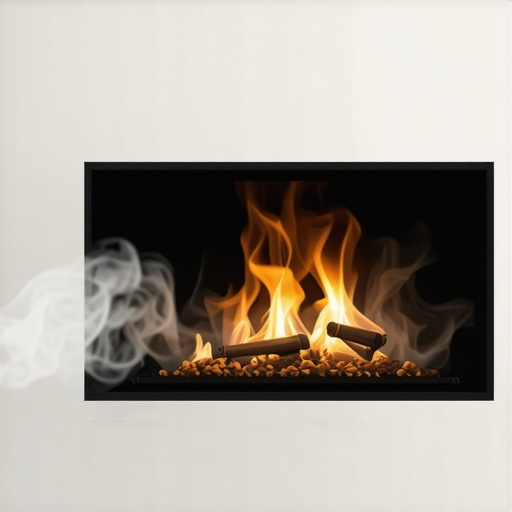
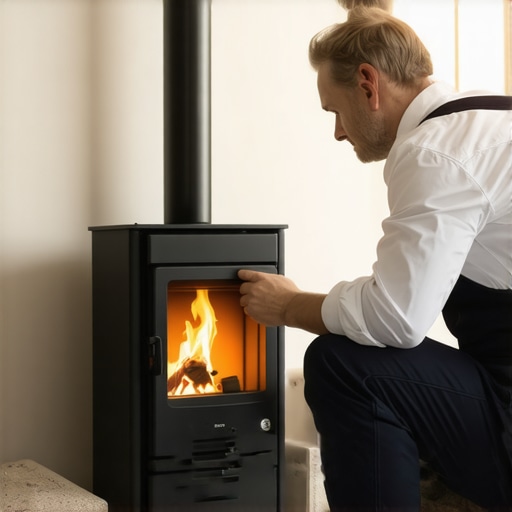
Pop the door off your furnace (carefully) and look at the burners. A healthy furnace has a crisp, blue flame that looks like a tiny blowtorch. If you see a lazy, flickering yellow or orange flame that seems to ‘roll’ out of the burner box, you have a serious problem. This is called ‘flame rollout.’ It happens when the heat exchanger is so blocked with soot or internal scale that the flue gases can’t exit fast enough. The pressure builds up, and the fire looks for the path of least resistance—which is often right out toward the controls and wires. This is why emergency heating repair calls spike during the first real cold snap. A dirty exchanger restricts the draft, turning a precision machine into a smoky campfire. This isn’t just an efficiency killer; it’s a ‘red tag’ offense that will leave you without heat in a blizzard.
“Proper maintenance of heat-transfer surfaces is essential to ensure that design heat-transfer rates are maintained and that equipment life is not shortened by excessive operating temperatures.” – ASHRAE Standard 62.1
Sign 3: The Ticking of Thermal Stress
Every furnace makes noise when it starts, but if you hear a loud ‘bang’ or persistent ‘ticking’ as it cools down, that’s the sound of metal fatigue. A dirty heat exchanger operates at much higher temperatures than intended. This causes the metal to expand more aggressively. If you have mini-split units or radiant floor heating installation handling part of the load, the furnace might ‘short cycle’ more frequently, compounding this stress. This is where preventative maintenance contracts pay for themselves. A tech who actually knows how to use a combustion analyzer can see the internal decay before the metal actually splits. They’ll check your capacitor replacement services needs and ensure the blower motor is moving enough CFM to keep the exchanger cool. If the ‘Sparky’ didn’t wire the high-limit switch correctly, your furnace could be overheating for months without you ever knowing—until the exchanger cracks and the CO detector starts screaming.
The 2026 Deadline: Why Cleaning Now is Mandatory
By 2026, the HVAC industry will be fully submerged in the A2L refrigerant transition. This means new systems will require specialized sensors and potentially higher installation costs. If you can keep your current furnace’s heat exchanger clean and healthy, you avoid being the ‘guinea pig’ for new tech during an emergency. Integrating smart building management and a humidifier installation can help regulate the internal environment of your HVAC system, but nothing replaces a manual cleaning of the ‘Gas’ side of the system. Don’t let a ‘Sales Tech’ tell you that a little soot is ‘normal for its age.’ It’s not. It’s a sign of a slow death. Keep the metal clean, keep the airflow moving, and you’ll keep your money in your pocket instead of in a ‘Tin Knocker’s’ new truck fund.