
The Sound of a Starved System: Why Your Blower is Screaming
I’ve spent thirty winters hauling tool bags across icy rooftops and three decades of summers melting in attics that felt like the inside of a wood-fired pizza oven. After thirty years, you don’t just see HVAC; you hear it. You feel it in the vibration of the floorboards. When I walk into a mechanical room and hear that high-pitched, metallic whistle—the sound of a return air drop trying to suck the paint off the walls—I know exactly what I’m looking at. It’s a starved system. Most homeowners think a filter is there to keep their lungs clean. That’s a nice side effect, but as a veteran tech, I’m telling you: the filter is there to protect the evaporator coil and the secondary heat exchanger from becoming a solid block of bio-organic sludge.
My old mentor, a man who could diagnose a refrigerant leak by the smell of the air coming out of a register, used to scream at me every time I reached for a roll of cheap silver tape instead of the Pookie (mastic). He’d grab me by the collar of my uniform and bark, ‘You can’t cool what you can’t touch!’ He was talking about the boundary layer of air on the coil fins. If you’ve got a cheap, flimsy fiberglass filter that’s failing to catch the small stuff, or if you’ve shoved a high-resistance filter into a system not designed for it, you aren’t touching the air correctly. You’re either letting ‘gunk’ bypass the filter and coat the coil, or you’re choking the ‘juice’ (refrigerant) because there isn’t enough airflow to move the heat. This is the Airflow Manifesto, and as we head into 2026, the stakes for your indoor air quality and your equipment’s lifespan have never been higher.
“The most expensive equipment in the world cannot overcome a bad duct system or improper filtration selection.” – Industry Axiom
Sign 1: The Static Pressure Ghost and the ECM Death Rattle
In the old days, we had PSC motors. They were dumb, heavy, and they just spun. If the filter was dirty, the airflow dropped, and the coil froze. Simple. But today, we’re dealing with sophisticated inverter-driven compressors and ECM (Electronically Commutated Motors) that try to be ‘smart.’ When you have a failing or inadequate filter, your ‘smart’ blower motor notices the resistance. It ramps up its RPMs to maintain the CFM (Cubic Feet per Minute) programmed into its logic board. You might not notice the airflow drop immediately, but you’ll hear the ‘ghost’—a rhythmic thumping or a rising whine as the motor works itself to death. By the time you notice the remote thermostat access app sending you an alert, you’ve likely cooked the motor windings. This is especially critical in two-stage furnace installation setups where the system expects precise airflow for each stage. If you’re seeing your electricity bill spike while your comfort drops, your filter is failing the static pressure test. Upgrading to a MERV 13 filter with a deep-pleated 4-inch cabinet is the only way to get high-level filtration without the motor-killing pressure drop of a 1-inch ‘allergy’ filter.
Sign 2: The ‘Secondary’ Sludge in Modern Furnaces
In the North, where we lean heavily on 90%+ AFUE furnaces, we have two heat exchangers. The secondary heat exchanger is a dense forest of fins designed to extract every last bit of heat from the flue gases. If your filter is failing—meaning it’s allowing ‘bypass’ because the frame is flimsy or it’s simply too porous—that dust hits the wet, condensing surface of that secondary heat exchanger. It turns into a grey, cement-like paste. I recently followed a ‘Sales Tech’—those guys who look like they’ve never touched a wrench and spend more time on their hair than their diagnostics—who told a homeowner in a radiant floor heating installation and furnace combo home that she needed a total $12,000 replacement because of a ‘clogged heat exchanger.’ I took one look at her 99-cent blue fiberglass filter, pulled the blower, and spent an hour cleaning the ‘sludge’ off the fins. She didn’t need a new furnace; she needed a MERV filter upgrade and a tin knocker to install a proper media cabinet. A MERV 13 upgrade in 2026 isn’t just about breathing better; it’s about keeping that high-efficiency Energy Star heating certification hardware from choking on its own breath. For more on how to avoid these traps, check out these hvac repair secrets.
“Air filtration systems shall be designed to provide a pressure drop that does not exceed the maximum allowable for the HVAC equipment.” – ASHRAE Standard 62.2
Sign 3: The 2026 Refrigerant Transition and Short-Cycling
We are currently in the middle of a massive industry shift. R-410A is being phased out for A2L refrigerants like R-454B. These new systems are even more sensitive to heat transfer. If your filter is failing—either by being too dirty or by being too restrictive—the balance of the ‘gas’ is thrown off. On a cold Chicago night, a restricted filter on a heat pump can lead to the indoor coil getting too hot, causing the system to ‘short cycle.’ It turns on, realizes it’s overheating because it can’t shed its heat into the house, and shuts down. This constant on-off-on-off is the silent killer of compressors. If you are looking into financing for heat pump installs, you must factor in the filtration. These new systems often require refrigerant leak detection sensors, and poor airflow can trigger false alarms or, worse, cause the vibration that leads to a leak in the first place. Whether you’re managing boiler maintenance services or a modern solar thermal heating integration, the movement of air (or water) is the heart of the beast. If the heart is struggling, the limbs go cold. If you’re dealing with a system that won’t stay running, you might be falling for one of the common furnace repair myths instead of addressing the actual airflow restriction.
The MERV 13 Solution: Physics over Marketing
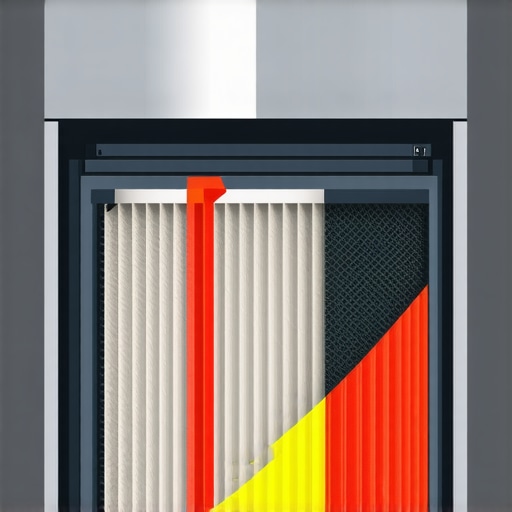
The jump to MERV 13 is often feared by old-school techs who think it will ‘kill the compressor.’ They aren’t wrong if you’re trying to shove a MERV 13 into a 1-inch slot. The math doesn’t work. The surface area is too small. But in 2026, we use 4-inch or 5-inch media filters. By increasing the surface area (the ‘tapestry’ of the pleats, if you want to get poetic, though I prefer to call it ‘the surface physics’), we can catch 98% of airborne particles down to 0.3 microns without killing the suction line pressure. This is essential for maintaining indoor air quality and protecting your heat pump maintenance investment. When I check a suction line and it’s ‘beer can cold,’ I know the airflow is right. If I see ice, I check the filter first, the sparky’s wiring second, and the ‘juice’ levels third. If you’re having trouble with a complex setup, you might need to look at mini split troubleshooting or call in a professional who understands static pressure. Don’t let a $20 part destroy a $15,000 system. Airflow is king, and MERV 13 is the crown. If you have questions about your specific setup, you can always contact us for a real diagnostic, not a sales pitch.

Reading this post made me reflect on how often I’ve seen systems suffer due to improper filtration, especially with those flimsy filters that homeowners tend to select without understanding the repercussions. It’s fascinating how a simple upgrade to a MERV 13 filter with a deep-pleated 4-inch media can dramatically improve airflow and prevent costly repairs down the line. I’ve personally installed such filters in my own HVAC system, and the difference in air quality and system performance is noticeable. The key seems to be increasing surface area while keeping resistance low. I’m curious—what’s everyone’s experience with upgrading to these higher-MERV filters? Have you noticed a significant difference in energy efficiency or system longevity? To me, it’s an investment in both air quality and system health, especially with the industry shift towards more sensitive refrigerants. I think every homeowner should consider this as a proactive maintenance step before problems like short cycling or sludge build-up become critical. Would love to hear if others have seen similar benefits or challenges during their upgrades.