The Sanctuary Shiver: Why Your Church Heating is Failing in 2026
I’ve spent three decades crawling through the bell towers and crawlspaces of century-old churches, and let me tell you something: a sanctuary is an HVAC technician’s greatest nightmare or his masterpiece. Most of what you’re hearing from ‘Sales Techs’—those guys who show up in a clean uniform and a tablet just to quote you a $50,000 replacement—is absolute nonsense. They want to sell you ‘tonnage’ when what you actually need is physics. My old mentor used to scream at me until he was blue in the face, ‘You can’t heat what you can’t touch!’ This is the fundamental law of the Airflow Manifesto. If your warm air is sitting thirty feet up in the rafters while the congregation is shivering in the pews, you don’t have a heating problem; you have a distribution catastrophe. We are moving into 2026, and the regulations on gas and juice are changing, making the old ways of ‘just crank the thermostat’ not only ineffective but incredibly expensive.
1. The Stratification Trap and Failed Staging
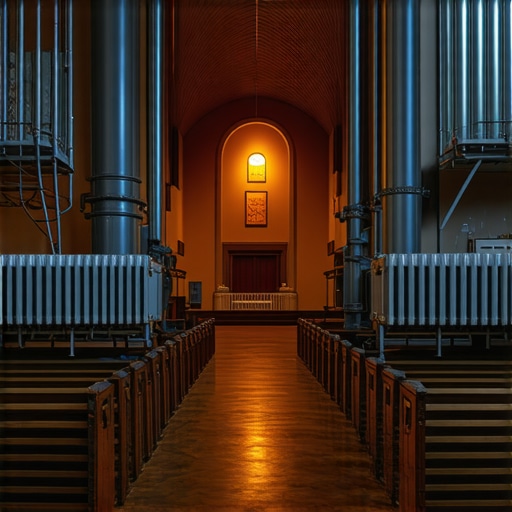
The first reason your church feels like an icebox is simple thermodynamics: stratification. In a high-ceiling environment, heat is a runaway train heading for the roof. If you are still running a single-stage furnace, you are losing the battle. When that big burner kicks on, it dumps a massive volume of hot, buoyant air that shoots straight to the ceiling. By the time the thermostat is satisfied, the floor level hasn’t moved a degree. This is why two-stage furnace installation has become the gold standard for religious facilities. A two-stage system allows the unit to run at a lower, more consistent capacity, keeping the air moving gently without creating that massive heat plume that disappears into the architecture. For many modern churches, we are also seeing a shift toward hyper-heat heat pumps. These aren’t the heat pumps of the 90s that quit when it hit freezing. These units can pull heat out of the air even when it’s -15°F outside, providing a steady ‘soak’ of heat rather than a violent blast. [IMAGE_PLACEHOLDER]
“The most expensive equipment in the world cannot overcome a bad duct system.” – Industry Axiom
2. The Ghost in the Wires: Outdated Relays and Control Logic
You can have the best burners in the world, but if your relay services and thermostat wiring upgrades aren’t up to 2026 standards, the system is essentially lobotomized. I recently walked into a 1920s stone cathedral where they complained of ‘cold spots.’ The Sparky had wired the new thermostats, but he didn’t understand the latency of a massive thermal mass. In a church, you aren’t just heating air; you’re heating tons of stone, wood, and plaster. If your controls aren’t configured for the specific recovery time of the building, the system will short-cycle. Short cycling is a silent killer. It bakes the capacitors and stresses the heat exchanger. We often find that a refrigerant leak detection test on dual-fuel systems reveals that the ‘cold’ is actually the system failing to switch between the heat pump and the gas backup because a $50 relay is stuck. If you aren’t on priority service memberships, these small electrical gremlins often go unnoticed until the Christmas Eve service, when the system finally gives up the ghost.
3. The Airflow Manifesto: Why Your Ductwork is Choking Your Comfort
Air is like water; it takes the path of least resistance. Most church ductwork was designed by a ‘Tin Knocker’ who didn’t have to worry about IAQ improvement services or high-MERV filtration. When you slap a high-efficiency filter onto an old blower, you increase the static pressure. It’s like trying to breathe through a straw while running a marathon. The blower motor screeches, the heat exchanger overheats, and the air velocity drops so low that the heat never reaches the back pews. You need to stop thinking about the furnace and start thinking about the ‘Pookie’ (mastic). Sealing leaks in the return air drops is often more effective than buying a bigger unit. Furthermore, in churches with commercial kitchens, a restaurant kitchen exhaust repair that isn’t balanced properly can actually pull a vacuum on the entire building, sucking cold air in through every window seal and door frame. This ‘infiltration’ is why the pews near the entrance always feel five degrees colder. An annual heating inspection should always include a draft test to ensure you aren’t accidentally turning your sanctuary into a giant exhaust fan.
“Standard practice for commercial buildings requires a minimum ventilation rate to ensure acceptable indoor air quality, yet many older structures fail to meet these metrics due to outdated duct design.” – ASHRAE Standard 62.1
Safety is the final piece of the puzzle. With aging heat exchangers, carbon monoxide detector installation isn’t just a suggestion; it’s a legal and moral mandate. A cracked heat exchanger can leak odorless, colorless toxins into the sanctuary. If you’re noticing a ‘sour’ or ‘musty’ smell when the heat kicks on, that’s not just ‘old building smell’—it could be biological growth on the coils or a failing flue. Before you let a Sales Tech talk you into a massive replacement, check your basics. Are the filters clean? Is the ‘Gas’ (refrigerant) level correct in your heat pump? Is the ductwork sealed with Pookie? Understanding hvac repair secrets can save a congregation thousands of dollars. If your system is truly at the end of its life, don’t just buy what’s on sale. Look into the ultimate guide to heat pump maintenance and repairs to see if a hybrid system fits your needs. And remember, if you’re unsure, it’s better to contact us for a forensic diagnosis rather than a sales pitch. Comfort in 2026 isn’t about horsepower; it’s about precision, airflow, and respect for the laws of physics.