The Anatomy of a Short-Cycling Furnace: Why It Quits Before It Starts
There is a specific sound a furnace makes when it is dying a slow, preventable death. It is the rhythmic, mechanical clicking of a relay followed by the roar of the inducer motor, the orange glow of the hot surface igniter, a brief ‘whoosh’ of gas, and then—silence. That silence is the sound of your control board deciding that your house isn’t safe. I’ve spent thirty winters listening to that cycle in the middle of sub-zero polar vortexes, usually while shivering in a crawlspace because some ‘Sales Tech’ told a homeowner they needed a brand-new $12,000 system when all they really needed was five minutes and a piece of Scotch-Brite. If your furnace shuts off after just a few seconds, you aren’t necessarily looking at a mechanical catastrophe; you are likely looking at a failure in the Psychrometric Logic Engine of the system’s safety circuit.
The Narrative: The Case of the $6,000 Dust Bunny
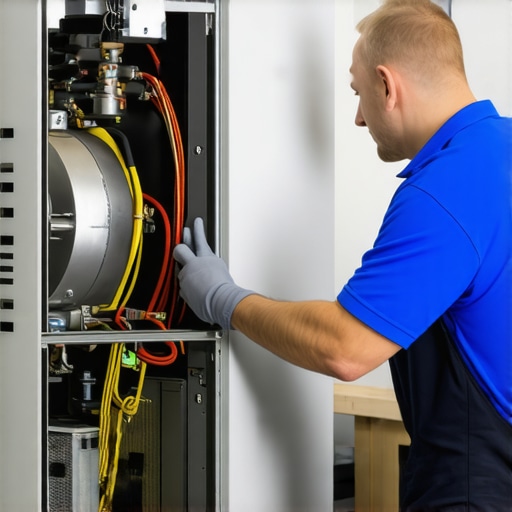
Last January, during a stretch of weather so cold the grease in my van’s door hinges had turned to clay, I followed a technician from one of those ‘Big Box’ HVAC companies. He had quoted a young couple in a drafty Victorian $6,500 for a heat exchanger replacement. He told them the unit was ‘leaking carbon monoxide’ and had ‘tripped the internal safeties’ because the metal was warped. When I arrived for a second opinion, I pulled the burner cover. The heat exchanger was pristine. The actual culprit? A flame sensor coated in a microscopic layer of silica dust from a nearby laundry room. It’s a classic scam. These ‘Sales Techs’ get a commission on equipment, not on repairs. I cleaned the sensor with a $2 wire brush, performed a system performance testing protocol to verify the microamp signal, and had the heat running in ten minutes. You can read more about these common deceptions in this guide to furnace repair myths debunked.
“The most expensive equipment in the world cannot overcome a bad duct system or a neglected safety circuit.” – Industry Axiom
The Physics of Flame Rectification: Why Cleaning Matters
To understand why your furnace quits, you have to understand flame rectification. Your furnace doesn’t just ‘hope’ there is a fire; it needs to prove it. The flame sensor is a simple stainless steel rod that sits in the path of the fire. When the gas ignites, the flame itself becomes a conductor of electricity. The control board sends an AC voltage to the sensor, and the flame ‘rectifies’ it into a tiny DC microamp signal. If the board doesn’t see at least 0.5 to 5.0 microamps within a few seconds, it slams the gas valve shut to prevent your basement from turning into a bomb. Over time, silica and carbon buildup on that rod act as an insulator. The flame is there, but the signal can’t get through. It’s not magic; it’s thermodynamics. If you’re seeing this issue, a limit switch replacement isn’t always the answer—often, it’s just a dirty rod. However, if the high-limit is tripping, you’re likely dealing with an airflow disaster, probably because some tin knocker undersized the return air drop twenty years ago.
The Forensic Diagnosis: Steps to Fix the Short-Cycle
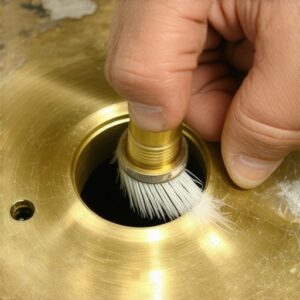
Before you call a sparky or an HVAC pro, check the sequence of operation. First, the inducer motor must create a vacuum to close the pressure switch. If your furnace is in a shop heater services environment, sawdust is the enemy here. Second, the igniter must glow. Third, the gas valve opens. If the flame dies after exactly 3 to 5 seconds, that is your flame sensor screaming for help. Step 1: Power off the unit (don’t be a hero, 120v bites). Step 2: Locate the sensor—it’s the rod on the opposite side of the burner assembly from the igniter. Step 3: Remove the one 1/4″ screw holding it in. Step 4: Lightly rub the metal rod with a fine abrasive. Do not use heavy sandpaper; you’ll create grooves that collect more carbon. Step 5: Reinstall. This simple fix is one of the many hvac repair secrets that ‘Sales Techs’ hate. If the system still fails, we then look at more complex issues like duct design services or potential SEER2 compliant upgrades if the heat exchanger is actually compromised.
The Airflow Manifesto: Beyond the Sensor
In cold northern climates, we don’t just worry about the heat turning off; we worry about why it was working so hard in the first place. If your furnace stays on for ten minutes and then quits, that’s not the flame sensor—that’s the limit switch. This usually means the ‘juice’ (heat) isn’t being pulled off the heat exchanger fast enough because your filter is a ‘dirty brick’ or your ducts are choked. We see this often in hospital HVAC zoning or large residential builds where the ductless mini-split installation was used as a band-aid for a failing central system.
“Properly sized equipment shall be selected based on heat loss and heat gain calculations performed in accordance with ACCA Manual J.” – ASHRAE Standards
If you find yourself constantly resetting the system, you might consider app-controlled heating systems that can alert you to a failure before your pipes burst. For those with allergies, a UV light installation for HVAC can also keep the internal blower components clean, ensuring that the airflow stays ‘beer can cold’ in the summer and ‘fire-breathing dragon hot’ in the winter. If your setup involves more complex venting, such as ventless gas heater services, the safety protocols are even stricter because there is no chimney to hide your mistakes.
When to Pull the Plug: Repair vs. Replace
If you’ve cleaned the sensor and checked the airflow, but the inducer motor sounds like a bag of marbles in a blender, you’re facing a $500 repair. Is it worth it? On a 15-year-old mid-efficiency furnace, maybe. But if the heat exchanger is rusted out, you’re looking at a $8,000 to $12,000 replacement to get into a modern, high-efficiency unit. This is where you need to be careful with SEER2 compliant upgrades. The new 2025 regulations are changing the gas (refrigerant) we use, which means the price of everything is going up. If your furnace is part of a dual-fuel heat pump system, check out our guide to heat pump maintenance to ensure the whole system is balanced. Remember, comfort isn’t just a number on a thermostat; it’s a result of proper duct design services and a technician who cares more about static pressure than their sales commission. Don’t let a ‘Sales Tech’ turn a $2 cleaning job into a $15,000 debt.