The Eerie Silence of a Mid-January Lockout
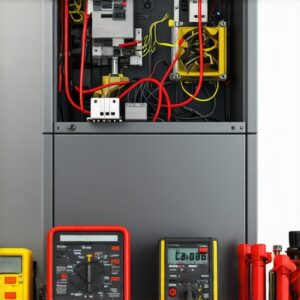
It’s 3:00 AM in the middle of a sub-zero cold snap. You wake up not to the sound of your alarm, but to the lack of sound. That rhythmic, low-frequency hum of your furnace has been replaced by a deafening, cold silence. You trek down to the basement, and there it is: a blinking red LED on the control board—a diagnostic code for ‘Flame Rollout’ or ‘Ignition Failure.’ This isn’t just a nuisance; it’s the physical manifestation of a neglected system screaming for help. Most homeowners think a winter tune-up is just a guy with a shop vac and a flashlight. They’re wrong. Without a proper combustion analysis, you aren’t getting a service; you’re getting a performance. If your tech didn’t pull out a digital analyzer that costs more than your first car, they didn’t actually check your furnace.
“The most expensive equipment in the world cannot overcome a bad duct system, nor can it safely operate with an unverified combustion profile.” – Industry Axiom
The Physics Lesson: Why Airflow and Oxygen Dictate Your Survival
My old mentor, a grizzly veteran who had more soot in his lungs than a Victorian chimney sweep, used to scream at me, ‘You can’t burn what you can’t breathe!’ He wasn’t talking about human lungs; he was talking about the stoichiometric ratio of a gas burner. This is why airflow matters more than horsepower. Combustion is a chemical reaction, not a magic trick. You need the perfect cocktail of fuel (the Gas) and oxygen. If that ratio is off by even a fraction, you stop producing heat and start producing Carbon Monoxide (CO). I’ve walked into mechanical rooms where the ‘Tin Knocker’ installed a beautiful duct system, but the ‘Sparky’ didn’t wire the inducer correctly, or the intake was choked with a bird’s nest. The result? A yellow, lazy flame that’s essentially a slow-motion poison generator. This is why we preach hvac repair secrets that prioritize chemistry over cosmetic cleaning.
The Anatomy of a Burn: The Forensic Diagnosis
When I perform a forensic diagnosis on a furnace, I’m looking at the organs of the machine. The Inducer Motor is the lungs, pulling air through the heat exchanger. The Gas Valve is the heart, pumping the fuel. The Burners are the digestive system, where the chemistry happens. But the most critical part is the Heat Exchanger—that thin metal wall that separates the toxic flue gases from the air you breathe. During a combustion analysis, we use a probe to measure Oxygen (O2), Carbon Monoxide (CO), and Excess Air. If I see CO levels spiking over 100 PPM in the flue gas before the draft, I know the heat exchanger is likely failing or the secondary heat exchanger is plugged with ‘Pookie’ or debris. This is the difference between a simple furnace repair myth and a life-saving intervention. We don’t just guess; we use the numbers to tell the story of the metal’s integrity.
The North Climate Reality: Cracked Heat Exchangers & AFUE Ratings
In our climate zone, furnaces aren’t just a luxury; they are survival equipment. We deal with extreme temperature differentials that put immense thermal stress on the metal. High-efficiency furnaces (90%+ AFUE) utilize a secondary heat exchanger to squeeze every bit of latent heat out of the combustion process. This creates acidic condensate. If your drainage is backed up or your combustion isn’t dialed in, that acid eats the metal from the inside out. I’ve seen three-year-old units ready for a heat pump replacement or total furnace overhaul because the installer skipped the initial combustion setup. We offer furnace repair services that include checking the manifold pressure in Inches Water Column (IWC). If the gas pressure is too high, you’re over-firing the unit, essentially blow-torching your heat exchanger until it cracks. This leads to flame rollout, where the fire literally jumps out of the cabinet because it can’t find a path to the flue.
“Test, don’t guess. Combustion analysis is the only way to verify that a fuel-burning appliance is operating within the manufacturer’s specified safety parameters.” – ANSI/ACCA Standard 12
The Math: Repair vs. Replace
Homeowners always ask: ‘Is it worth a $600 repair on an 12-year-old unit?’ Here is the cold, hard math. If your heat exchanger is compromised, the unit is legally and ethically ‘dead.’ You don’t patch a heat exchanger; you replace it. However, if our analysis shows the combustion is clean but the flame sensor is dirty or a capacitor is weak, we save you thousands. For those in rural areas, we provide propane conversion services that require even more precise combustion tuning, as propane is denser and more temperamental than natural gas. If the system is truly end-of-life, we utilize HVAC load calculation services to ensure your new unit isn’t oversized. An oversized furnace is a curse; it short-cycles, never dehumidifies (in the summer), and wears out its components twice as fast. We also assist with rebate application assistance to make sure you aren’t leaving money on the table when upgrading to a high-efficiency 96% AFUE beast.
The Invisible Threat: Why Digital Probes Beat Visual Inspection
A ‘Sales Tech’ will look at a blue flame and tell you it’s fine. I’ve seen blue flames that were putting out 2,000 PPM of Carbon Monoxide because the secondary heat exchanger was partially blocked. You can’t see CO. You can’t smell it. But my analyzer sees everything. It measures the ‘Stack Temperature’—the heat leaving your house through the chimney. If that temp is too high, you’re literally burning money and throwing it into the sky. We also recommend whole-home humidifiers to protect your wood floors and your sinuses, but even those need to be integrated into the system’s airflow logic. For new builds, our new construction heating design ensures that the ductwork can actually handle the static pressure required for modern high-static blowers. Don’t wait for a predictive maintenance alert from your smart thermostat to tell you the house is 45 degrees. Get the analysis done before the first snowflake hits the ground.