The Anatomy of Silence: Why Your Pellet Stove Quit
There is a specific kind of silence that happens in a house during a Northeast winter when the heating system gives up. It’s not just the absence of noise; it’s a heavy, cold stillness that starts at the floorboards and works its way into your bones. As a tech who has spent three decades dragging tools through snowdrifts to reach steam boiler repair calls and industrial hotel boiler services, I’ve heard every sound a failing machine can make. But when a pellet stove stops feeding, it’s usually preceded by a agonizing, rhythmic clunk-clunk-clunk of an auger motor trying to commit suicide against a jam of compressed sawdust. My old mentor used to scream at me, ‘You can’t cool what you can’t touch, and you can’t burn what you can’t move!’ He was a man who understood that HVAC isn’t about magic; it’s about the physics of movement. This is why airflow and mechanical transport matter more than the horsepower of the unit. Whether you are dealing with baseboard heater repair or a high-end pellet stove, the transport mechanism is the heart of the system. If that auger isn’t turning, your BTU output is exactly zero.
“The most expensive equipment in the world cannot overcome a bad duct system or a failed fuel delivery mechanism.” – Industry Axiom
The Forensic Diagnosis: Understanding the Auger System
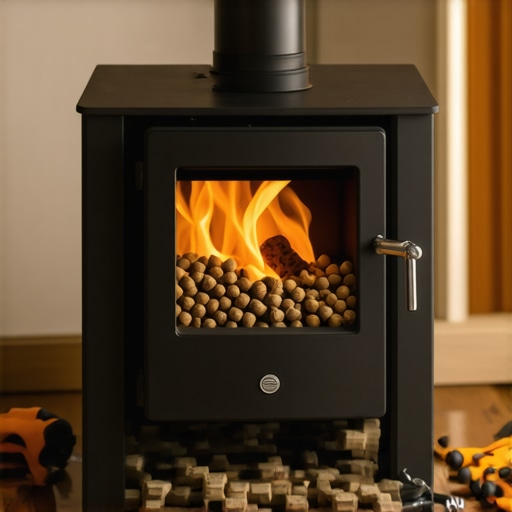
To fix a jam, you have to understand the mechanical anatomy of the feed system. Your pellet stove is a miniature combustion plant. It relies on a low-torque, high-ratio gear motor (the auger motor) to lift pellets from a hopper and drop them into a burn pot. This isn’t just about ‘fuel.’ It’s about thermodynamics. When the draft inducer motor creates a vacuum, it signals the controller that it’s safe to feed. If that draft inducer motor repair was neglected, or if the vacuum switch doesn’t see enough negative pressure, the auger won’t even try to turn. But let’s assume the lights are on and the motor is humming but nothing is moving. You have a jam. This is often caused by ‘fines’—the dust at the bottom of the pellet bag that gets compressed into a solid, brick-like mass. It’s the same principle we see in restaurant kitchen exhaust repair; when grease and particulates build up, the system chokes. In a pellet stove, that dust turns into a mechanical brake. You might need capacitor replacement services if the motor’s start capacitor has weakened, leaving it without the ‘oomph’ to break through a minor obstruction. Understanding these hvac repair secrets can save you a $300 service call just to vacuum out some dust.
Step 1: The Hopper Deep Clean
The first step isn’t reaching for a wrench; it’s reaching for a shop vac. Empty the hopper completely. You’d be surprised how many homeowners think their stove is broken when they just have ‘bridging.’ This happens when pellets arch over the auger intake, creating a hollow pocket. If you’re in a humid environment, pellets can swell. While we aren’t in the swampy South, even a North-bound basement can have enough humidity to turn pellets into sawdust mush. Vacuum the intake throat. If you see a thick layer of dust at the bottom, you’ve found your culprit. This dust increases the friction on the auger flighting. It’s the same reason we emphasize annual heating inspection for larger systems; debris is the silent killer of efficiency. If the motor is still struggling after a cleaning, you might be looking at blower motor replacement issues elsewhere in the system, but usually, the auger just needs to breathe.
Step 2: Inspecting the Draft Inducer and Pressure Switch
Before you blame the auger, look at the draft inducer motor. These small motors are responsible for pulling air through the burn pot and exhausting the spent gasses. If the inducer is sluggish, the vacuum switch won’t close. No vacuum, no pellets. I’ve seen ‘Sales Techs’ tell a sweet old lady she needs a $5,000 stove replacement because the auger ‘died,’ when in reality, the venting was just clogged with fly ash. This is why I tell people to look at furnace repair myths; the most obvious symptom is rarely the actual cause. A simple draft inducer motor repair or even just cleaning the centrifugal fan blades can restore the vacuum and get the auger moving again. It’s about the ‘Thermodynamic Zoom’—the relationship between oxygen intake and fuel delivery.
“Equipment shall be installed in accordance with the manufacturer’s instructions and the terms of its listing.” – ASHRAE Standard 15.2
Step 3: The Mechanical Reverse (The Sparky Method)
If you’re comfortable with a multi-meter, you can check the voltage to the motor. If the motor is getting 120V but isn’t turning, it’s either burned out or physically seized. Sometimes, you can manually rotate the auger backward with a pipe wrench (gently!) to break the ‘clinkers’ or the jam. Watch out for the shear pin. Much like the safety valves we check during hot water heater repair, the shear pin is designed to break so the motor doesn’t burn out. If you’ve got a broken pin, you’re a ‘Tin Knocker’ for the day—you’ll be digging into the mechanical assembly to replace a $2 part. If the motor is getting hot to the touch but not moving, the windings are likely shot. This is common in older units that lack an Energy Star heating certification, as they don’t have the thermal overloads modern units do.
Step 4: Quality Control and the Pellets
Not all fuel is created equal. If you’re buying the cheapest bags at the big-box store, you’re inviting trouble. High ash content and high moisture levels lead to carbon buildup in the burn pot. This carbon can bake onto the end of the auger, effectively welding it shut. It’s the same reason we see steam boiler repair issues when the water chemistry is off; if the input is garbage, the output will be failure. For those with complex setups like mini-splits for backup, you might want to check out this mini split troubleshooting guide to ensure your secondary heat source is ready when the stove fails. If your stove is your primary heat, don’t skimp. Better pellets mean fewer jams and less chance of needing a blower motor replacement due to ash-clogged heat exchangers.
The Math of Maintenance vs. Emergency Repair
Think of it this way: a bottle of ‘Pookie’ (mastic) and a good vacuuming session costs you $20 and two hours of your time. A midnight emergency call for a baseboard heater repair or a jammed stove can cost you $400 before the tech even opens his tool bag. If your system is aging, don’t wait for the first polar vortex to hit. Whether it’s hot water heater repair or checking the torque on your auger, preventative maintenance is the only way to survive a northern winter. And if you’re ever unsure, don’t let a ‘Sales Tech’ talk you into a new system until you’ve checked the basics. Real comfort is physics, not a sales pitch. If you’re still stuck, it might be time to contact a professional who knows the difference between a real repair and a quick buck. Stay warm, keep your ‘juice’ (refrigerant) where it belongs, and keep that auger turning.