The Ghost in the Vent: Why Your Clean Hood is Failing
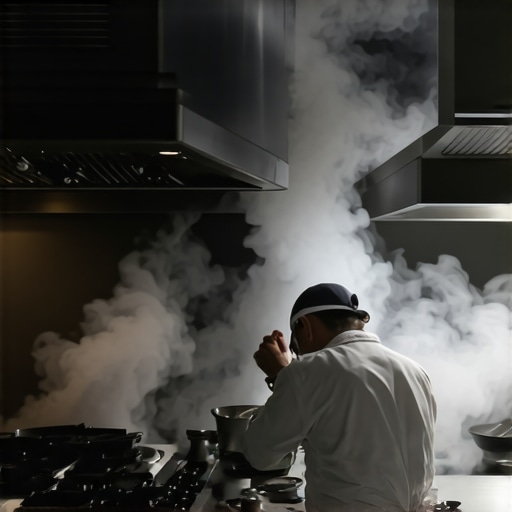
Imagine this: It is February in Chicago. The wind is howling off the lake at forty miles an hour, pushing the outdoor temp well below zero. You have a line out the door, the grill is loaded with prime cuts, and suddenly, the kitchen looks like a London fog. Your cooks are coughing, your servers are tearing up, and the owner is screaming because he just paid a ‘tin knocker’ a fortune to scrape the grease out of the ducts last week. I have seen this a thousand times. Cleaning the hood is like washing the windshield of a car with a blown engine; it looks nice, but it does not fix the underlying physics of the machine. If you are breathing in blue smoke while standing under a spotless stainless steel canopy, you do not have a grease problem—you have an airflow war.
The Physics Lesson: Why Airflow Trumps Horsepower
My old mentor, a guy who could smell a burnt-out motor from three blocks away, used to scream at me, ‘You can’t cool what you can’t touch, and you can’t exhaust what you don’t replace!’ This is the fundamental law of the kitchen. Most restaurant owners think the exhaust fan is a magical vacuum that just sucks air into a void. It isn’t. For every cubic foot of smoke-laden air you suck out of that hood, you have to bring a cubic foot of air back into the building. This is called ‘Makeup Air.’ If your Makeup Air Unit (MAU) is down, or if the belt is slipping and it’s only spinning at half speed, that exhaust fan is fighting a losing battle against a vacuum. It is trying to pull air out of a sealed box, and physics always wins.
“The most expensive equipment in the world cannot overcome a bad duct system or an imbalanced pressure environment.” – Industry Axiom
Reason 1: The Makeup Air Unit (MAU) and the ‘Vacuum Effect’
In cold climates like the Northeast or Midwest, the MAU is your best friend and your worst enemy. It is a massive furnace that sits on your roof, taking -5°F air and heating it to 65°F before dumping it into the kitchen. If that unit has a failed thermocouple replacement need or the relay services on the control board have fried, the unit stays off to prevent freezing your pipes. When the MAU is dead, your exhaust fan starts pulling air from wherever it can—the dining room, the cracks under the doors, or even backwards through the boiler repair services venting. This creates a massive negative pressure. The smoke doesn’t go up the hood because the exhaust fan is struggling just to pull air through the building’s skin. You need control board diagnostics to see why your MAU isn’t firing. If the heat exchanger is clogged with soot, you need heat exchanger cleaning to restore the thermal transfer so the unit doesn’t trip on high-limit. Check your hvac-repair-secrets-boost-efficiency-with-expert-tips for more on how these systems interact.
Reason 2: High Static Pressure and ‘Pookie’ Failures
Sometimes the fan is spinning, and the air is being replaced, but the smoke still hangs. This is often a ‘Static Pressure’ issue. Think of static pressure like the resistance you feel when blowing through a straw. If the furnace filter replacement has been neglected on the supply side, the resistance goes up. If the ductwork was poorly designed—too many turns, too much ‘flex’ duct, or leaking joints—the fan can’t overcome the ‘drag.’ I’ve seen ‘Sparkies’ wire fans backwards after a repair, and I’ve seen ‘Tin Knockers’ leave gaps in the duct that should have been sealed with ‘Pookie’ (mastic). If your duct is leaking, you are exhausting the attic air instead of the grease smoke from the range. This is why IAQ improvement services are critical; they measure the actual ‘Inches of Water Column’ to see if your fan is actually moving the CFM it was rated for.
“Design of the exhaust system must ensure that the pressure in the kitchen is slightly negative relative to the dining area, but never to the point of causing back-drafting of combustion appliances.” – ASHRAE Standard 154
Reason 3: The Interlock Failure and Control Board Chaos
Modern kitchens are smart—sometimes too smart. The exhaust fan and the MAU are supposed to be ‘interlocked.’ When you flip the switch for the hood, the MAU should kick on automatically. However, control board diagnostics often reveal that the relay services have failed. If the MAU doesn’t start, the kitchen becomes a vacuum, and the smoke stays at eye level. Furthermore, if you have a two-stage furnace installation in the building that isn’t communicating with the kitchen’s air handlers, you might be fighting against your own HVAC system. For example, if the electric heater services in the entryway are running full blast while the kitchen is trying to exhaust air, you are literally throwing money out the roof. If you suspect a deeper mechanical failure, check our guide on mini-split-troubleshooting-when-and-how-to-call-a-pro to understand how different zones can conflict.
Beyond the Hood: The Hot Water and Boiler Connection
I once walked into a kitchen where the smoke was so bad the fire department had been called twice. The owner swore the fans were fine. I looked at his hot water heater repair history and saw he’d been having issues with the pilot light going out. Why? Because the kitchen was under such high negative pressure that it was sucking the flame right off the burner of the water heater. It was also sucking the ‘gas’ (refrigerant) smells from a small leak in the walk-in, making everyone think there was a chemical fire. We performed a thermocouple replacement and fixed the MAU, and suddenly, the smoke vanished. If you’re dealing with these ‘phantom’ issues, you don’t need a cleaner; you need a technician who understands the ‘Suction Line’ and the ‘Delta T’ of your entire building. Don’t fall for the furnace-repair-myths-debunked-what-homeowners-need-to-know regarding simple fixes. If you’re tired of a smoky kitchen, it’s time to look at the bones of the system. Contact us today for a full airflow audit and get your kitchen breathing again. { “@context”: “https://schema.org”, “@type”: “HowTo”, “name”: “Troubleshooting Commercial Kitchen Smoke Issues”, “step”: [ { “@type”: “HowToStep”, “text”: “Verify the Makeup Air Unit (MAU) is operational and providing fresh air to the kitchen.” }, { “@type”: “HowToStep”, “text”: “Check furnace filters and supply vents for obstructions that increase static pressure.” }, { “@type”: “HowToStep”, “text”: “Perform control board diagnostics to ensure the exhaust fan and MAU are properly interlocked.” }, { “@type”: “HowToStep”, “text”: “Inspect ductwork for leaks and ensure all joints are sealed with mastic (Pookie).” } ] }