The Ghost in the Baseboard: Why Your Heating System is Talking Back
It usually starts around 3:00 AM. You’re fast asleep in a house that should be silent, but then you hear it—a rhythmic, metallic tick-tick-tick that sounds like a tiny hammer hitting your floorboards. Most homeowners ignore it until it turns into a full-blown clack. By then, the efficiency of your hydronic or electric baseboard system has already hit the floor. I’ve spent thirty years crawling through frozen crawlspaces in the Northeast, and if there is one thing I’ve learned, it’s that noises in a heating system are never ‘just a noise.’ They are a cry for help from the laws of thermodynamics.
My old mentor, a grizzly old tin knocker named Silas who could smell a gas leak from a block away, used to scream at me, ‘You can’t heat what you can’t touch!’ He wasn’t talking about the air; he was talking about the physical contact between the heating element and the medium. If your baseboard is clicking, it’s because the metal is fighting against its own housing. This is a physics problem, not a ghost story. In the frozen climates of Chicago or Boston, where we rely on these systems to keep pipes from bursting, understanding the expansion and contraction of copper and aluminum is the difference between a $50 fix and a $10,000 radiator replacement.
“The heat loss of the structure must be calculated accurately to ensure the distribution system—whether baseboard or radiant—can maintain the setpoint during the 99% design temperature.” – ACCA Manual J, 8th Edition
The Forensic Diagnosis: Anatomy of a Clicking Heater
Before we pull out the tool bag, we have to understand the mechanical anatomy. A hydronic baseboard heater is essentially a copper pipe with aluminum fins ‘pressed’ onto it. When the boiler kicks on, 180-degree water rushes through that pipe. Copper has a high coefficient of thermal expansion. It’s going to grow. If that pipe is trapped tightly by a wooden floor joist or a metal bracket, it can’t grow quietly. It rubs. That friction is what you hear as clicking. If you’re dealing with electric baseboards, the principle is the same, but the heat source is an electric resistance element. In both cases, if the airflow is blocked, the internal temps skyrocket, leading to even more aggressive metal movement.
Fix 1: The Friction Buffer (The ‘Pookie’ and Plastic Method)
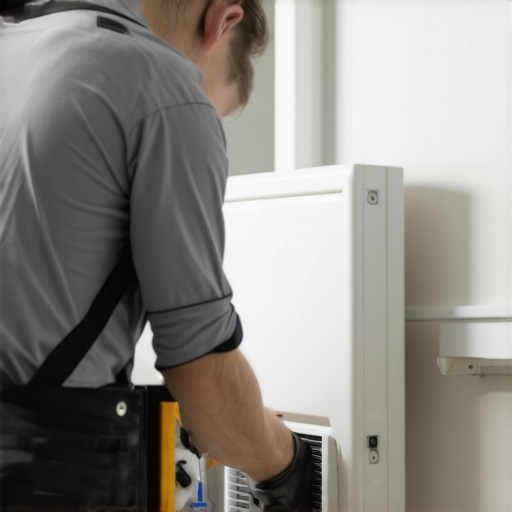
The most common cause of that annoying click is the copper pipe rubbing against the metal support brackets inside the heater cabinet. Over decades, the original plastic glides that were supposed to let the pipe slide back and forth disappear or get brittle and crack. When I go into a house for radiator replacement or repair, I look at those brackets first. You don’t need a new system; you need to restore the ‘slip.’ I often use high-temperature nylon shims or even small strips of Pex piping cut lengthwise to snap over the bracket. This creates a low-friction surface. While you’re in there, check the ‘Pookie’ (the mastic or sealant) around the wall penetrations. If the installer didn’t leave a gap where the pipe goes through the floor or wall, the pipe will ‘bind’ against the wood. You need to widen those holes slightly and use a high-temp silicone that remains flexible. This isn’t just about noise; a binding pipe can eventually cause a stress fracture and a leak that ruins your hardwood floors.
Fix 2: Fin Realignment and Airflow Measurement Services
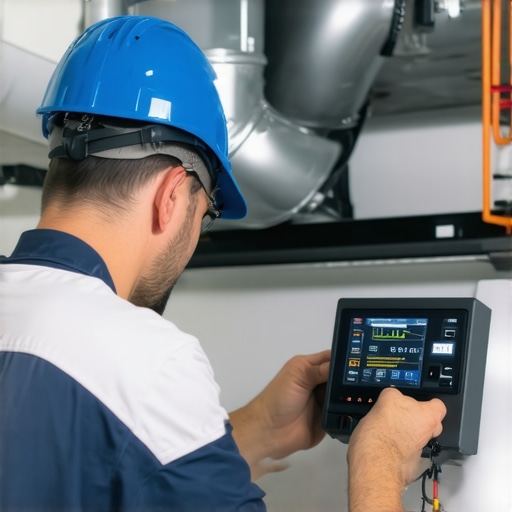
Most people treat their baseboards like a shelf. I’ve seen them covered in dust, cat hair, and even laundry. When those aluminum fins get clogged or bent, the heat can’t escape the cabinet fast enough. This causes ‘heat soak,’ where the metal gets much hotter than it was designed for, leading to extreme expansion. Part of my airflow measurement services involves checking the ‘delta T’ (temperature difference) between the floor-level intake and the top-vent output. If there’s no flow, that heater is just a ticking time bomb of wasted energy. Take a fin comb—the same kind we use on a ‘beer can cold’ suction line on an AC unit—and straighten those aluminum fins. Vacuum out the ‘dust bunnies’ that act like an insulator. You’ll find the clicking reduces significantly simply because the metal isn’t reaching those extreme, ‘angry’ temperatures anymore.
Fix 3: The Smart Transition (Sensors and Thermostats)
Sometimes the clicking isn’t thermal expansion; it’s the sound of a failing relay or a cheap ‘dumb’ thermostat rapidly cycling the system on and off. This is what we call ‘short cycling.’ In 2026, we’re seeing a massive shift toward occupancy sensor installation and smart thermostat setup. A modern thermostat with ‘cycles per hour’ (CPH) logic can prevent the system from hitting those rapid-fire expansion/contraction cycles. Instead of the heater going from 70 to 180 degrees in a frantic burst, a programmable thermostat programming strategy allows for a more gradual ramp-up. If you’re still using a mercury-bulb slider from 1974, you’re basically asking for mechanical failure. Upgrading the brain of the system often solves the ‘noise’ problem by stabilizing the physics of the heat delivery.
“Radiant heating systems shall be installed in accordance with the manufacturer’s instructions and the requirements of the International Mechanical Code to ensure pressure boundaries are maintained.” – ASHRAE Standard 15
The Math: Repairing the Old vs. Investing in New
I hate Sales Techs who walk into a room, hear one click, and tell a homeowner they need a $15,000 high-efficiency furnace installation. That’s a scam. However, there is a point where the ‘tin knocker’ in me has to be honest. If your baseboard fins are falling off due to corrosion (common in damp basements), or if your boiler is leaking ‘juice’ faster than you can fill it, it’s time to pull the plug. In a cold climate, your attic insulation is your first line of defense. If you have poor attic insulation for heating, your baseboards have to work three times harder, leading to more expansion cycles and more noise. Before you replace the heater, check the insulation. If the house is a ‘sieve,’ no amount of plumbing is going to fix the comfort level. We often see clients move toward ventless gas heater services or heat pumps for supplemental heat, but if you love your hydronic system, keep it clean and keep it ‘slippery.’ Don’t forget that even the best heaters need a furnace filter replacement if they are part of a hybrid forced-air system, as clogged filters kill the airflow that keeps the whole house balanced. If you’re stuck, check out this guide on hvac repair secrets to see how to keep the ‘gas’ in the lines and the money in your pocket.
When the Noise Means Danger
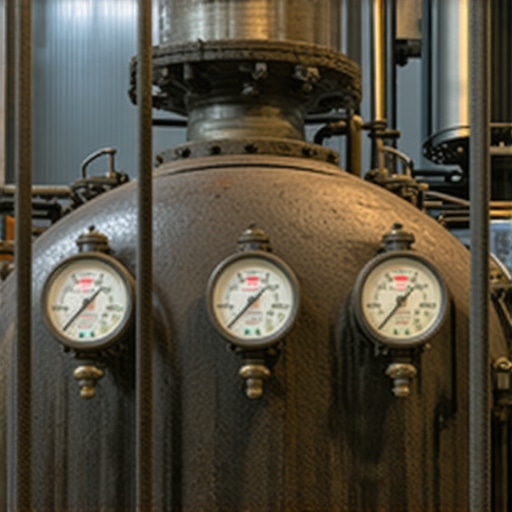
If that clicking is accompanied by a ‘metallic pop’ or a ‘hiss,’ you might have a steam trap failure or a localized boil in your pipes. That’s not just an annoyance; that’s a pressure spike that can lead to a catastrophic failure. This is why spa heater services and home boiler services are so specialized—you’re dealing with pressurized vessels. If the noise sounds like ‘marbles in a can,’ you likely have air trapped in the lines. You need to ‘purge’ the air, as air is a terrible conductor of heat and causes the pump to cavitate. For more on these complex issues, see our heat pump maintenance guide or read about furnace repair myths to avoid getting ripped off by a tech who just wants to sell you a new box. Comfort isn’t magic; it’s just physics, and usually, the fix is simpler than you think.