The Myth of the Magic Blue Bulb
I remember my old mentor, a grizzled tin knocker named Silas who’d been hanging duct since the Eisenhower administration, screaming at me in a 140-degree crawlspace in Savannah. ‘You can’t cool what you can’t touch, and you can’t kill what you don’t understand!’ he’d bellow, his voice echoing through the galvanized trunks. He was talking about airflow, but his logic applies perfectly to the 2026 obsession with UV-C lights. Everyone wants a shortcut to clean air. They want to screw in a glowing bulb and imagine their HVAC system has become a sterile surgical suite. But as a guy who’s spent three decades scraping biological sludge off evaporator coils, I can tell you the reality is a lot messier than a sales brochure suggests. We are entering an era where geothermal heat pump systems and high-efficiency solar thermal heating integration are becoming standard, yet we still struggle with the basic physics of mold. If you think a UV light is a ‘get out of jail free’ card for a neglected system, you’re about to get a very expensive education in microbiology.
The Forensic Diagnosis: Anatomy of an Infected System
To understand if UV works, we have to look at the mechanical anatomy of your air handler. In a humid climate like the South, your evaporator coil is essentially a massive dehumidifier. As the ‘gas’ or refrigerant expands inside those copper loops, the surface temperature drops below the dew point. Moisture from your home’s air condenses on the fins. This is sensible heat being traded for latent heat removal. If your HVAC duct sealing is compromised, you aren’t just pulling in air; you’re pulling in dust, dander, and organic spores. This moisture-and-dust cocktail creates a ‘biofilm’—a polite word for the grey, fuzzy gunk that chokes off airflow.
“The most expensive equipment in the world cannot overcome a bad duct system, nor can it compensate for the accumulation of biological growth on heat exchange surfaces.” – Industry Axiom
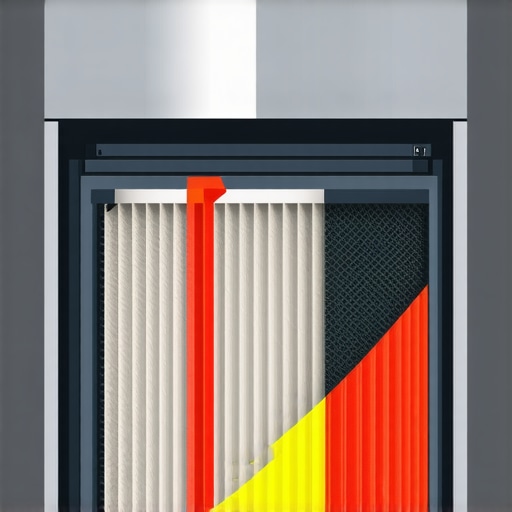
When a ‘Sales Tech’ tries to sell you a UV kit, they often ignore the fact that the coil is already buried in an inch of mud. A UV-C bulb at 254 nanometers can scramble the DNA of a mold spore, but it cannot penetrate a layer of sludge. It only kills what it can see. If your coil is dirty, the light just sanitizes the top layer of the gunk while the roots continue to feast on the aluminum fins.
The Physics of UV-C: 254 Nanometers vs. The Swamp
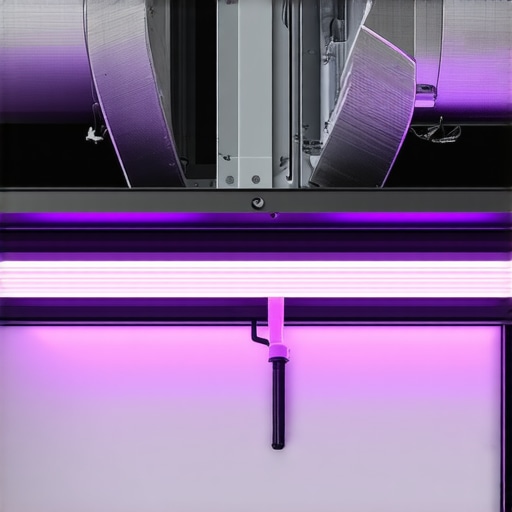
In 2026, we’re seeing more sophisticated leak detector integration within our air handlers to manage the transition to A2L refrigerants, but the fundamental battle with mold hasn’t changed. UV-C light works through ‘germicidal irradiation.’ It breaks the molecular bonds in the DNA of microorganisms, preventing them from reproducing. However, ‘dwell time’ is the variable most people ignore. For a UV light to kill a spore in a moving airstream, that spore has to be exposed to the light for a specific duration at a specific intensity. If your blower is pushing air at 400 CFM per ton, that spore is flying past the bulb at light speed. This is why ‘In-Duct’ UV lights are often less effective than ‘Coil-Irradiation’ lights. To truly stop mold, the light must be pointed directly at the wet surfaces of the coil 24/7. Even then, it’s not a substitute for proper humidifier installation or steam humidifiers management. If your house is a ‘cold swamp’ because your unit is oversized and short-cycling, the UV light is just a flashlight in a rainstorm.
The 2026 Regulatory Landscape and IAQ
We are seeing a massive shift in how we approach hotel boiler services and residential IAQ (Indoor Air Quality). With the death of R-410A, the new systems hitting the market are more sensitive than ever. These units are built with thinner fins to eke out every bit of SEER2 efficiency. This makes them even more susceptible to ‘pitting’ from the acidic waste produced by mold colonies. If you are investing in geothermal heat pump systems, the stakes are even higher. You’re spending five figures on a system that should last 25 years; why would you let a $5 mold colony rot the coil in five? This is where professional HVAC repair secrets boost efficiency with expert tips come into play. A real tech will tell you that the UV light is the last step of the process, not the first. You clean the coil with a non-acidic foaming cleaner, you apply ‘Pookie’ (mastic) to every joint in the plenum to ensure 100% of the air goes through the filter, and then you install the UV-C lamp to keep that surface sterile.
“Ventilation systems shall be designed to prevent the accumulation of stagnant water and the growth of microorganisms on cooling coils and in condensate pans.” – ASHRAE Standard 62.1
When to Pull the Plug: Repair vs. Replace
I’ve seen homeowners spend $800 on a high-end UV system when their secondary drain pan was rusted through and their hot water heater repair was long overdue. It’s about priorities. If your system is over 12 years old and the compressor sounds like a tin can full of marbles, don’t buy a UV light. Save that money for the inevitable replacement. However, if you have a newer system and you’re noticing that ‘dirty sock’ smell—a sour, acidic stench that hits you when the blower kicks on—then UV might be your savior. Just remember: it won’t fix a swamp cooler maintenance issue in the desert or a cracked heat exchanger in a garage heater installation. It is a specific tool for a specific problem: surface-level biological growth on the evaporator coil.
The Final Verdict on 2026 Tech
Is UV light a scam? No. Is it a miracle? Absolutely not. In 2026, with the integration of smart sensors and advanced filtration, UV-C is a solid supporting actor. But it will never be the lead. If you haven’t checked out our HVAC repair secrets boost efficiency with expert tips, you might be missing the foundational work required to make a UV light actually worth the electricity it pulls. Stop listening to the guy in the clean white shirt who wants to sell you a ‘total home wellness package’ before he’s even pulled the door off your furnace. Real comfort comes from physics, static pressure, and keeping your ‘Juice’ (refrigerant) inside the lines. If you’re struggling with a system that feels like it’s blowing ‘wet’ air, or if you’re confused by the new A2L sensors, don’t guess. Check out our mini-split troubleshooting guide or contact us to get a tech who knows the difference between a real solution and a glowing blue gimmick. Maintenance is the only way to avoid furnace repair myths and keep your family breathing clean. At the end of the day, you can’t cheat the thermodynamics of a wet coil in a dark box. You either keep it clean, or the mold wins.