
The 2026 Regulatory Cliff: Why Your Old Heat Pump Is a Ticking Financial Bomb
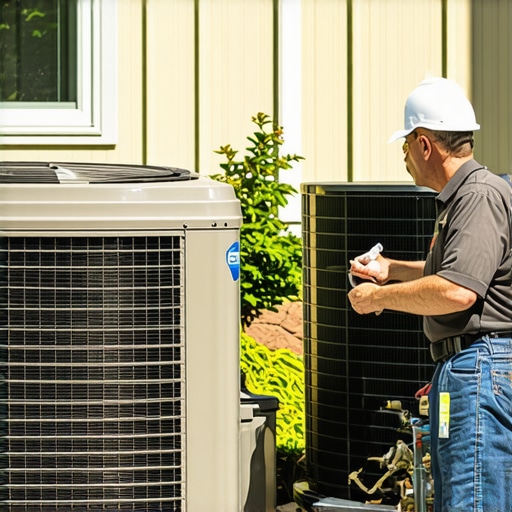
The sounds of a dying HVAC system aren’t just mechanical; they are the rhythmic thumping of your bank account being drained. If you are standing over your outdoor unit right now, listening to that high-pitched metallic whine—the screech of a failing bearing in the condenser fan—you’re likely asking the $10,000 question: Is it time to swap this thing out, or do I just pay for a contactor repair and pray to the gods of thermodynamics? As we stare down the 2026 price landscape, the answer isn’t as simple as it was five years ago. We are currently navigating the most volatile period in the history of residential climate control, thanks to the phase-out of R-410A and the mandatory shift to A2L refrigerants like R-454B and R-32.
My old mentor, a man who spent forty years dragging sheet metal through crawlspaces, used to scream, ‘You can’t cool what you can’t touch!’ He was talking about airflow and evaporator surface area, but the lesson applied to everything. If your equipment is obsolete, you can’t fix it because you literally can’t touch the parts or the ‘juice’ (refrigerant) without paying a ransom. In 2026, we are seeing the ‘Regulatory Cliff’ in full effect. New units now require leak detection sensors and redesigned coils to handle ‘mildly flammable’ refrigerants. This isn’t just a technical shift; it’s a price hike that makes the old 14 SEER units look like bargain-bin clearance items.
“The most expensive equipment in the world cannot overcome a bad duct system.” – Industry Axiom
The Anatomy of the 2026 Price Check
When you look at a two-stage furnace installation or a high-efficiency heat pump today, you aren’t just paying for the compressor and the ‘tin knocker’ (duct guy) to hang it. You are paying for the R&D of the A2L transition. A standard contactor repair used to be a quick hundred-buck fix. In 2026, if that contactor pitted because your undersized wire caused a voltage drop, a ‘Sales Tech’ will try to tell you the whole system is cooked. They’ll show you predictive maintenance alerts on their tablet like they’re reading a terminal diagnosis. Don’t fall for it without checking the physics first. If your compressor isn’t grounded and your windings still show resistance, that motor has life in it. But—and this is the ‘but’ that keeps me up at night—if you’re leaking R-410A, you’re chasing a ghost. The cost of that gas is skyrocketing as production quotas vanish.
Climate Physics: Sensible Heat vs. The Dry Heat Reality
In the Southwest, where I’ve spent more time on scorching rooftops than in my own living room, we deal with sensible heat that cooks capacitors until they bulge like a cheap soda can. If you’re running swamp cooler maintenance alongside a heat pump, you know the ‘Monsoon Effect.’ When the humidity spikes to a measly 30%, those evaporative coolers quit, and your heat pump takes the full load. High head pressure in 115°F ambient heat is a killer. This is where HVAC maintenance plans actually earn their keep. A technician who actually washes your coils (instead of just spraying them with a hose for show) can drop your head pressure by 40 PSI, saving the compressor valves from shattering.
For those managing larger scales, like church heating systems or school boiler maintenance, the math is even more brutal. These systems often rely on massive thermal bridges. If a church’s heat pump dies in 2026, the replacement isn’t just a unit swap; it often requires a total sensor overhaul to comply with new safety codes regarding the slightly higher flammability of new refrigerants. You can read more about heat pump maintenance and repairs to see how these commercial-grade demands differ from your backyard split system.
When to Pull the Plug: The 50% Rule
I tell my customers the same thing: If the repair cost exceeds 50% of the system’s value and the unit is over 10 years old, stop hemorrhaging cash. A furnace repair services bill for a cracked heat exchanger is an automatic ‘replace’—you’re literally betting your life against carbon monoxide. If you’re looking at a restaurant kitchen exhaust repair, you know that grease-laden air eats through components faster than salt air on the coast. In those high-stress environments, replacement is often the only way to maintain the static pressure required by code.
“Standard 15-2001 specifies that residential systems shall be designed to maintain a minimum indoor temperature of 68°F (20°C) for heating and a maximum of 75°F (24°C) for cooling.” – ASHRAE
The Modern Tech Trap: Predictive Maintenance vs. Reality
Don’t let a ‘Sparky’ (electrician) or a green tech tell you that predictive maintenance alerts mean you need a new system today. Often, these alerts are triggered by a MERV filter upgrade that the homeowner didn’t account for. You put a MERV 13 filter in a system designed for a fiberglass rock-catcher, and suddenly the static pressure spikes, the blower motor amps up, and the ‘smart’ thermostat starts screaming. Before you drop $12,000 on a new unit, check your filters. High-restriction filters are the silent killers of ‘beer can cold’ suction lines. If the airflow is choked, the liquid refrigerant doesn’t boil off in the evaporator, and you start ‘slugging’ the compressor with liquid. That’s a death sentence you can avoid for twenty bucks.
If you’re struggling with a system that’s acting up, sometimes it’s a simple fix. Check out these HVAC repair secrets before you sign a contract for a full replacement. And for those with smaller setups, mini-split troubleshooting can save you a weekend of sweating.
Final Verdict for 2026
The 2026 price check shows a 15-25% increase in equipment costs due to the A2L transition. If your current R-410A system is holding a charge and the compressor sounds like a purring cat, keep it. Invest in HVAC maintenance plans to ensure the coils are clean and the ‘Pookie’ (mastic) on your ducts isn’t cracking. But if you’re facing a major leak or a burnt-out compressor (you’ll know by that acidic, sour smell that hits your nose the moment you open the cabinet), don’t put a new compressor in an old R-410A box. You’re buying a ticket for a sinking ship. Transition to the new standard now, ensure your ‘tin knocker’ sizes the return air properly for the new high-static coils, and stop paying for ‘gas’ that’s being taxed out of existence.
This post highlights some very practical considerations that many homeowners overlook when deciding whether to repair or replace their heat pumps, especially with the upcoming 2026 regulations. I’ve personally experienced the frustration of repairs that seemed minor at first but ended up costing double due to refrigerant leaks and coil issues. The point about the ‘50% rule’ is so crucial—it’s easy to get emotionally attached to fixing an aging system, but at some point, investing in a new high-efficiency unit pays off in the long run, particularly with rising energy costs and refrigerant prices. I’m curious, how do others on here evaluate their system’s current efficiency? Do you combine this with energy bills or just focus on repair costs? I’ve also wondered if smart home thermostats and maintenance alerts are genuinely reliable indicators or if they tend to trigger unnecessary replacements. It would be great to hear about others’ experiences with this transition, especially with the new refrigerant safety standards making DIY repairs more complicated.
This article really underscores the complexities that homeowners face with HVAC systems as we approach the 2026 regulatory shifts. I’ve been through a few repairs that initially seemed minor but quickly ballooned into costly fixes, especially when refrigerant leaks occurred. The point about the 50% rule has been a lifesaver for me; I used to hold onto old systems longer than I should, but now I prioritize replacement when repair costs get too high—particularly with the rising price of R-410A. I’ve also noticed that many modern thermostats and maintenance alerts can sometimes give false alarms or misinterpret warnings, which makes me wonder how reliable these tools are in the long run. For those wondering about DIY repairs or evaluating system efficiency, I’d suggest paying close attention to airflow restrictions and refrigerant integrity before jumping to full replacement. Has anyone tried integrating smart diagnostics to better predict when maintenance is really needed? I’d love to hear how others are navigating these changes with the new refrigerant standards and what strategies they’re finding most effective.
This post really hits on a crucial point about the upcoming 2026 shifts—replacing an old heat pump isnt just be about fixing what’s broken; its about planning for the future. I’ve seen firsthand how the costs of refrigerants like R-410A are shooting up, making repairs into short-term fixes rather than long-term savings. I agree that the 50% rule is a practical approach, especially for systems over a decade old, but I also think considering energy efficiency improvements with new units can lead to significant savings down the line. Plus, with the new regulations demanding more sensors and redesigns, installation costs will inevitably rise. For homeowners trying to decide whether to repair or replace, what strategies have others employed to evaluate the long-term benefits—especially those who’ve had to handle complex retrofits for new refrigerants? It seems the days of quick fixes are fading, so understanding total lifecycle costs seems more important than ever.