The Acrid Reality of a Backdrafting Insert
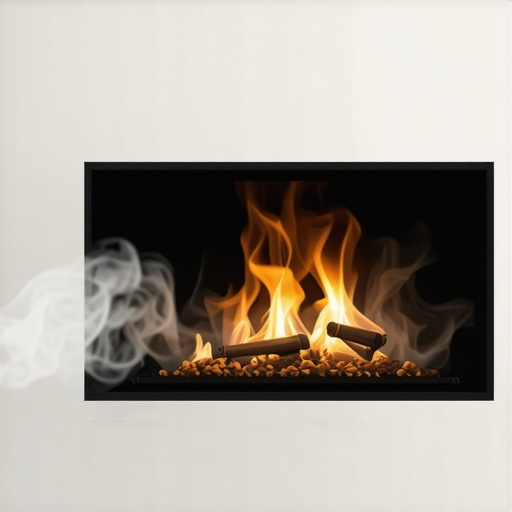
You wake up at 3 AM. It’s not the cold that wakes you—it is that sharp, biting scent of charred oak. It isn’t the pleasant aroma of a campfire; it’s the smell of a system failing. When your fireplace insert starts puking smoke into your living room instead of drafting it up the flue, you aren’t just looking at a mess on your mantle. You are looking at a fundamental breakdown of pressure physics. Most homeowners think they have a dirty chimney, but as someone who has spent three decades dragging combustion analyzers through snow-covered crawlspaces, I can tell you that the fireplace is often the victim, not the criminal. In the North, where we deal with deep freezes and the stack effect, a smoking insert is a diagnostic red flag that your home’s lungs are out of sync.
The $15,000 Lie: A Forensic Narrative
Last winter, I followed a ‘Sales Tech’—the kind of guy who wears a crisp white shirt and carries a tablet instead of a pipe wrench—into a 1920s Tudor home. He had already quoted the homeowner $15,000 for a total boiler replacement because her fireplace was smoking and her ‘combustion air was insufficient.’ He told her the whole system was ‘condemned.’ I walked in, smelled the air, and asked her to turn off the massive 1,200 CFM kitchen hood she’d just installed for her professional-grade range. Within five minutes, the fireplace draft stabilized. The ‘dead’ boiler? It was a perfectly healthy cast-iron beast that just needed a simple furnace tune-up services check. The real culprit was negative pressure. That Sales Tech was trying to sell her a new heart when she just needed to open a window. This is why I tell people to ignore the glossy brochures and focus on the physics. You can’t fight the laws of thermodynamics with a financing plan.
“Infiltration and exfiltration are driven by pressure differences caused by wind, stack effect, and mechanical equipment.” – ASHRAE Standard 62.2
Thermodynamic Zooming: Why Air Refuses to Leave
To understand why your insert is smoking, you have to look at the ‘Neutral Pressure Plane.’ Your house is a giant chimney. Warm air rises and escapes through leaks in the attic (exfiltration), creating a vacuum at the bottom of the house that sucks in cold air (infiltration). If your home is ‘tight’—thanks to modern weather stripping and spray foam—that vacuum gets desperate. It will literally pull air down your chimney to satisfy the pressure imbalance. When that happens, smoke is pulled right along with it. This isn’t magic; it’s a pressure fight, and the strongest fan wins. If your furnace or boiler repair services aren’t accounting for this, your fireplace will never work. This is especially true when we look at new construction heating design, where we often see houses that are so air-tight they’re practically hermetically sealed. [IMAGE_PLACEHOLDER]
Fix 1: The Mechanical Makeup Air Solution (The 2026 Standard)
By 2026, building codes are tightening even further. You can’t just cut a hole in the wall anymore. The first fast fix for a smoking insert is an automated makeup air damper. This device interlocks with your exhaust fans. When the ‘Tin Knocker’ installs your ductwork, they should be placing a motorized damper that opens the moment your HVAC system or kitchen fan kicks on. This bypasses the chimney’s role as an accidental air intake. If you’re tired of the soot, look into HVAC repair that focuses on your home’s envelope. This isn’t just about comfort; it’s about preventing ‘flame rollout’ and carbon monoxide issues that occur when your heating system competes with your hearth.
Fix 2: Combustion Analysis and the Heat Exchanger Trap
The second fix involves a deep dive into combustion analysis. Often, a smoking insert is a sign that your flue is undersized for the BTU output of the wood or gas you’re burning. But there’s a 2026 twist: as we move toward high-efficiency systems, the way we vent gases is changing. If your furnace is sharing a chimney with your insert (a common but dangerous ‘Sparky’ or DIY mistake), you are asking for trouble. A proper tech will use a digital manometer to measure the ‘draft’ in inches of water column. If you’re not hitting -0.02 to -0.04, you’re going to get smoke. Check out these HVAC repair secrets to see how tiny adjustments in venting can fix massive drafting problems without replacing the whole unit.
“The most expensive equipment in the world cannot overcome a bad duct system or an unbalanced pressure environment.” – Industry Axiom
Fix 3: Humidity and Air Density Balancing
The third fix is one most people ignore: whole-home humidifiers. In cold climates, dry air is ‘heavy’ and harder to move. When your home’s RH (Relative Humidity) drops below 20%, the air becomes incredibly dense, making it harder for the relatively weak ‘lift’ of a fireplace to push smoke up a cold flue. By integrating a humidifier into your central air, you stabilize the air density, making it easier for the stack effect to work in your favor rather than against it. If your house feels like a desert and your fireplace won’t draw, you don’t need a new chimney; you need moisture. This is a common point in furnace repair myths debunked—homeowners often blame the heater for ‘dryness’ when it’s actually a lack of humidification control.
When to Pull the Plug: Repair vs. Replace
Sometimes, the ‘Gas’ or ‘Juice’ isn’t the problem—it’s the iron. If your insert has a warped baffle or a cracked firebox, no amount of makeup air will fix it. This is where the forensic diagnosis comes in. If I see a cracked heat exchanger during a furnace tune-up services call, I’m pulling the red tag. The same goes for your fireplace. If your 2026 budget allows, consider rebate application assistance for transitioning to a mini-split for your primary heat, which allows you to keep the fireplace for ‘ambiance’ without relying on it as a primary (and potentially smoky) heat source. For those in truly dry areas, evaporative cooler services might be the summer equivalent, but in the North, it’s all about that boiler and furnace balance. If you’re stuck, don’t guess. Contact us before the soot ruins your ceiling. You can also read our mini-split troubleshooting guide if you’re thinking of making the jump to electric heat. Always remember: your house is a machine. If one part is smoking, the whole machine is out of tune.