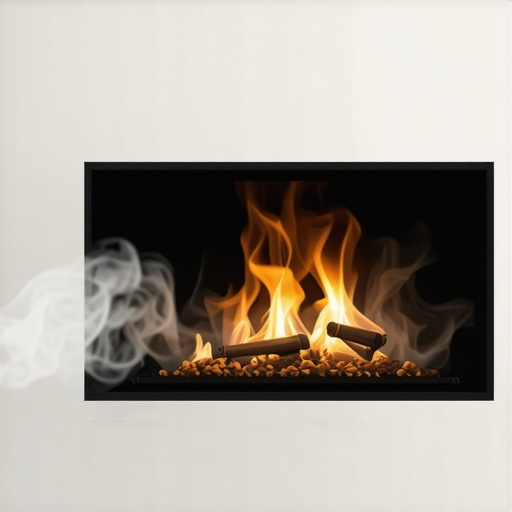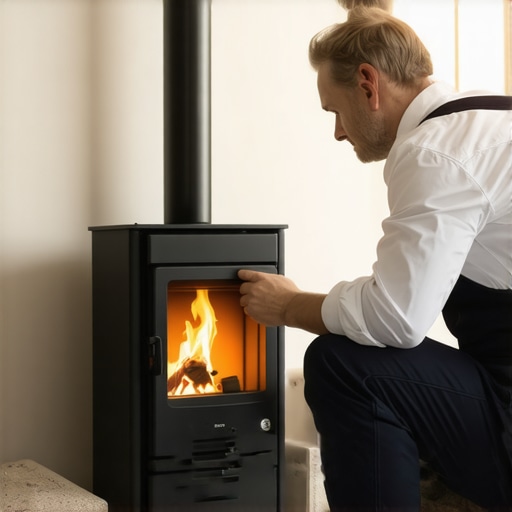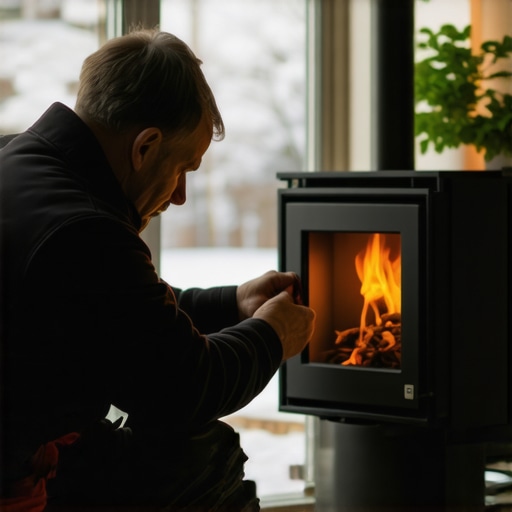
The Silence of a Dead Hearth: A Forensic Diagnosis
There is a specific sound to a failing pellet stove that makes my skin crawl. It is not the roar of a healthy flame or the rhythmic clatter of the auger feeding the beast. It is a high-pitched, metallic screech followed by a click and then… nothing. That silence is the sound of a cold house in the middle of a January polar vortex. I have spent three decades in the trenches of the heating industry, and I can tell you that while the fancy touchscreens on 2026 models look nice, the physics of heat remains the same. Most of the calls I get for emergency heating repair are not for catastrophic failures; they are for simple mechanical bottlenecks that a ‘Sales Tech’ would use as an excuse to sell you a $12,000 system you do not need.
The $15,000 Scam: A Story from the Trenches
Last winter, I followed a tech from one of those big-box franchises to a house in the suburbs. He had quoted a retired teacher $15,000 for a full new construction heating design and radiator replacement, claiming her pellet stove was ‘leaking toxic gas’ and the heat exchanger was ‘vaporized.’ I walked in, smelled the air—it did not have that sour, acidic tang of a real burnout—and looked at the unit. It was a simple vacuum switch failure caused by a handful of pet hair and ash. I cleaned the port with a paperclip, and the stove roared back to life in ten minutes. He wanted a commission; I wanted her to be warm. This is why I preach the gospel of airflow over hardware. If your stove is acting up, you need a mechanic, not a salesman.
“Ventilation systems shall be designed and installed so that the flue gases are safely vented to the outdoors, maintaining the integrity of the combustion process.” – ASHRAE Standard 62.2
1. The Auger Jam: When the ‘Gas’ Stops Flowing
In the trade, we call the pellets ‘the gas’ or ‘the juice’ because without them, the energy cycle stops. An auger jam is usually a mechanical torque issue. If you are using cheap pellets with high moisture content, they expand and turn into a sawdust-concrete mix inside the flighting. You will hear the motor humming—struggling against the friction—but no fuel hits the burn pot. I have seen tin knockers try to hammer these out, but the fix is delicate. You have to empty the hopper and clear the obstruction without stripping the gears. This is where preventative maintenance contracts pay for themselves; a tech should be vacuuming that auger chute every season before the first frost hits.
2. The Vacuum Switch: The Heartbeat of Safety
Your stove is a pressure vessel. If the exhaust fan (the combustion blower) does not create enough negative pressure, the vacuum switch will not close, and the stove will refuse to ignite. This is a safety feature to prevent carbon monoxide from leaking into your living room. Often, the ‘fix’ is just cleaning the small silicone tube that connects the switch to the firebox. If that tube is clogged with ash, the switch ‘thinks’ the venting is blocked. I have seen homeowners get talked into ventless gas heater services because they thought their stove was unfixable, when all they needed was a blast of compressed air in a tiny hose. This is the essence of static pressure testing; if the air cannot move, the fire cannot live.
3. The Igniter Failure: A Physics Lesson in Resistance
An igniter is just a high-wattage heating element. Over time, the repeated expansion and contraction of the metal leads to a break in the internal coil. If your stove is going through its start-up cycle but the pellets remain cold and dry, your igniter is likely ‘open.’ You can check this with a multimeter. If there is no continuity, the element is dead. During a SEER2 compliant upgrade or a standard tune-up, I always check the amperage draw of the igniter. If it is pulling less than its rated load, it is on its way out. Do not wait for it to die on a Friday night.
4. The Flame Sensor and Optical Logic
Modern stoves use an optical sensor or a thermocouple to ‘see’ the fire. If the stove lights but shuts down after ten minutes, it probably thinks there is no fire. This is often just soot on the lens of the sensor. It is the same principle as furnace flame sensor cleaning. If the sensor is ‘blinded’ by creosote, it shuts off the fuel supply to prevent the hopper from catching fire. A quick wipe with a soft cloth is usually all it takes, but many techs will try to sell you a whole new control board.
“The most expensive equipment in the world cannot overcome a bad duct system or poor venting logic.” – Industry Axiom
5. The Venting ‘T’ and Ash Accumulation
Thermodynamically, your stove relies on the delta between the hot exhaust and the ambient air. If the ‘T’ at the back of the stove is packed with ash, you lose your draft. I have seen units where the duct design services were so poor that the exhaust had to travel twenty feet horizontally. That is an ash trap. You need demand-controlled ventilation that matches the burn rate of the stove. If you are noticing lazy, dark orange flames instead of a crisp, white-hot torch, your stove is suffocating. This is a classic airflow issue that leads to ‘short cycling’ and massive fuel waste.
The Reality of 2026 Winter Prep
Whether you are looking at mini-split troubleshooting or fixing an old pellet stove, the lesson is the same: maintain your mechanicals. If you ignore the ‘Pookie’ (mastic) seals and the sensor cleanings, you will be calling for emergency heating repair when the temps hit zero. If you want to understand more about why your heating system is acting up, check out these hvac repair secrets or learn the truth about furnace repair myths before you sign a check for a new unit. If you’re stuck in the cold right now, don’t wait—contact us for a real diagnostic, not a sales pitch.