The Sound of the Silent Killer
I’ve spent the last thirty years dragging my tool bag through frost-cracked crawlspaces and over-insulated attics, and if there is one thing I’ve learned, it’s that homeowners don’t respect humidity until it’s already trying to kill them. You wake up in January, your nose is bleeding, your skin feels like old parchment, and you think, ‘I’ll just crank up the whole-home humidifier.’ Three weeks later, your kid has a chronic cough and your bedroom smells like a damp basement. You think it’s a virus. I’m telling you, it’s the science of thermodynamics gone wrong in your ductwork.
My old mentor, a guy who could smell a burnt-out compressor from the driveway, used to scream at me, ‘You can’t cool what you can’t touch, and you can’t humidify what you can’t control!’ He called whole-home humidifiers ‘microbial condominiums.’ He wasn’t wrong. If you aren’t maintaining that system with the same religious fervor you use for your car’s oil, you aren’t adding comfort to your home—you’re just aerosolizing a petri dish. Most ‘tin knockers’ will just slap a bypass unit on your return and walk away, but they aren’t the ones who have to see the black slime growing in the distribution tray six months later.
The Forensic Diagnosis: Anatomy of a Contaminated System
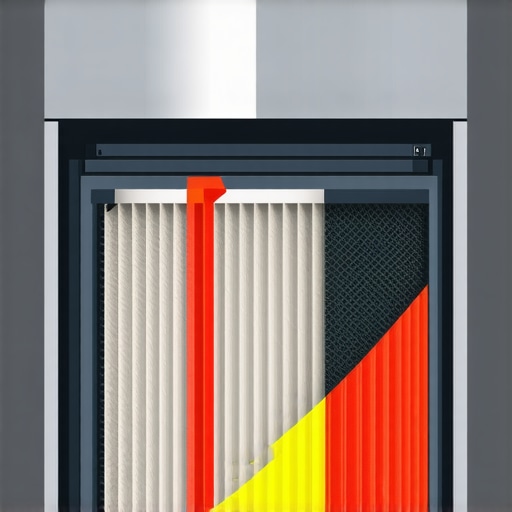
In the North, where the polar vortex turns your furnace into a literal blast furnace, the air gets bone-dry. We’re talking 10% relative humidity, which is drier than the Sahara. To fix this, we install IAQ improvement services like bypass or fan-powered humidifiers. Here’s the mechanical reality: your humidifier is a water-fed organ inside your HVAC body. You have a solenoid valve that acts like a heart valve, a water panel (the lung), and a drain line. If that water panel gets scaled up with calcium and magnesium, it stops being a filter and starts being a dam. Stagnant water is the enemy. When the water sits in the tray because of a clogged drain or a sticky valve, it reaches the dew point inside your warm ductwork, and that’s when the ‘biofilm’ starts to move. This isn’t just a ‘bad smell’; it’s an indoor air quality crisis.
“Ventilation and acceptable indoor air quality are not just luxury items; they are requirements for a healthy building envelope, especially when introducing moisture into a forced-air system.” – ASHRAE Standard 62.1
When I’m out on a call for furnace flame sensor cleaning, I always peek at the humidifier. Nine times out of ten, the homeowner hasn’t touched the water panel in three years. By then, it’s a calcified brick. The ‘juice’ (water) is just spraying over the top of it, leaking into the furnace cabinet, and causing the very rust that leads to heat pump replacement or furnace failure. I’ve seen hydronic heating systems that were pristine, but the secondary air handler’s humidifier was so fouled it was literally blowing mold spores through the attic insulation for heating and into the master bedroom.
The Physics of 2026: Why Modern Homes are Trapping Toxins
By 2026, homes are tighter than ever. We’ve got better windows, spray foam, and high-efficiency heat pump installation projects everywhere. While this is great for your electric bill, it’s a nightmare for air exchange. In an old, drafty house, the ‘bad air’ leaked out. In a modern home, if your humidifier is dirty, you are just recirculating those contaminants. This is where smart thermostat setup becomes critical. A basic thermostat just looks at temperature. A real 2026 setup uses occupancy sensor installation and hygrometers to track exactly when and where moisture is needed. If you’re over-humidifying a room that’s already at 45% humidity, you’re just inviting condensation on the windows, which leads to rot in the sills.
If you’re dealing with mysterious respiratory issues, it’s time to stop looking at the medicine cabinet and start looking at your thermostat wiring upgrades. Are you actually controlling the RH (Relative Humidity), or are you just guessing? I’ve seen guys try to fix a ‘cold’ house by adding more humidity, but all they’re doing is making the attic insulation for heating soggy and useless. You can’t solve a physics problem with a plumbing solution. You need to understand the latent heat of vaporization. When your humidifier turns water into vapor, it actually uses energy. If your system isn’t sized right—a common issue I see after a bad ‘Sales Tech’ visit—your unit will short cycle, leaving the air damp but the house cold. This is why hvac-repair-secrets-boost-efficiency-with-expert-tips are so vital; you have to balance the whole system, not just the thermostat.
The Maintenance Manifesto: Prevention vs. The Scam
Don’t fall for the ‘Sales Tech’ who tells you that a $5,000 UV light is the only way to stay healthy. Start with the basics. First, change that water panel every single season. No excuses. Second, make sure your drain line has a proper P-trap or air gap so you aren’t sucking sewer gas back into your supply air. Third, check your furnace flame sensor cleaning schedule; if your furnace is struggling to stay lit, it’s not going to provide the consistent heat needed to evaporate the water in the humidifier correctly. If you’re running a dual-fuel system, your heat pump maintenance is equally important. During the shoulder seasons, a heat pump doesn’t get the air nearly as hot as a gas furnace, which means the water in your humidifier might not evaporate at all—it’ll just sit there and rot.
“The most expensive equipment in the world cannot overcome a bad duct system or a neglected moisture control strategy.” – Industry Axiom
I’ve worked on everything from high-end pool heater repair to mini-split troubleshooting, and the common thread is always neglected maintenance. People think ‘whole-home’ means ‘set it and forget it.’ It doesn’t. If you want to avoid getting sick, you need to treat your HVAC system like a living thing. If you’re hearing the screech of a bearing or seeing white dust on your furniture (mineral deposits from the humidifier), you need to act. For more on what’s real and what’s a lie, check out furnace-repair-myths-debunked-what-homeowners-need-to-know.
When to Pull the Plug: Repair vs. Replace
Sometimes, the old drum-style humidifier is so far gone it’s not worth the ‘Pookie’ (mastic) needed to seal it back up. If you have standing water in your ductwork or if your hydronic heating systems are showing signs of external corrosion from humidifier leaks, it’s time for a heat pump replacement or a dedicated steam humidifier upgrade. Steam units are more expensive, but they don’t rely on the ‘wet pad’ method, which significantly reduces the risk of mold. Plus, they work independently of the furnace blower, giving you much better control over your IAQ. If you’re unsure if your system is a biohazard or just needs a tune-up, you can always contact us for a real forensic look at your airflow. We don’t do ‘Sales Tech’ pitches; we do physics.
Remember, your home is a sealed system. Everything you put into that air—whether it’s moisture, ‘juice’ from a leak, or dust—stays there until your filters or your lungs pull it out. Don’t let your humidifier be the reason you’re coughing all winter. Keep it clean, keep it dry when it’s not in use, and keep your smart thermostat setup dialed in to the actual needs of your house, not just a random number on a dial. If you need a deep dive into keeping your primary heating source running, see the ultimate-guide-to-heat-pump-maintenance-and-repairs. Comfort isn’t magic; it’s just well-managed thermodynamics.