
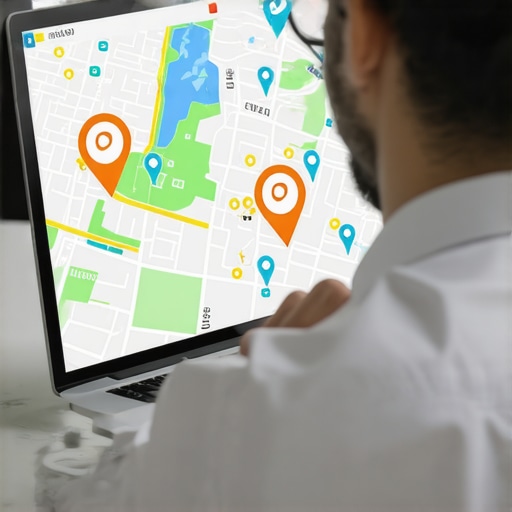
7 Google Maps Optimization Tips to Win More Commercial HVAC Contracts
In the high-stakes world of commercial mechanical services, the “Yellow Pages” of the modern era isn’t a dusty book – it’s the Google Map Pack. For facility managers, property owners, and industrial plant directors, the search for a reliable partner often begins and ends with those top three localized results. While residential “no-heat” calls are driven by desperation, high-ticket commercial contracts are driven by perceived authority, proximity, and proven expertise. If your business isn’t visible when a property manager searches for “commercial chiller repair near me,” you aren’t just losing a lead; you’re losing a multi-year service agreement.
To increase google maps exposure, you must understand that the “Local Pack” (the map results appearing at the top of Google Search) operates on a specific triad of ranking factors: Proximity, Relevance, and Prominence. Statistics show that over 70% of local searches result in a phone call or a site visit within 24 hours. For a commercial HVAC contractor, that phone call could be the gateway to a $50,000 rooftop unit replacement or a $100,000 annual preventative maintenance contract. This guide will walk you through the precise google business profile seo strategies needed to dominate your local market and win those lucrative B2B contracts.
Tip 1: Master the “Primary Category” Hierarchy
The single most influential factor in determining whether you show up for a specific search is your Primary Category. Many contractors make the mistake of setting their profile and forgetting it, but for commercial HVAC, the hierarchy is everything. While “HVAC Contractor” is the standard default, it often pits you against every residential “one-man-and-a-van” operation in the city. To win commercial contracts, you need to signal to Google that you handle large-scale mechanical systems.
Your primary category should indeed be “HVAC Contractor” to capture the broadest search volume, but your secondary categories are where you define your commercial niche. You must include “Mechanical Contractor,” “Commercial Refrigerator Repair Service,” and “Air Conditioning Repair Service.” By adding “Mechanical Contractor,” you align your profile with the terminology used by general contractors and industrial facility managers during the bidding process. You can learn How to Outrank Local Competitors by Choosing the Right Google Business Categories to see how specific sub-categories trigger different search intents.
To ensure you aren’t missing out on categories your top-ranking competitors are using, utilize a google business profile audit tool from SEO Viper Tools. This allows you to see the “hidden” categories that successful commercial firms use to maintain their dominance. Choosing the right category is the foundation of local seo for hvac; without it, the rest of your optimization efforts will struggle to gain traction.
Tip 2: Geo-Targeting for the “Truck Radius”
Google Maps rankings are heavily influenced by the physical location of the searcher. However, as a commercial HVAC provider, your “office” might be in a suburban industrial park, while your “clients” are in the downtown high-rises or the sprawling warehouse districts twenty miles away. This is where Service Area Business (SAB) settings and NAP consistency seo (Name, Address, Phone) become critical.
To rank in the google map pack where the big contracts are, you must define your service areas by specific zip codes and cities. Don’t just set a 50-mile radius; manually enter the zip codes of the industrial zones, hospital districts, and office parks you want to target. This tells Google’s algorithm that your “relevance” extends to those specific high-value zones. Furthermore, ensure your NAP data is identical across your website, your Google Business Profile (GBP), and all local directories. Any discrepancy in your phone number or suite number can dilute your “Prominence” score, causing your ranking to drop.
For a deeper dive into geographic dominance, check out our guide on How to Rank Your HVAC Shop in the Neighborhoods Where You Actually Work. Remember, Google wants to show the most “local” and “trusted” option. By tightening your geo-signals, you prove that your trucks are regularly in the areas that matter most to your bottom line.
Tip 3: Visual Proof of Commercial Expertise
If your Google Business Profile is filled with photos of residential outdoor condensers and thermostats, you are inadvertently telling property managers that you aren’t equipped for their 50-ton rooftop units (RTUs). To rank higher on google maps for commercial terms, your visual content must mirror the scale of the jobs you want to win. Property managers look for “Visual Proof of Competency” before they ever hit the “Call” button.
Upload high-resolution photos of your team working on chillers, cooling towers, and complex ductwork in commercial settings. Use your smartphone to take “behind-the-scenes” videos of a crane lift for an RTU replacement or a technician performing commercial energy waste audits. These photos should be geotagged – meaning the metadata of the image contains the GPS coordinates of the job site. This provides Google with “un-fudgable” proof that you are active in your claimed service areas.
Additionally, focus on your technological edge. Post photos of your team using thermal imaging cameras or building automation system (BAS) interfaces. This positions you as a sophisticated mechanical partner rather than just a repairman. For more on how to leverage this, read about Cutting commercial energy waste with smart building management. High-quality, relevant imagery is a core component of a google maps optimization service strategy that converts views into contracts.
Tip 4: Engineering the “Commercial” Review Engine
We all know that a 5-star rating is important, but for google business profile seo, the *words* inside the review are often more important than the stars themselves. Google’s AI analyzes review text to understand what services you actually provide. If twenty people leave reviews saying “great service,” it helps your reputation but does little for your SEO. However, if a client writes, “They provided excellent commercial boiler repair for our warehouse ventilation system,” you have hit the keyword jackpot.
When closing out a commercial project, don’t just ask for a review; guide the client. Ask them to mention the specific equipment worked on or the type of facility. A review from a “Facility Manager” mentioning “preventative maintenance” is worth its weight in gold for local seo for contractors. This builds “Relevance” in the eyes of the algorithm, signaling that you are the authority for those specific high-ticket terms.
To keep an eye on how your reviews stack up against the competition, you can use google maps ranking service tools to analyze review sentiment and keyword density. Understanding what your competitors’ customers are praising (or complaining about) allows you to pivot your own strategy. For more on this, see Why a 5-Star Rating Isn’t Enough to Rank No. 1 on Google Maps Anymore.
Tip 5: Using Google Posts as a B2B Sales Funnel
Google Business Profile “Posts” are essentially free ad space that appears directly in your search listing. For commercial HVAC, treat this like a mini-LinkedIn feed. This is the place to demonstrate thought leadership and google business profile optimization. Instead of generic “We fix ACs” posts, focus on the pain points of property managers: energy costs, compliance, and equipment longevity.
Create posts about the R-454B transition steps for 2026, explaining how new refrigerant mandates will affect their capital expenditure budgets. Post about **preventative maintenance contracts** and how they reduce emergency downtime in mission-critical environments like data centers or hospitals. Use these posts to drive google maps lead generation by including a “Call Now” or “Book” button.
Timely content is key. If a heatwave is coming, post about “Pre-Season Chiller Optimization.” If the year is ending, post about “Section 179 Tax Deductions for HVAC Upgrades.” This level of detail shows a prospective commercial client that you are a business partner, not just a vendor. Check out our latest update: Is Your HVAC Obsolete? 3 R-454B Transition Steps for 2026 to get ideas for your next post.
Tip 6: Technical Alignment (Local Schema & Citations)
While the Google Maps app is where the users are, the “brain” of your ranking often lives on your website. To truly rank google business profile listings at the top, you need technical alignment between your site and your map listing. This is achieved through **local schema markup**. Schema is a piece of code that tells search engines exactly what your business is, where it is, and what services it offers in a language they understand perfectly.
Your website should have specific “Service Area” pages for every major city you serve. Each of these pages should be wrapped in LocalBusiness Schema. This creates a digital bridge between your website’s authority and your Google Maps listing. Furthermore, you must engage in citation building services. A citation is any mention of your business name, address, and phone number on other websites like Yelp, Thomasnet, or the Better Business Bureau. For commercial contractors, being listed in industry-specific directories (like BlueBook or specialized mechanical associations) carries significant weight.
To manage this technical side, many top-tier firms use local seo tools to track their citations and ensure there are no duplicates or errors. Inconsistent data is the “silent killer” of Map Pack rankings. For a technical breakdown, read Why local schema markup is the secret to winning local HVAC search.
Tip 7: Proactive Audit and Competitor Tracking
The Google Maps landscape is not static; it is a living, breathing battlefield. A competitor might launch a gmb ranking service campaign tomorrow and knock you out of the top three. To maintain your position and increase google business profile visibility, you must be proactive. You cannot simply set up your profile and hope for the best; you must monitor your “rank radius.”
Standard SEO tools often give you a single ranking number for a city, but Google Maps doesn’t work that way. Your ranking changes block by block. Use a google maps rank tracker to see a “grid view” of your performance. This will show you exactly where your visibility drops off. If you rank #1 near your office but drop to #10 near the city’s main hospital complex, you know exactly where you need to focus your geotagged photos and localized posts.
Regularly auditing your profile – checking for new features Google has added, responding to Q&As, and monitoring competitor “spam” (like keyword stuffing in business names) – is essential for long-term success. You can find out more by reading 3 Local Keyword Tracking Steps That Reveal Exactly Where Your Furnace Leads Live. This proactive approach ensures you are always the first choice when a high-value contract is on the line.
Conclusion: Dominating the Commercial Map
Winning commercial HVAC contracts in today’s digital landscape requires more than just a fleet of trucks and skilled technicians; it requires a dominant presence on Google Maps. By mastering your primary categories, tightening your geo-targeting, and providing visual and technical proof of your expertise, you position your business as the premier choice for property managers.
Don’t let your competitors capture the “Local Pack” while you’re left fighting for scraps on page two. Start by auditing your profile today. Focus on the high-ticket keywords, leverage the local seo software available at SEO Viper Tools, and ensure your digital footprint is as robust as your mechanical systems. If you’re ready to take your commercial maintenance to the next level, contact Chilly Pro HVAC for a comprehensive facility audit.