3 Local Keyword Tracking Steps That Reveal Exactly Where Your Furnace Leads Live
In the HVAC world, there is a phenomenon I call the “Invisibility Gap,” and it is costing furnace repair companies thousands of dollars in missed emergency calls every winter. You sit in your office, pull out your phone, and search for “furnace repair near me.” You see your business sitting comfortably at #1 in the Google Maps 3-Pack. You feel confident. You think your SEO is working. But here is the cold, hard truth: that ranking is often a digital mirage.
Because of the way the Google algorithm prioritizes proximity, you are almost always going to rank #1 when you are standing inside your own shop. The real question isn’t whether you rank at your desk; it’s whether you rank five, ten, or fifteen miles away in the high-value suburbs where homeowners are currently shivering in a cold house. If you aren’t tracking your visibility across a specific geographic grid, you are essentially flying blind.
The Google “Local 3-Pack” is the holy grail of HVAC marketing, receiving up to 44% of all clicks in local search results. To capture those clicks, your google business profile seo must be tuned to the three pillars of local search: Proximity, Relevance, and Prominence. While you can’t change your physical proximity to a customer, you can absolutely manipulate how Google perceives your relevance and prominence in specific neighborhoods. This guide will walk you through the three technical steps to track your keywords hyperlocally, ensuring you know exactly where your leads live – and how to go get them.
Step 1: Implementing Geo-Grid Tracking for Hyperlocal Visibility
For years, HVAC contractors relied on traditional “list-based” rank trackers. These tools would tell you that you rank #3 for “furnace installation” in your city. While that sounds useful, it is fundamentally obsolete for a local service business. A city isn’t a single point; it’s a collection of neighborhoods, zip codes, and school districts. Your ranking can be #1 on one street and #11 two blocks over.
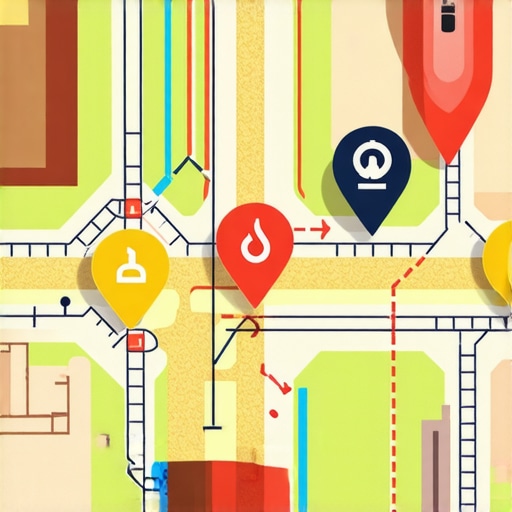
To fix this, you need a sophisticated google maps rank tracker. Instead of a list, you need a visual grid. I recommend setting up a 13×13 or 15×15 grid centered on your primary service area. This creates a “ranking heat map” that places pins every half-mile or mile across your territory. Each pin represents a search performed at that exact geographic coordinate.
When you look at a heat map, the data usually tells a startling story. You’ll see a cluster of green (rankings 1-3) immediately around your office, surrounded by a sea of red (rankings 10+). For an HVAC owner, this red represents “dead zones” – neighborhoods where homeowners are finding your competitors instead of you. If you want to check if your HVAC company is actually ranking in nearby neighborhoods, the geo-grid is the only way to get an honest answer.
Actionable Advice for Grid Setup:
- Track High-Intent Keywords: Don’t just track “HVAC.” Track “emergency furnace repair,” “broken furnace,” and “furnace blower motor replacement.” These are the keywords people search when they are ready to book a technician now.
- Adjust Grid Density: In densely populated urban areas, set your pins closer together (0.5 miles). In sprawling suburbs, you can widen the gap to 2 miles.
- Monitor Competitor Movement: A good google maps ranking service will show you not just where you rank, but which competitor is beating you in specific “red zones.”
By visualizing your data this way, you move from “guessing” to “knowing.” You can see exactly where your “ghost” rankings are and begin the process of google business profile optimization to bridge the gap between your shop and your leads.
Step 2: Correlating Search Intent with Neighborhood Demographics
Not all pins on your map are created equal. As an HVAC expert, you know that a 30-year-old neighborhood with original furnaces is worth ten times more in lead value than a brand-new development where every unit is under warranty. This is where local seo tools become your most powerful asset.
The goal of your google business profile seo strategy should be to align your highest rankings with the neighborhoods that have the highest furnace failure rates. This requires a two-pronged approach: analyzing demographic data and optimizing for “Service Area” signals.
If you are a Service Area Business (SAB), meaning you go to the customer rather than them coming to you, Google’s algorithm looks for “geo-signals” to verify you actually serve a specific area. If your heat map shows you are invisible in a high-value zip code, you need to feed the algorithm proof of your presence there. This is a core part of any professional google maps ranking service.
How to Inject Geo-Signals into Your Profile:
- Geo-Tagged Photos: When your technicians are out on a furnace repair call in a target neighborhood, have them take a photo of the unit (with permission) and upload it to your Google Business Profile. Google reads the metadata and GPS coordinates of that image, reinforcing your relevance in that specific area.
- City-Specific Service Pages: Your website should have dedicated landing pages for the specific suburbs you are tracking. If your grid shows you are weak in “Oak Creek,” you need an “Oak Creek Furnace Repair” page that is linked from your profile.
- Local Content: Write about common furnace issues found in local housing styles. For example, “Common Furnace Problems in [Neighborhood] Victorian Homes.”
By correlating your google maps rank tracker data with local demographics, you stop wasting energy on low-value areas and start dominating the neighborhoods that keep your trucks running all winter long.
Step 3: The “Review-to-Rank” Mapping Strategy
Most HVAC owners view reviews simply as “social proof.” While they are great for building trust, reviews are also one of the most powerful local seo tools for expanding your ranking radius. Google’s algorithm is incredibly smart – it looks at the text of the review and, more importantly, the location of the person leaving it.
If you receive ten reviews in a month from customers in the “Northside” district, and those reviews specifically mention “furnace repair,” Google’s confidence in your ability to serve the Northside area skyrockets. Consequently, your google business profile ranking will naturally rise in that specific geographic cluster on your heat map.
I call this the “Review-to-Rank” strategy. It is one of the specific moves that help your furnace repair service win on Google Maps. Instead of just asking for reviews, you need to be strategic about where those reviews are coming from.
Implementing the Strategy:
- Identify “Cold” Zones: Look at your geo-grid. Find a high-value neighborhood where your ranking is #7 or #8 (just outside the 3-pack).
- Target Your Techs: Encourage your dispatchers to send your best, most “review-friendly” technicians to calls in those specific neighborhoods.
- Prompt for Specifics: When the technician finishes a furnace job in that zone, have them ask the customer to mention the neighborhood and the service in the review. For example: “We’d love it if you could mention we fixed your furnace here in [Neighborhood Name].”
Using a google business profile audit tool can help you track the “Review Velocity” of your competitors in these zones. If a competitor is gaining five reviews a week in a neighborhood where you have zero, they will eventually push you off the map. This proactive approach to local map pack seo ensures that your ranking radius isn’t just a circle around your office, but a strategic map that follows your best customers.
Competitor Awareness & Predictive Lead Tracking
Most HVAC marketing agencies focus on the basics: setting up the profile, adding a description, and maybe posting once a week. But in a competitive market, that is the bare minimum. To truly rank higher on google maps, you need to move toward predictive lead tracking.
Predictive lead tracking involves looking at your ranking trends over time. If your google maps rank tracker shows that your average position in a key neighborhood has dropped from #2 to #5 over the last 30 days, you can predict a drop in furnace leads from that area before it even happens. This allows you to react – by running a localized ad campaign or increasing your review acquisition – before the phone stops ringing.
This level of data-driven gmb ranking service is what differentiates a market leader from a company that is just getting by. By focusing on local map pack seo through the lens of hyperlocal tracking, you can outmaneuver “big box” HVAC franchises that have massive budgets but lack the granular, neighborhood-level focus that Google’s local algorithm rewards.
Conclusion: Turning Data into Warm Homes and Hot Leads
Tracking is the difference between guessing and growing. In the HVAC industry, where a single furnace replacement lead can be worth thousands of dollars, you cannot afford to have “blind spots” in your local service area. By implementing geo-grid tracking, correlating your SEO with neighborhood demographics, and using the “Review-to-Rank” strategy, you can see exactly where your leads live and ensure you are the first company they see when their heater fails.
Don’t let your business be invisible this winter. Use the free maps tools we use to grow our local service footprint to audit your current standing and start reclaiming your territory. If you find that your “heat map” is looking a little too cold, it may be time to invest in a professional google maps ranking service to fix your dead zones and start generating the leads your business deserves.
Faisal Rehman ( AI SEO Expert ) | Founder @ Local Grow 360