My old mentor, a grizzled tech who had more copper in his blood than blood in his veins, used to scream at me every time I grabbed a manifold gauge set before checking the filter: “You can’t cool what you can’t touch, and you can’t heat what you can’t move!” He was obsessed with the physics of air, and for good reason. He taught me that airflow matters more than horsepower. If that air isn’t moving across the heat exchanger or the evaporator coil, your expensive piece of machinery is nothing more than a high-voltage paperweight. Most homeowners think the ‘screech’ coming from their furnace is just an annoyance, but in my thirty years of crawling through spider-infested crawlspaces, I know that sound is the death rattle of a system about to leave you stranded in a polar vortex.
The Anatomy of the Screech: What Your Blower is Screaming
When you hear that high-pitched, metal-on-metal squeal, you aren’t just hearing a noise; you are hearing the sound of friction winning a war against your wallet. Most older furnaces use PSC (Permanent Split Capacitor) motors with sleeve bearings. These bearings rely on a thin film of oil to keep the shaft spinning at 1,200 RPMs. When that oil dries out or gets gummed up with dust because some tin knocker didn’t seal the return air drop properly with pookie, the friction generates heat. That heat expands the metal, the tolerance vanishes, and you get the screech. If you have a newer system, you likely have an ECM (Electronically Commutated Motor). These are smarter and more efficient, but they are also more sensitive to static pressure. If your ductwork is too small—which it usually is—that motor is working overtime, ramping up its torque to overcome the resistance, eventually leading to a catastrophic electronic failure. [image_placeholder_1]
“The most expensive equipment in the world cannot overcome a bad duct system.” – Industry Axiom
The Thermodynamic Domino Effect
Let’s talk Thermodynamic Zooming. Your furnace’s heat exchanger is designed to transfer thermal energy from the combustion process to the air moving over it. This is a delicate balance of Delta-T (temperature difference). If the blower motor is failing and the RPMs drop, the air stays in contact with the heat exchanger for too long. The temperature of the metal skyrockets, exceeding its metallurgical limits. This leads to stress fractures. Once you have a cracked heat exchanger, you aren’t just looking at an emergency heating repair; you’re looking at a gas line installation for furnaces or a total replacement because of carbon monoxide risks. I’ve seen ‘sales techs’ try to use this to scare people into a $20,000 system, but the reality is that catching that blower motor screech early prevents the crack from ever happening. We often assist with rebate application assistance for homeowners upgrading to high-efficiency ECM motors that can handle these loads better.
The Big Freeze: Why Timing is Everything
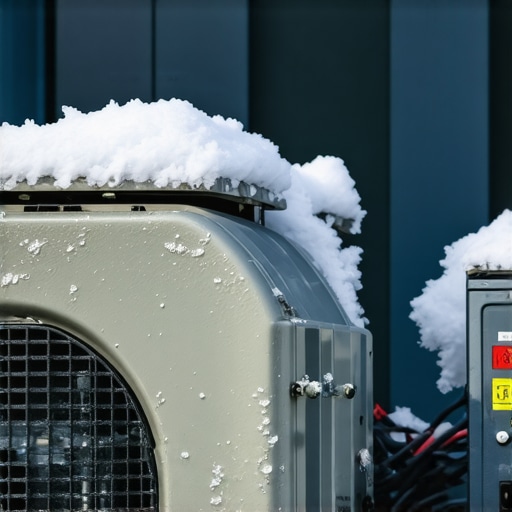
In the North, where the mercury drops faster than a lead weight, a blower failure at 2 AM on a Tuesday isn’t just an inconvenience—it’s a plumbing disaster. When the heat stops, your home’s thermal envelope begins to leak energy to the outdoors. Within hours, your pipes, particularly those on exterior walls, reach the freezing point. This is why we emphasize portable heater safety checks during our maintenance visits; you’d be surprised how many people burn their houses down trying to stay warm with a space heater while waiting for a tech. If you’re in a climate prone to heavy snow, you might also consider snow melt systems installation for your walkways, but none of that matters if your primary relay services in the furnace control board are fried because a seizing motor drew too many amps and melted the traces. [image_placeholder_2]
The Myth of the Quick Fix
I’ve seen DIYers try to spray WD-40 into a sealed motor housing. Don’t be that guy. WD-40 is a solvent, not a lubricant; you’re just washing away what little grease is left. True maintenance involves checking the thermostat installation to ensure the fan ‘auto’ setting is communicating correctly and verifying the capacitor’s microfarad rating. A weak capacitor is often the silent killer of blower motors; it’s like trying to start a marathon with a heart murmur. For more on this, check out our guide on furnace repair myths debunked to see what else you might be getting wrong. If your system is older and uses outdated juice, you might also be looking at low-GWP refrigerant retrofits if you have a dual-fuel heat pump setup. Properly balancing your system is physics, not magic.
“Standard 62.1-2019 defines the roles of ventilation and air cleaning in achieving acceptable indoor air quality.” – ASHRAE Standards
The Solution: Beyond the Blower
If your blower is acting up, it’s a symptom, not just a disease. We look at the whole house. Is your UV light installation for HVAC obstructing airflow? Is your dehumidification services equipment integrated correctly, or is it adding too much external static pressure? When we come out for a diagnostic, we aren’t just looking to swap a part; we’re looking to see why the part failed. We check the suction line on your heat pump to ensure it’s ‘beer can cold’ in the summer and properly pressurized in the winter. If you’re tired of the ‘Sales Tech’ routine and want a real sparky or mechanical expert to look at your rig, you should contact us before the first snowflake hits the ground. Prevention is cheaper than a 3 AM emergency call-out fee any day of the week. You can also find more hvac repair secrets on our blog to keep your system humming. Don’t wait for the screech to turn into silence.