The sound of silence in a Chicago January isn’t poetic; it’s a precursor to frozen pipes and a four-figure emergency call. As a tech who has spent three decades dragging manifolds through crawlspaces, I’ve learned that the furnace isn’t just a box that makes fire—it’s a delicate thermodynamic balancing act. My old mentor, a grizzled tin knocker named Sarge, used to scream at me, ‘You can’t heat what you can’t touch!’ He was talking about airflow, but the logic extends to the Integrated Furnace Control (IFC) board. If the brain of the system can’t ‘touch’ the components through electrical signals, you’re just sitting in a very expensive meat locker.
The Anatomy of a Brain: The IFC Board Explained
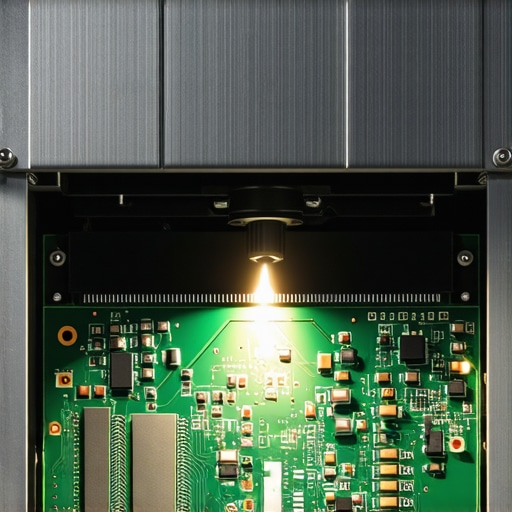
The control board is the air traffic controller for your heating system. It manages the sequence of operations: it checks safety limits, starts the draft inducer motor, energizes the igniter, opens the gas valve, and eventually kicks on the blower motor. When we talk about furnace repair services, we aren’t just swapping parts; we’re performing a forensic audit of this sequence. In our freezing northern climate, where AFUE (Annual Fuel Utilization Efficiency) ratings determine your survival, the control board has to be flawless. It’s not just about comfort; it’s about preventing flame rollout and carbon monoxide leaks. If your chimney liner installation is aging, backdrafting can actually cook the board’s sensitive electronics over time.
“The most expensive equipment in the world cannot overcome a bad duct system or a malfunctioning sequence of operations.” – Industry Axiom
One of the most common signs of a failing board is the ‘clicking’ of death. You hear the relays chatter—a frantic click-click-click—as the board tries and fails to send 24 volts to the gas valve or the inducer. This usually happens because a solder joint has hairline fractures or a capacitor on the board has dried out. Unlike a heat pump installation where you might deal with reversing valve issues, a gas furnace board is fighting high-temperature swings that cause the circuit board to expand and contract. This mechanical stress is what kills most ‘brains’ before the heat exchanger even considers cracking.
Thermodynamic Zooming: The Microamp Mystery
To truly understand if your board is toast, you have to look at the flame rectification circuit. The board sends a small AC voltage to the flame sensor. When the flame hits the sensor, the gas becomes ionized, allowing a tiny DC current (measured in microamps) to flow back to the board. If the board’s logic gate is failing, it won’t ‘see’ this signal, even if the flame is roaring. It will shut down the system in seconds, thinking it’s about to blow your house off the map. This is why preventative maintenance contracts are vital. A tech can measure those microamps and tell you if the board is losing its ‘eyesight’ before the first blizzard hits. If you’re running industrial heater services or even a complex garage heater installation, these tolerances are even tighter.
Repair vs. Replace: The Cold Math
When I’m standing in a basement, looking at a board with a scorched terminal block, the homeowner always asks: ‘Can’t we just fix the board?’ The answer is no. This isn’t a 1970s Chevy; these are UL-listed safety devices. You don’t solder a new relay onto an IFC. You replace the whole unit. A board replacement might run you $500 to $900 depending on the model. If your furnace is 15 years old and has a standard blower, you’re on the fence. However, if you have a cracked heat exchanger or a failing inducer, you might be looking at financing for heat pump installs instead. Modern heat pumps, especially in cold climates, are often paired with an air handler repair strategy to provide dual-fuel reliability. Understanding hvac repair secrets can help you decide when to stop throwing good money after a bad board.
The North Climate Context: Venting and Corrosion
In the Northeast and Midwest, we deal with extreme sensible heat demands. When a furnace short-cycles because of a bad control board, it never reaches a steady-state efficiency. This leads to condensation in the secondary heat exchanger of high-efficiency units. That acidic ‘juice’ can drip back onto the control board if the air handler repair wasn’t done right, or if the venting isn’t pitched correctly. We also see issues with chimney liner installation where improper drafting causes heat to build up in the cabinet, essentially baking the control board’s CPU. If you’ve ever smelled that acrid, ozone-like scent of burning electronics, you know exactly what I’m talking about. It’s the smell of a $800 bill.
“All combustion equipment shall be vented in accordance with the manufacturer’s instructions and the National Fuel Gas Code.” – NFPA 54 Section 12.1
Advanced Integration: From Leak Detectors to Solar Thermal
Modern HVAC systems are becoming ‘smarter,’ but that just means there are more ways for the board to fail. We now see leak detector integration wired directly into the IFC to shut down the system if a secondary drain pan overflows. If you have solar thermal heating integration, your control board is likely communicating with an external controller. These complex ‘handshakes’ between devices are where the ‘Sparky’ (electrician) and the HVAC tech often butt heads. A failing board might manifest as a ‘communication error’ on your fancy Wi-Fi thermostat. Before you let a ‘Sales Tech’ sell you a whole new system, check the diagnostic LED on the board. Those blinking lights are the board’s last words; they’ll tell you if it’s a ‘Limit Switch Open’ or a ‘Rollout Sensed.’ If you are unsure, mini-split troubleshooting guides often share similar logic regarding communication errors, even if the hardware differs.
Conclusion: Don’t Ignore the Ghosts in the Machine
If your furnace starts making weird clicking noises, or if the indoor blower starts running and never stops, your control board is likely on its way out. Don’t wait for the ‘Sound of Silence.’ Proper furnace repair services involve checking the board’s health during every tune-up. For more on what to avoid, read about furnace repair myths. Remember, comfort isn’t magic—it’s physics, and the control board is the physicist. If you need expert help diagnosing your system or are considering financing for heat pump installs, don’t hesitate to contact us for a real diagnosis, not a sales pitch. Check our privacy policy for more information on how we handle your data during service requests. Stay warm, and keep your airflow clear.