The Forensic Diagnosis: Why Your Dry House is a Mechanical Failure
I remember my old mentor, a man who smelled like tobacco and 30 weight oil, screaming at me in the middle of a frozen January in a drafty warehouse. ‘Kid,’ he’d bark, ‘You can’t heat what you can’t touch, and you can’t touch air that’s as dry as a desert bone!’ He wasn’t talking about the thermometer; he was talking about psychrometrics. In the high-stakes world of North-climate HVAC, where furnace repair services are often just a band-aid for poor air quality, the battle against dry air is won or lost in the plumbing. You see, when the mercury drops and your furnace starts eating propane or natural gas, the relative humidity in your home plummets. Your skin cracks, your floorboards groan, and your static electricity starts jumping like a live wire. Most homeowners think a ‘humidifier’ is just a box you strap to the ductwork. Most ‘Sales Techs’—those guys in the shiny shirts who couldn’t find a furnace flame sensor cleaning port if it was glowing red—will tell you a simple saddle valve is fine. They’re wrong. If you want real comfort, you need a dedicated water line.
“The most expensive equipment in the world cannot overcome a bad duct system.” – Industry Axiom
Let’s talk Thermodynamic Zooming. To turn liquid water into a vapor that your warehouse heating solutions or home furnace can actually distribute, you have to account for the latent heat of vaporization. If your water source is a pathetic trickle from a pin-hole saddle valve, you aren’t getting enough volume to saturate the humidifier pad. The result? The water evaporates too slowly, the pad scales up with mineral deposits in weeks, and you’re back to breathing air that feels like a sandpaper massage. A dedicated copper or PEX line, tapped directly into your main and valved off properly, ensures consistent pressure. This isn’t just about ‘moisture’; it’s about the thermal mass of the air. Humid air holds heat better than dry air. When we perform a heat pump installation or a geothermal heat pump systems setup, we look at the total enthalpy of the space. Without proper humidity, your 72-degree setting feels like 68. You’re literally burning money because your air is ‘thin.’
The Saddle Valve Scam: A Maintenance Nightmare
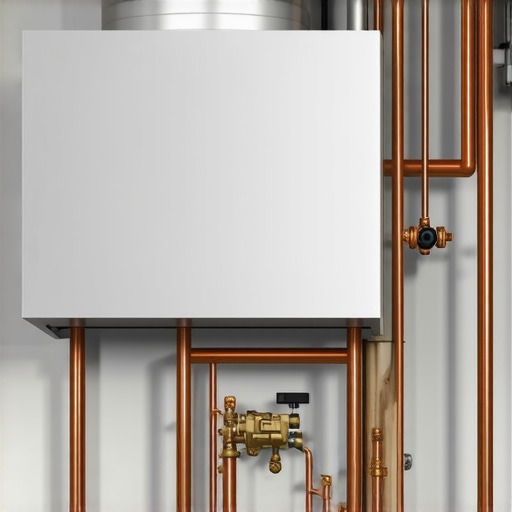
In thirty years of crawling through crawlspaces, I have never seen a saddle valve that didn’t eventually leak or clog. It’s a lazy man’s tool. It pierces the pipe with a needle and relies on a tiny rubber gasket to hold back the house pressure. Eventually, that needle hole calcifies. Suddenly, your humidifier isn’t humidifying, and you’re calling for furnace repair services because you think the blower is failing. I followed a tech once who tried to sell a family a whole new blower motor for $1,200 when the real issue was just a bone-dry house making the air feel ‘stagnant.’ I replaced the clogged saddle valve with a dedicated 1/2-inch tee and a ball valve, and suddenly the house felt like a tropical oasis. That’s the difference between a ‘Parts Changer’ and an actual technician. If you’re seeing predictive maintenance alerts on your smart thermostat, it might not be the furnace—it might be the fact that your humidifier hasn’t seen a drop of ‘juice’ in months.
“Properly designed HVAC systems must maintain both temperature and humidity to ensure structural integrity and occupant health.” – ASHRAE Standard 55
When we talk about warehouse heating solutions or large-scale residential setups, the stakes are even higher. I’ve seen propane conversion services where the homeowner complained the heat was ‘too sharp.’ That’s dry air. By installing a high-output steam humidifier with a dedicated 3/4-inch line, we transformed the space. And don’t get me started on MERV filter upgrades. Everyone wants a MERV 13 or 16 these days to catch every speck of dust. But if you don’t have moisture in the air, the dust stays suspended longer. High-efficiency filtration and proper humidification are two sides of the same coin. If you’re doing a thermocouple replacement on an old beast of a furnace, take a look at the humidifier while you’re in the ‘tin.’ If you see a plastic tube and a saddle valve, you’re looking at a ticking time bomb. We always recommend a hard-piped solution to prevent the ‘swamp effect’ in the basement. HVAC repair secrets often come down to these small plumbing details that ‘Tin Knockers’ usually ignore.
Integrating Modern Controls: Geofencing and Humidity
Modern comfort isn’t just a dial on the wall anymore. With geofencing temperature control, your system knows when you’re ten minutes from home and ramps up the heat. But if your humidifier is tied to a crappy water source, it can’t keep up with the rapid temp rise. You end up with ‘hot-dry’ air, which is the fastest way to get a sinus headache. A dedicated line allows for high-flow solenoids that can respond instantly to the humidistat’s call. Whether you’re running a mini-split troubleshooting session or calibrating a geothermal heat pump systems array, the water supply is the lifeblood of the winter season. If you’re tired of the ‘Sales Tech’ shuffle, contact us to get a real tech out there who knows the difference between a flare nut and a compression fitting. We don’t just fix the heat; we fix the air. For more on keeping your system running during the brutal North winters, check out our ultimate guide to heat pump maintenance or learn about common furnace repair myths. Don’t let a $5 valve ruin a $10,000 system. Do it right: pipe it in, bleed the air, and let that evaporator pad do its job properly. That’s the only way to survive the polar vortex without turning into a prune.