The Invisible Chokehold on Your Comfort
You can spend $15,000 on a high-efficiency furnace with a fancy modulating gas valve and a communication-ready blower motor, but if your ductwork is a mess of restrictive dust and ‘Pookie’ (mastic) applied by a blind ‘Tin Knocker,’ you might as well be burning $100 bills for warmth. I’ve spent 30 years crawling through crawlspaces and balancing airflow, and I’ve learned one immutable truth: your HVAC system is a respiratory system, not just a box of parts. If the lungs are full of gunk, the heart—the compressor or the heat exchanger—is going to fail long before its time. We’re going to talk about the physics of the ‘Airflow Manifesto’ and why those hidden dust traps are doing more than just making you sneeze.
“The most expensive equipment in the world cannot overcome a bad duct system.” – Industry Axiom
My old mentor used to scream at me, ‘You can’t heat what you can’t touch!’ He’d stand over me while I struggled with a manometer, making sure I understood that airflow matters more than horsepower. He was right. If the air can’t physically move across the heat exchanger because of a thick mat of pet dander and construction debris, the heat exchanger overheats, the high-limit switch trips, and eventually, the metal cracks. That’s not just a repair; that’s a death sentence for the unit and a carbon monoxide risk for you. This is why furnace repair myths often lead people to buy new parts when they really just need to let the system breathe.
The Physics of the Secondary Heat Exchanger Trap
In the North, where we deal with AFUE ratings of 90% or higher, we have a secondary heat exchanger. This is a dense grid of fins that extracts the last bit of latent heat from the combustion gases, turning vapor into liquid. Because these fins are so tight, they act like a secondary air filter—one you never change. When dust bypasses a cheap 1-inch pleated filter, it coats these wet fins, creating a gray, fuzzy mud. This mud destroys your heat transfer. We use static pressure testing to diagnose this. If the ‘blood pressure’ of your system is too high, it means there’s a blockage in the arteries. Most ‘Sales Techs’ will tell you the motor is weak. I’m telling you the motor is fine; it’s just trying to push air through a brick wall of dust.
The Garage Heater and the Gas Line Danger
I often see people trying to bypass their main system issues by installing a garage heater installation. While a dedicated unit in the shop is great, I’ve seen some absolute nightmares with gas line installation for furnaces and heaters where ‘Sparky’ (the electrician) or a DIYer used the wrong pipe or didn’t check for leaks. If you’re smelling something sour or acidic, it might not just be a dirty duct; it could be a pilot light relighting issue or a gas leak. Every winter, I find portable heater safety checks are ignored, leading to melted outlets. If you’re relying on a space heater because your vents are blowing weak, you have an airflow problem, not a heater problem.
Static Pressure: The Silent Killer of Efficiency
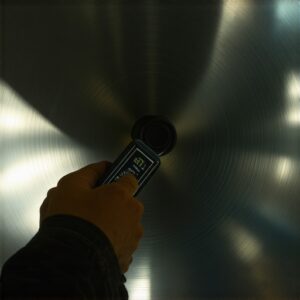
When I hook up my dual-port manometer to your plenum, I’m looking for the total external static pressure (TESP). Most residential blowers are rated for 0.5 inches of water column. I often find systems running at 0.9 or 1.2. That is the mechanical equivalent of running a marathon while breathing through a cocktail straw. This high pressure causes contactor repair needs because the extra heat in the cabinet melts the wiring, and it kills the ‘juice’ (refrigerant) flow in the summer. We are currently seeing a massive shift toward low-GWP refrigerant retrofits as the industry moves away from R-410A. These new systems, using R-454B or R-32, are even more sensitive to airflow. If your ducts are dirty and restrictive, these new ‘mildly flammable’ systems will throw sensors and lock out before they even get started.
“Standard 62.2 defines the roles of mechanical ventilation in maintaining acceptable indoor air quality.” – ASHRAE Standards
If you’re considering a heat pump replacement to get away from gas, don’t think you’re off the hook. A heat pump requires even MORE airflow than a furnace. While a furnace can dump 140-degree air, a heat pump gives you ‘luke-warm’ 95-degree air. To move the same amount of BTUs, you need more volume. If your return air drop is undersized or clogged with twenty years of skin cells, that brand-new heat pump will be a giant, expensive paperweight during a polar vortex. This is where heat pump maintenance becomes critical—you have to keep the coils and the ducts surgically clean.
The Return Air Drop: The Ultimate Dust Trap
The biggest ‘hidden’ trap isn’t in the vents you see on the floor; it’s the return air drop—the big trunk that sucks air back to the furnace. Most builders use the wall cavities as returns (‘panned returns’). These are not sealed. They suck in dust from the attic, insulation from the walls, and spiders from the basement. When we do a static pressure testing, we often find the return side is the culprit. Cleaning these out is the only way to restore the ‘Suction Line’ to that ‘beer can cold’ feeling in the summer. If you’ve upgraded to remote thermostat access, you might see ‘Equipment Alert’ notifications on your phone. Those aren’t glitches; that’s your furnace screaming that it’s suffocating.
The Wood Stove and the Pressure Imbalance
In rural areas, I often see a wood burning stove installation paired with a central system. If you aren’t careful, the chimney effect of the stove can create a negative pressure that pulls dust and debris even deeper into your central ductwork. It can even cause back-drafting of your furnace’s exhaust. It’s all about the ‘building envelope.’ You can learn more about how these systems interact in our hvac repair secrets guide. Whether it’s a pilot light relighting on an old floor heater or a contactor repair on a modern AC, the root cause is almost always the same: neglect of the air path.
Stop listening to the guys who want to sell you a new ‘high-seer’ box without looking at your ‘tin.’ If they don’t pull out a manometer, they aren’t technicians; they’re salesmen in blue shirts. Clean the traps, seal the leaks with ‘Pookie,’ and let the physics of thermodynamics work for you instead of against you. If you’re having issues with a specific zone, check out our mini-split troubleshooting page for targeted comfort. For anything else, you can reach out through our contact page or read our privacy policy to see how we handle your data.