The Sound of a Choked System: Why Airflow is King
I’ve spent thirty years crawling through fiberglass-filled attics and cramped basements, and if there is one thing I’ve learned, it’s that most people don’t understand physics. They think an HVAC system is a box that magically creates ‘cold’ or ‘heat.’ It’s not. It’s a heat transfer machine. If you can’t move air, you can’t move BTUs. I’ve seen commercial furnace repair jobs where the owner thought the heat exchanger was shot, but the reality was the system was just suffocating under a decade of dust. My old mentor used to scream, ‘You can’t cool what you can’t touch!’ This is why airflow matters more than horsepower. When your ducts are restricted, your static pressure skyrockets, and your blower motor replacement is just a matter of when, not if. Most ‘duct cleaning’ companies are just guys with a shop vac and a sales pitch. But when it’s done right, the physics of your home changes.
“The most expensive equipment in the world cannot overcome a bad duct system.” – Industry Axiom
The Anatomy of the Scam: A Technical Intervention
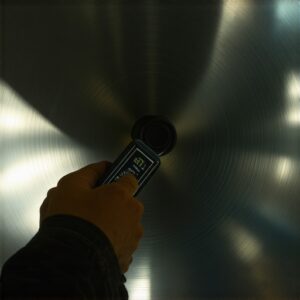
I followed a so-called ‘Sales Tech’ last winter into a large facility requiring warehouse heating solutions. This guy had quoted the manager $22,000 for a full system replacement because the units were ‘underperforming.’ I walked in with my manometer and a borescope. The two-stage furnace installation they had was barely five years old. The ‘tech’ had ignored the fact that the return air drops were completely undersized and the internal liners of the flex duct had collapsed, acting like a cardiac blockage. He wanted to sell a new box; I wanted to fix the lungs. We cleaned the coils, replaced the collapsed runs, and used hospital HVAC zoning principles to balance the air. The system didn’t need replacing—it needed to breathe. This is why I tell people to check hvac repair secrets to boost efficiency before signing a five-figure check.
Sign 1: The Static Pressure Drop (The Manometer Doesn’t Lie)
If your technician didn’t pull out a dual-port manometer, they didn’t ‘clean’ anything—they just vacuumed your floor vents. Effective duct cleaning must result in a measurable drop in Total External Static Pressure (TESP). Think of it like blood pressure for your house. When debris builds up on the turning vanes and the evaporator coil, the blower motor has to work twice as hard to push air through. After a real cleaning, your blower motor replacement risk drops because the ‘juice’ (amperage) required to turn that wheel decreases. In a commercial furnace repair context, high static pressure can lead to premature failure of the secondary heat exchanger because the air isn’t moving fast enough to carry the heat away, leading to localized overheating. You should notice the fan sounds ‘lighter’ or less strained.
Sign 2: The Elimination of ‘Dirty Sock Syndrome’ and VOCs
In the North, where crawl space heating solutions are common, moisture often hitches a ride into the ductwork. If your house smells like a wet gym locker when the furnace kicks on, you’ve got microbial growth on the coil or deep in the ‘Pookie’ (mastic) sealed joints. Effective cleaning removes the organic ‘food’ (dust, dander, skin cells) that these colonies thrive on. This is especially critical for hospital HVAC zoning where air quality isn’t just about comfort—it’s about safety. If that smell persists after a cleaning, the company didn’t sanitize the plenum or clean the secondary drain pan. You can find more on this in my furnace repair myths debunked guide.
Sign 3: Thermal Delta-T Balancing
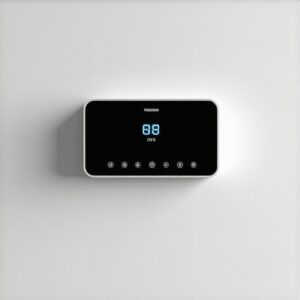
Thermodynamically, a clean system is an efficient one. If you have a mini-split or a traditional forced-air system, the ‘Delta-T’ (the temperature difference between the return air and the supply air) should stabilize. In a heating application, specifically with gas line installation for furnaces and high-efficiency burners, dirty ducts cause the unit to ‘short cycle.’ The air gets too hot, the high-limit switch trips, and the furnace shuts down for safety. After a proper cleaning, the air moves at the designed CFM (Cubic Feet per Minute), allowing the two-stage furnace installation to actually stay in its low-fire stage longer, which provides more even heat and lowers your gas bill. If your predictive maintenance alerts stop screaming about ‘Limit Switch Open’ errors, your cleaning worked.
“Airflow is the primary vehicle for heat transfer in all forced-air HVAC systems; without proper volumetric flow, rated efficiencies are impossible to achieve.” – ACCA Manual D
Sign 4: The ‘White Glove’ Test at the Furthest Register
Go to the room furthest from the furnace. This is the end of the line. Before cleaning, this room likely felt ‘stuffy.’ After an effective service, the velocity of the air at that register should be noticeably higher. Use a simple tissue test; if the air doesn’t have the ‘oomph’ to hold a tissue against the ceiling, the ‘tin knocker’ who installed the ducts or the cleaner who ‘serviced’ them failed. This is the same logic we use in warehouse heating solutions—if the air doesn’t reach the floor, the heat just stays at the 20-foot ceiling.
When to Call a Real Pro
If you’ve gone through a cleaning and you’re still seeing predictive maintenance alerts or your mini-split is iced over, it’s time to stop DIY-ing. You might need a gas line installation for furnaces update or a deeper commercial furnace repair. Check out our ultimate guide to heat pump maintenance if you’re running a dual-fuel system. If the air still feels ‘dead,’ you can always contact us to get a real tech with a manometer out there, not a sales guy with a clipboard. Physics doesn’t care about your feelings, but it definitely cares about your static pressure.