The Sound of a Choked Flame
There is a specific sound a furnace makes when it is struggling for breath, a rhythmic, desperate pulsing of the inducer motor that most homeowners mistake for a simple ‘old unit’ quirk. I spent my first decade in the trade under the wing of a man named ‘Old Man Miller,’ a guy who could tell you the manifold pressure just by looking at the color of the flame. He used to grab me by the shoulder and bark, ‘Kid, you can’t burn what you can’t vent! Flow is life, and the flue is the artery.’ If that artery gets clogged by a few pounds of straw and bird droppings, the physics of your home doesn’t just stop—it turns deadly. This is the forensic reality of modulating furnace repair and the critical nature of venting integrity.
‘A chimney or vent shall be so designed and constructed as to develop a positive flow adequate to remove all products of combustion to the atmospheric air.’ – NFPA 54: National Fuel Gas Code
The Anatomy of a Flue Obstruction
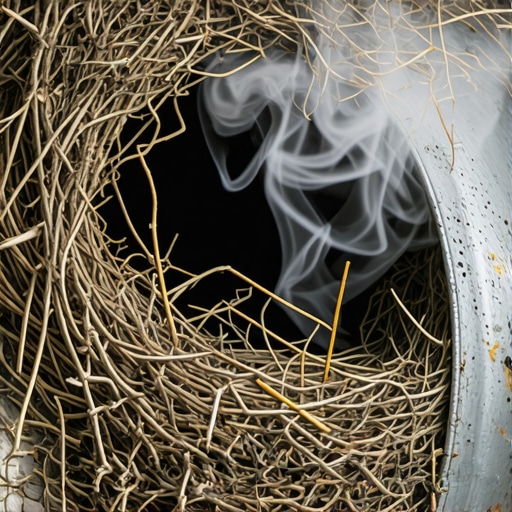
When a bird decides that your 80% AFUE B-vent or your 95% PVC exhaust is the perfect warm nesting spot, they aren’t just building a home; they are creating a stoichiometric nightmare. In a standard gas furnace, we are dealing with combustion air and flue gases. These gases contain carbon monoxide (CO), water vapor, and carbon dioxide. If a nest blocks that pipe, the pressure switch—that little round puck with the rubber hose—will usually trip and prevent the furnace from firing. But I’ve seen plenty of ‘hacks’ bypass those switches, leading to flame rollout. That is when the fire literally licks out of the burner box because the heat has nowhere else to go. This is why furnace repair myths debunked is such a vital read; assuming a ‘reset’ fixes a safety trip is how houses burn down.
The Psychrometrics of the North: Why Winter Kills Units
In cold climates like the Northeast or the Midwest, we deal with extreme temperature differentials. When you have 0°F ambient air outside and 140°F flue gases trying to escape, condensation happens. In high-efficiency systems, we call this the ‘latent heat of vaporization.’ The furnace captures the heat from the steam, turning it back into liquid water. If a bird nest is sitting in that pipe, it acts like a sponge, freezing into a solid ice-and-straw block that no inducer motor can push past. This is particularly troublesome for those with solar thermal heating integration or hybrid systems where the furnace doesn’t run constantly, allowing the flue to stay cold longer and ice to build up faster. If you are noticing weird noises, it might be time for professional HVAC services to scope that line.
Beyond the Furnace: Boilers and Heat Pumps
It isn’t just the furnace that’s at risk. I’ve walked onto jobs for boiler repair services where the atmospheric draft hood was spilling CO back into the mechanical room because a squirrel had stuffed the chimney with acorns. The physics of a boiler rely on the ‘stack effect’—hot air rising naturally. Any resistance, even a thin layer of soot or a small nest, destroys that draft. For folks moving away from gas, a heat pump or mini-split avoids the flue issue entirely since they don’t burn fuel, but they have their own airflow enemies. Check out the ultimate guide to heat pump maintenance to see how snow and debris replace the bird nest as the primary villain. If you’re tired of the gas-pipe headache, financing for heat pump installs has made the switch to ‘juice-based’ heating much more accessible for the average homeowner.
The Moisture Factor: Humidifiers and Attic Insulation
A blocked flue doesn’t just threaten your lungs; it threatens the structure of your home. When combustion gases can’t escape, the moisture backs up. I’ve seen whole-home humidifiers blamed for ‘sweating walls’ when the real culprit was a clogged flue dumping gallons of water vapor back into the house. If you have a bypass humidifier repair on your to-do list, make sure the technician checks the furnace’s primary venting first. Furthermore, attic insulation for heating efficiency is great, but if your tin knocker didn’t properly seal the flue penetration through the attic floor with fire-rated pookie (mastic) and metal flashing, that bird nest in the flue becomes a localized furnace against your dry wooden rafters.
‘The most expensive equipment in the world cannot overcome a bad duct or venting system.’ – Industry Axiom
The Solution: Hard Hardware and Expert Eyes
Whether it is pool heater repair (yes, they have flues too, and spiders love them) or a complex mini-split setup, the solution is always the same: regular inspection. You can find more hvac repair secrets here, but the ‘secret’ is usually just a flashlight and a mirror. Don’t let a sparky or a general handyman tell you that a ‘little bit of debris’ is fine. If that flue is obstructed, the unit is a bomb. If you’re seeing an error code on your head unit, see mini-split troubleshooting before you start pulling panels. And remember, the privacy policy of your home’s health starts with the air you breathe. Keep the birds in the trees and the exhaust in the pipe.