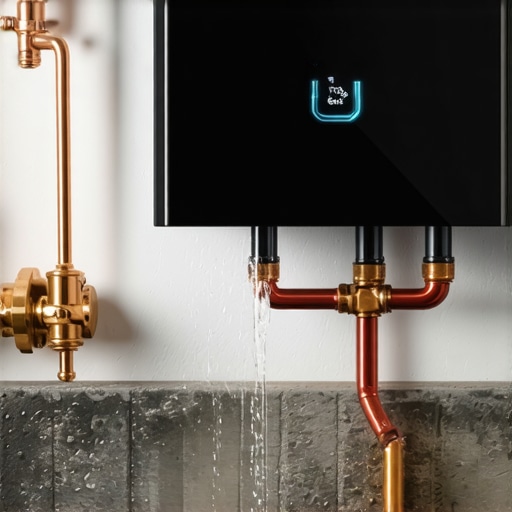
You hear it before you see it. That rhythmic, metallic tink-tink-tink of water hitting a cold concrete floor in the dead of a New England winter. You head down to the basement, and there it is: a puddle forming under your boiler. Before you panic and call the first number on a magnet, let me tell you about a call I took last February. I followed a ‘Sales Tech’—one of those guys who gets a commission on every unit he sells—who had just quoted a retired schoolteacher $16,500 for a full oil-to-gas conversion. He told her the ‘heat exchanger was compromised’ because of a leak. I walked in, saw the puddle, and found a failed $40 expansion tank that had caused the pressure relief valve to weep. Ten minutes and a few turns of a pipe wrench later, the ‘catastrophic’ leak was gone. He wasn’t a technician; he was a salesman in a uniform. I despise that. In thirty years of melting in crawl spaces and smelling the acidic, sour rot of a rusted-out burner, I’ve learned that a leak is rarely a death sentence—if you understand the physics of the system.
The Anatomy of a Leak: Thermodynamic Stress in Cold Climates
In the North, where the mercury regularly dips into the negatives, your boiler isn’t just a machine; it’s a life-support system. When we talk about boiler repair services, we aren’t just ‘fixing a pipe.’ We are managing thermal expansion. A boiler is a closed loop. When water heats up, it expands. If that expansion has nowhere to go because your expansion tank is waterlogged (lost its ‘air cushion’), the pressure spikes. This is where the static pressure testing of the hydronic side becomes critical. If the pressure exceeds 30 PSI, the safety valve does exactly what it was designed to do: it pukes water on the floor to keep the boiler from becoming a basement-level rocket ship.
“Hydronic systems must be designed to accommodate the thermal expansion and contraction of the fluid within the piping system to prevent component failure.” – ASHRAE Fundamentals Handbook
If you see water dripping from a pipe with a little silver lever on top, that’s your Pressure Relief Valve (PRV). Don’t just plug it. That valve is the only thing standing between you and a very bad day. The leak isn’t the problem; it’s a symptom of a failed expansion tank or a faulty fill valve that’s constantly shoving ‘juice’ (refrigerant guys call it gas, we call water the medium) into a system that’s already full.
The Critical Checkpoints: Where the Water Escapes
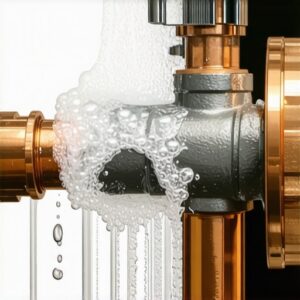
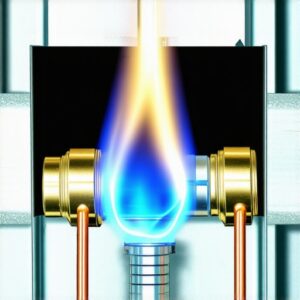
When I perform an emergency heating repair, I look at the system like a forensic pathologist looks at a body. I start at the circulator pumps. These are the hearts of the system. If you see green crusty buildup (the ‘tin knocker’s’ worst nightmare) around the pump flanges, the gaskets have dried out. This often happens in the shoulder seasons when the system sits idle. The rubber shrinks, and once the heat kicks back on, the ‘pookie’ or old pipe dope can’t hold back the tide. If the leak is coming from the internal cabinet of a modern high-efficiency unit, we might be looking at a modulating furnace repair scenario involving the condensate trap. These units extract so much heat from the exhaust that the flue gases turn back into acidic water. If that plastic trap cracks or clogs, it leaks. This isn’t just a water issue; it’s a safety issue. If the condensate can’t drain, it can back up and rot the burner, leading to flame rollout—a major reason why carbon monoxide detector installation is non-negotiable in any home with a combustion appliance.
Oil to Gas Conversion and Modern Efficiency
Many homeowners are tired of the ‘clunk-clunk’ of an old oil burner and the rising cost of fuel. Moving to a gas system allows for variable speed furnace services and modulating boilers that can scale their BTU output based on the outdoor temperature. If your old cast-iron beast is leaking from the sections (the actual ‘bones’ of the boiler), it might be time to look into rebate application assistance. Many states offer thousands of dollars to switch to high-efficiency gas or heat pump systems. I’ve seen guys try to patch a cracked section with JB Weld or some other garbage. It never works. The expansion and contraction cycles of a cast-iron boiler are too violent for epoxy. You’re better off checking out furnace repair myths debunked to see what’s actually fixable and what is just a salesman’s tall tale.
Crawl Space Heating Solutions and Pipe Protection
In many older homes, the boiler lines run through unconditioned spaces. Crawl space heating solutions often involve more than just throwing a space heater down there. If your boiler is leaking because a pipe froze and split, you’ve got an airflow problem. Insulation is great, but if you don’t have moving air or heat tape, that water is going to turn to ice the second the power flickers. A split pipe usually happens at the elbow. When water freezes, it expands with enough force to rip through ‘L’ grade copper like it’s wet paper. If you find yourself in this situation, shut off the main water valve immediately. For those with alternative setups, like ventless gas heater services in a garage or basement, remember that these units put off a massive amount of moisture as a byproduct of combustion. If you see ‘leaking’ walls or ceilings near a ventless heater, it’s likely not a plumbing leak—it’s condensation from the heat itself. This is why proper venting and humidity control are vital, as discussed in our ultimate guide to heat pump maintenance which covers similar thermodynamic principles.
“Any appliance that consumes fuel must have an adequate supply of air for combustion and ventilation to prevent the accumulation of carbon monoxide.” – NFPA 54: National Fuel Gas Code
The Veteran’s Verdict: Stop the Leak Fast
If you have a leak right now, here is your checklist: 1. Check the pressure gauge. If it’s over 25 PSI, your expansion tank is likely dead. 2. Look at the PRV. If it’s dripping, it’s doing its job. 3. Check the pump flanges for ‘green’ corrosion. 4. Ensure your carbon monoxide detectors are active. If the leak is coming from the heat exchanger itself—the big metal box where the fire lives—you need a professional. Don’t let a sales tech scare you into a $15k purchase if you only need a $200 pump. If you’re unsure, contact us for a second opinion that’s based on physics, not a commission check. For more technical deep dives, read about hvac repair secrets that the big companies don’t want you to know. Comfort isn’t magic; it’s a balance of pressure, temperature, and common sense. Keep your ‘juice’ in the pipes and the fire in the box, and you’ll survive the winter just fine.