The Sound of a Silent Furnace in a Polar Vortex
There is a specific kind of silence that hits you in the middle of a January night in the Northeast. It is not the peaceful kind; it is the heavy, oppressive silence of a furnace that has decided to quit while the mercury is dropping toward zero. As a tech with thirty years of soot under my fingernails, I have heard every excuse a machine can give, but the most dangerous one is the silent leak. When you walk into a mechanical room and catch that faint, sulfurous whiff of rotten eggs—mercaptan, the additive the gas company uses because natural gas is naturally invisible and odorless—your gut tightens. You are no longer just a tin knocker; you are a forensic investigator in a high-stakes environment where the fuel for your comfort is trying to become a bomb.
The Sales Tech Scam: A Case of Managed Fear
I remember following a ‘Sales Tech’—one of those guys who wears a crisp white shirt and carries a tablet instead of a pipe wrench—into a home in a drafty suburb of Chicago. He had already quoted the homeowner, a retired teacher, a staggering $14,000 for a full system replacement. His reason? A ‘catastrophic gas valve failure.’ He told her the unit was a ticking time bomb. I walked in, pulled out my electronic sniffer, and found a loose flare nut on the pilot tubing. It took two minutes and a quarter-turn of a wrench to fix. The ‘Sales Tech’ didn’t even have a bottle of bubble solution in his bag. He was selling fear, not service. This is why understanding the anatomy of your furnace’s control valve is essential; it is the difference between a $150 service call and a $15,000 mistake. Understanding furnace repair myths can save you from these predatory ‘Comfort Advisors’.
“The most expensive equipment in the world cannot overcome a bad duct system.” – Industry Axiom
The Mechanical Anatomy of the Gas Control Valve
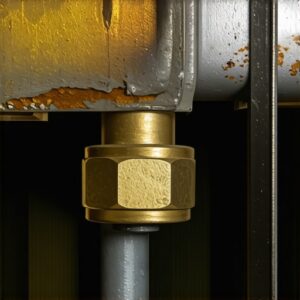
The gas valve is the gatekeeper. It is a complex electromechanical device that manages the flow of fuel to the burners. In a modern high-efficiency furnace, this valve is controlled by the integrated furnace control (IFC) board. When the thermostat calls for heat, a sequence of events must occur: the inducer motor starts to clear the heat exchanger, the pressure switch proves airflow, the igniter glows white-hot, and finally, the gas valve receives 24 volts to its solenoid coils. Inside, a diaphragm lifts, allowing ‘gas’ to flow into the manifold. If that valve has a micro-crack in the casting or a failing internal seal, you have a leak. This isn’t just about efficiency; it’s about stoichiometry—the precise air-to-fuel ratio required for safe combustion. If the valve is ‘leaking’ internally (passing gas when it should be closed), it can lead to delayed ignition, which sounds like a small cannon going off in your basement.
How to Spot the Leak Before the Alarm Sounds
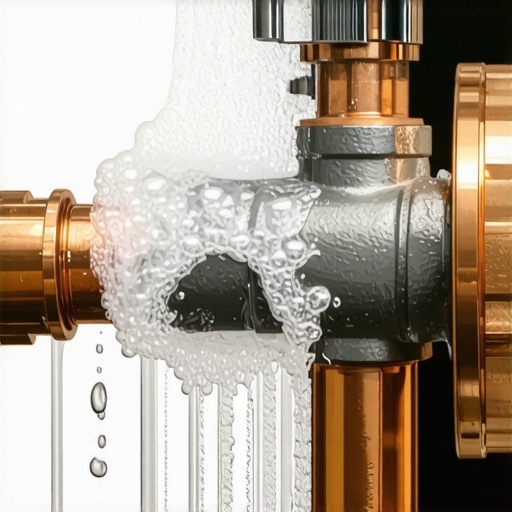
First, use your nose, but do not rely on it. A gas valve can leak in two ways: externally into the room or internally past the seat. An external leak often happens at the inlet or outlet bosses or at the manual shut-off handle. If you suspect a leak, the most reliable ‘old-school’ method is the bubble test. A mixture of water and high-viscosity soap applied to the fittings will reveal a leak by growing a cluster of bubbles. For the tech-savvy, an electronic combustible gas detector is the gold standard. We also look for thermocouple replacement issues. In older standing pilot systems, the thermocouple is the safety device that generates a tiny millivolt signal from the heat of the pilot flame to keep the gas valve open. If that signal is weak, the valve might ‘chatter,’ leading to intermittent gas smells and erratic heating. For those in cold climates, ensuring your cold climate heat pumps or furnaces are sized correctly using manual J calculations is vital, as an oversized unit will short-cycle, putting immense mechanical stress on the gas valve solenoids.
“Gas piping shall be tested in accordance with the International Fuel Gas Code to ensure the integrity of the system before operation.” – NFPA 54 / ANSI Z223.1
The Physics of the Cold: Why Humidity and Pressure Matter
In a cold climate like Chicago or the Northeast, we deal with extreme temperature differentials. This affects the density of the air and the performance of the gas. If your home is too dry, it can actually affect the seals in older equipment. This is where whole-home humidifiers and humidifier installation come into play; maintaining a steady 35% relative humidity isn’t just for your skin—it’s for the longevity of the entire building envelope. When we talk about industrial heater services or even residential units, we have to consider the ‘Total External Static Pressure.’ If your ductwork is restricted, the furnace runs hotter, the gas valve is subjected to more heat soak, and the internal components fail faster. If you are noticing a gas smell only when the unit cycles off, you likely have a ‘seeping’ valve that isn’t closing fully. This is a critical safety issue that requires immediate professional intervention. You can contact us for a forensic evaluation if you smell even a hint of mercaptan.
Remote Access and Modern Diagnostics
We live in an era of remote thermostat access, which is great for monitoring your home while you’re away, but a Wi-Fi thermostat won’t tell you if your gas valve is leaking. It will only tell you that the temperature is dropping. For electric heater services or spa heater services, the failure points are different, but for gas-fired equipment, the valve remains the primary point of failure. If you are using a wood burning stove installation as a backup, ensure your carbon monoxide detectors are calibrated and placed correctly. A leaking gas valve can lead to incomplete combustion, producing CO, the silent killer. Don’t be fooled by a ‘Sparky’ who thinks he can fix a gas valve with electrical tape; this is a job for a licensed HVAC pro who understands manifold pressure and ‘water column’ measurements. A typical natural gas furnace requires 3.5 inches of water column pressure at the manifold. If the valve is failing, it won’t maintain this pressure, leading to ‘sooting’ and potential cracked heat exchangers. For more advanced issues, see our mini-split troubleshooting guide or learn hvac repair secrets to keep your system humming through the winter.
Final Verdict: Repair or Replace?
If the gas valve is leaking, the valve itself is non-serviceable. You do not ‘fix’ a gas valve; you replace it. If your furnace is over 15 years old and the ‘tin knocker’ finds a leaking valve and a rusted heat exchanger, it is time to look at heat pump maintenance and repairs or a new high-efficiency furnace. But if the unit is solid and the ‘Sales Tech’ is just trying to hit his monthly quota, stand your ground. Demand a manifold pressure test and a soap bubble leak check. Comfort is physics, not magic, and a well-maintained furnace is a safe furnace.