The Sound of a Silent Killer
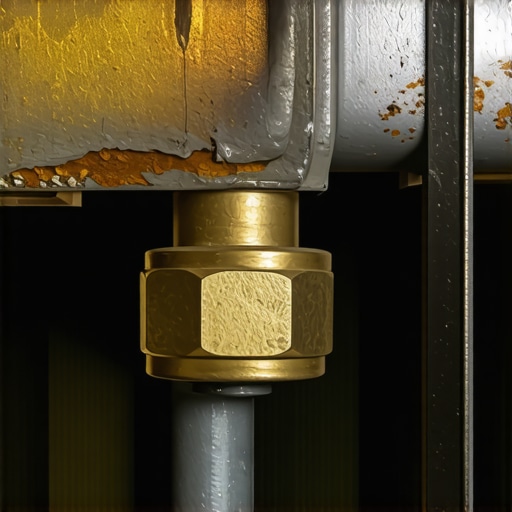
I remember my old mentor, a grizzled tin knocker who had been in the trade since the days of coal-fired gravity furnaces, used to scream at me every time I pulled a service jacket off a unit: ‘You can’t cool what you can’t touch, and you can’t heat what you’re about to explode!’ He wasn’t being dramatic. He was looking at a 1970s-era uncoated brass flexible gas connector tucked behind a furnace, green with corrosion and waiting for the slightest vibration to snap. In the world of real HVAC work, we don’t care about the shiny thermostat on your wall; we care about the mechanical integrity of the fuel delivery system. If that flexible line fails, your Energy Star heating certification doesn’t mean a thing because you won’t have a house left to certify.
The Forensic Anatomy of a Gas Leak
Most homeowners think a gas line is just a hose. It isn’t. When we perform system performance testing, we aren’t just looking at the Delta-T across the evaporator coil or checking the manifold pressure. We are looking for the structural fatigue of the corrugated stainless steel or, worse, those antique brass connectors. These flexible lines were designed to allow for the slight vibration of the inducer motor and the blower, but they have a finite lifespan. Over decades, the sulfur in the natural gas reacts with the metal—a process called ‘sulfidation.’ It eats the metal from the inside out until the wall thickness is paper-thin. When that inducer motor kicks on for the first time in November, the vibration is the final straw.
‘Flexible appliance connectors shall not exceed 6 feet in length and shall be replaced whenever the appliance is moved or replaced to ensure the integrity of the gas seal.’ – NFPA 54: National Fuel Gas Code
If you are still running an old unit and considering an oil to gas conversion, the gas line is the most critical part of the infrastructure. You can’t just hook up a high-BTU furnace to a line meant for a water heater. The physics of gas flow—the ‘gas’ or ‘juice’ as we call it—requires specific pipe sizing to prevent pressure drops that cause the burner to lean out, leading to soot and eventual heat exchanger failure. This is why duct design services are often coupled with gas line audits; the entire system must be balanced for both air and fuel.
The Cold Climate Context: Why the North is High-Stakes
In regions like Chicago or the Northeast, the thermal stress on a furnace is relentless. We deal with ‘Flame Rollout’—where the flame literally licks back out of the burner because the heat exchanger is cracked or the venting is blocked by ice during a polar vortex. If you have a flexible gas connector that is already compromised, that back-pressure or vibration from a struggling burner becomes a catalyst for disaster. Unlike evaporative cooler services used in the dry Southwest, our heating systems in the North rely on high-pressure combustion. When we talk about SEER2 compliant upgrades, we are usually discussing AC efficiency, but the heating side (AFUE) is where the real safety risks live. A high-efficiency condensing furnace produces acidic condensate; if that leaks onto a gas connector, it accelerates the corrosion at an alarming rate.
The ‘Sales Tech’ Scam vs. Real Safety
I’ve seen it a thousand times. A ‘Sales Tech’ walks in, sees a 15-year-old furnace, and immediately starts pitching a $15,000 replacement without even looking at the gas train. They want the commission, not the solution. A real technician checks the hydronic heating systems, the radiator replacement needs, and specifically, the gas connector. Sometimes, a furnace is fine, but the gas line is a death trap. Other times, the furnace is shot, and the tech installs a brand-new unit but reconnects it using the old, brittle flex line to save ten minutes. That is negligence. If you want to know the truth about your equipment, check out these furnace repair myths debunked to see what actually matters versus what is just a sales pitch.
Thermodynamic Zooming: Latent Heat and Combustion
Let’s talk science. When your furnace fires, it’s not just ‘making fire.’ It’s a chemical reaction. A standard furnace takes methane (CH4) and oxygen (O2) and converts it into heat, CO2, and water vapor. In high-efficiency units, we ‘squeeze’ that water vapor until it releases its latent heat of vaporization. That’s how we get 96% efficiency. But that process creates a lot of vibration and moisture. If your occupancy sensor installation is telling the thermostat to kick the heat on and off constantly (short-cycling), you are putting massive physical stress on those gas connections. Every ‘clunk’ of the gas valve is a hammer blow to a corrugated pipe. This is why we advocate for HVAC repair secrets that focus on long-term mechanical stability rather than just ‘patching the leak.’
‘The most expensive equipment in the world cannot overcome a bad duct system—or a failing fuel line.’ – Industry Axiom
The Blueprint for a Safe System
If you have a basement with biomass boiler services or a standard gas furnace, your inspection checklist should be forensic. 1. Is the gas connector coated in yellow or black plastic? (If it’s bare metal, it’s likely too old). 2. Is there any ‘pitting’ or white powder on the line? (That’s corrosion). 3. Does it look like it’s being used as a handle or a shelf? (I’ve seen it, believe me). If you’re unsure, you need to contact us for a real pressure test. We don’t just sniff for gas; we use a digital manometer to ensure your house isn’t slowly filling with 1,000 PPM of methane. This isn’t just about comfort; it’s about making sure you wake up in the morning. Real HVAC work is about physics, safety, and the ‘Pookie’ (mastic) that seals the deal. Don’t let a $20 part destroy a $500,000 home.