
The sound of a dead blower motor at three in the morning during a lake-effect blizzard is a sound you never forget. It is not just the silence; it is the immediate realization that the thermal mass of your home is now a ticking clock. As an HVAC veteran who has spent three decades dragging manifold gauges through knee-deep snow, I can tell you that a furnace doesn’t just ‘stop working.’ It loses a battle. Usually, it is a battle against neglected physics, restricted airflow, or a cracked heat exchanger that has been screaming for help for three seasons. Most homeowners treat their heating system like a toaster—they expect it to work until it doesn’t. But in a climate where the mercury drops to sub-zero, your HVAC system is more like a high-performance engine running a marathon in a sandstorm.
The Physics of the Freeze: A Mentor’s Lesson
My old mentor, a grizzled tin knocker named Gus, used to grab me by the collar of my Carhartt whenever I’d misdiagnose a limit switch. He’d shout, ‘You can’t move heat if you can’t move air!’ This wasn’t just a cranky old man’s mantra; it was a fundamental law of thermodynamics. In the middle of a blizzard, your system is fighting a brutal delta-T—the difference between the bitter arctic air outside and the 70 degrees you want inside. If your airflow is restricted by a clogged MERV filter or undersized ductwork, that heat exchanger isn’t just getting hot; it’s undergoing molecular stress. It expands and contracts until the metal fatigues and cracks, potentially venting carbon monoxide into your living space. This is why we push HVAC maintenance plans so hard. It’s not about a ‘tune-up’—it’s about verifying that the combustion process is stoichiometric and that the heat transfer is efficient enough to keep that metal from snapping.
“The most expensive equipment in the world cannot overcome a bad duct system.” – Industry Axiom
In the North, we deal with a specific set of mechanical enemies. When the temperature hits the ‘Polar Vortex’ threshold, heat pumps can struggle. A heat pump in a blizzard is essentially a refrigerator running in reverse, trying to extract trace amounts of thermal energy from air that feels like a freezer. If your defrost cycle fails because a sensor is caked in grime, the outdoor coil turns into a solid block of ice, and suddenly you’re relying on expensive ’emergency heat’ strips that spin your electric meter like a top. Understanding the ultimate guide to heat pump maintenance and repairs is the difference between a cozy living room and a $900 electric bill.
The Forensic Diagnosis: Anatomy of a Blizzard Breakdown
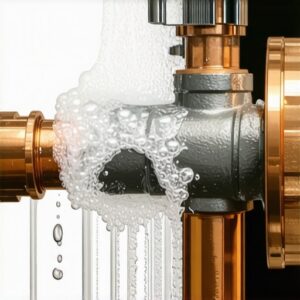
When I walk into a house for an emergency heating repair during a storm, I’m not looking for a broken part first; I’m looking for the cause of the failure. Most ‘Sales Techs’ will see a failed inducer motor and tell you that you need a whole new $12,000 system. I look at the chimney liner installation. If you’ve upgraded to a high-efficiency furnace but kept an old, oversized masonry chimney, those acidic flue gases are condensing, eating away at your mortar, and eventually causing a backdraft that trips your safety sensors. That’s not a equipment failure; that’s a system integration failure. [image_placeholder_1] During a blizzard, your furnace’s venting is its lifeline. High-efficiency units use PVC pipes that can easily be blocked by drifting snow. If that happens, the pressure switch won’t close, the ‘juice’ won’t flow to the igniter, and you’re left in the cold. Our priority members get a full perimeter check of these vent terminations before the first snowflake falls.
Why Modern Systems Struggle with Neglect
We see a lot of mini-split systems being used for supplemental heat in home offices or ‘man caves.’ While they are incredibly efficient, their filters are tiny. A month of pet dander can choke the indoor head, causing the evaporator to freeze up even in heating mode. If you’re struggling with one, checking out mini-split troubleshooting can save you a service call. The same goes for pellet stove repair. These units are mechanical beasts with augers and blowers that require precise calibration. If the ash isn’t cleared and the sensors aren’t wiped, they’ll fail right when the main furnace is struggling to keep up with the load.
“Design, installation, and maintenance of the venting system are as critical as the appliance itself for the safety of the occupants.” – NFPA 54 / ANSI Z223.1
Then there’s the issue of attic insulation for heating. You can have a 98% AFUE furnace, but if your attic insulation is settled or non-existent, you’re just heating the neighborhood. The heat rises, hits the cold roof deck, creates ice dams, and puts an insane ‘sensible heat’ load on your furnace. It never cycles off. It runs 24/7 until the bearings in the blower motor start to screech like a banshee. MERV filter upgrades are great for air quality, but if you put a MERV 16 filter on a system designed for a fiberglass ‘rock catcher,’ you’re strangling the blower. You need a tech who knows how to measure static pressure to ensure your ‘upgrade’ isn’t actually a death sentence for your compressor.
The Priority Membership Advantage
Our priority service membership isn’t a ‘club’—it’s an insurance policy against the brutal reality of mechanical failure. When the ‘Sparky’ (electrician) is busy and every HVAC company in the county has a 4-day waitlist, our members are at the front of the line. We don’t just look at the furnace; we look at the shop heater services in your garage to make sure your pipes don’t freeze out there, and we check the integrity of your furnace repair history to predict what might fail next. We use ‘Pookie’ (mastic) to seal duct leaks that are bleeding heat into your crawlspace, ensuring that every BTU you pay for actually reaches your register. If you want to avoid the common pitfalls, read about furnace repair myths debunked to see what you should actually be worried about. Don’t wait for the sound of silence. A little preventive medicine and some hvac repair secrets can keep your home a fortress against the frost. If you’re ready to secure your home’s comfort, contact us today before the next storm hits.