The Physics of Flow: Why Gas Lines Aren’t Just Pipes
My old mentor, a grizzled tin knocker named Silas who’d lost two fingers to a sheer and half his hearing to a centrifugal blower, used to scream at me, ‘You can’t cool what you can’t touch, and you can’t burn what you can’t feed!’ This was his way of beating the fundamentals of airflow and fuel delivery into my thick skull. In the thirty years since I first crawled into a 130-degree attic, I’ve realized he was right. Most techs today want to look at a control board and swap parts until a light turns green. They’re ‘Sales Techs’ looking for a commission. But a real tech—a veteran of the trade—knows that the heartbeat of a furnace starts with the gas line. When I’m following a home inspection report, I’m not just looking for leaks; I’m looking at the thermodynamic potential of the entire system. If that gas line isn’t sized for the BTU load, your high-efficiency furnace is nothing more than an expensive paperweight.
The Sound of Silence: A Forensic Diagnosis of the Gas System
When a furnace fails to ignite, there’s a specific sequence of sounds. The thermostat clicks (the brain sends a signal), the inducer motor moans (the lungs clear the path), and then… silence. No whoosh of ignition. No warmth. This is the ‘Sound of Silence’ that often traces back to fundamental plumbing errors. During home inspections, we frequently see gas lines that look like they were installed by a ‘Sparky’ who had a spare afternoon and a pipe wrench. The most common error? The missing sediment trap, or ‘drip leg.’ This is a short vertical pipe extension designed to catch moisture and debris before it hits the gas valve. Without it, tiny flakes of pipe scale or droplets of oil from the ‘juice’ (the gas itself) can foul the internal diaphragm of the gas valve. Once that valve is gummed up, it’s a $500 repair that could have been avoided with a $4 nipple and a cap. If you’re dealing with a system that has been neglected, it’s worth checking out our hvac-repair-secrets-boost-efficiency-with-expert-tips to see how these small components impact long-term reliability.
“Fuel gas piping must be sized to provide a supply of gas sufficient to meet the maximum demand of all appliances connected to it without a loss of pressure.” – NFPA 54: National Fuel Gas Code
The Physics of Pressure: Northern Climate Hazards
In the North, where the polar vortex turns your crawl space into an ice box, the gas line faces unique pressures. We see a lot of crawl space heating solutions where the gas lines are exposed to extreme temperature swings. If the gas pressure isn’t regulated correctly at the meter, you get ‘nuisance lockouts.’ Most residential systems run on 7 inches of water column (WC) for natural gas. If that drops because of poor sizing or a frozen regulator, the flame sensor won’t detect a stable burn, and the system shuts down to prevent ‘flame rollout’—a dangerous condition where the fire licks out of the heat exchanger and tries to find oxygen in the cabinet. This is why 24/7 heating emergency response is critical in these zones. A cracked heat exchanger in an old radiator system or a modern furnace can dump carbon monoxide into the home faster than you can say ‘ventilation.’ Speaking of old systems, radiator replacement in church heating systems often reveals massive gas lines that were sized for coal conversions but are now being fed by undersized modern regulators, leading to massive inefficiencies.
CSST and the Bonding Nightmare
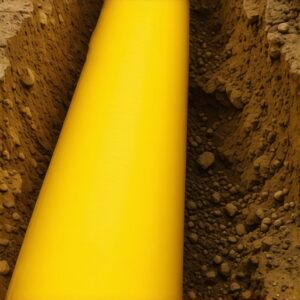
Corrugated Stainless Steel Tubing (CSST)—that flexible yellow pipe—is a favorite for modern thermostat installation and appliance hookups because it’s easy to snake through walls. However, it is a lightning magnet. If it isn’t properly bonded to the home’s electrical grounding system, a nearby strike can cause the tubing to puncture, leading to a high-pressure blowtorch inside your walls. We find unbonded CSST in nearly 40% of home inspections. It’s a ticking time bomb. This is often where we see ‘Sales Techs’ try to push a whole new system when all the homeowner needs is a proper electrical bond and maybe a localized repair. If you’re wondering about the legitimacy of a repair quote, you might find our guide on furnace-repair-myths-debunked-what-homeowners-need-to-know useful for cutting through the fluff.
Thermodynamic Zooming: Latent vs. Sensible Heat
Let’s talk about the ‘why.’ Why do we care if the gas line is slightly undersized? Because of the stoichiometric ratio—the perfect mix of fuel and air. If the gas pressure is low, the burner temperature drops. In a Northern climate, this means the heat exchanger never reaches its optimal temperature to facilitate the transfer of sensible heat to the air. Furthermore, in high-efficiency systems, the lack of heat prevents the secondary heat exchanger from properly managing the condensate, leading to ‘acidic sludge’ buildup. This is the ‘sour’ smell of a dying system. It’s not just about the furnace; it’s about the whole envelope. Integrating energy recovery ventilators (ERV) helps manage the pressure inside the house, ensuring that your gas appliances have enough ‘makeup air’ to breathe. Without an ERV, a tightly sealed modern home can actually experience back-drafting, where the furnace sucks its own exhaust back down the chimney because it’s starving for oxygen.
“The most expensive equipment in the world cannot overcome a bad duct system—or an undersized gas supply.” – Industry Axiom (Amended)
The Modern Edge: AI and Geofencing
While I’m an old-school tech, I can’t ignore the benefits of AI-driven HVAC optimization. We’re now installing app-controlled heating systems that use geofencing temperature control to ramp up the furnace as you drive home. But here’s the veteran’s warning: if your gas line is sized incorrectly, these smart systems will ‘short cycle’ your furnace. The AI sees the temperature isn’t rising fast enough and tries to compensate, leading to excessive wear on the contactor and the igniter. It’s like putting a Ferrari engine in a car with a lawnmower’s fuel line. For those moving toward modern heat pump setups to supplement their gas, checking the ultimate-guide-to-heat-pump-maintenance-and-repairs is a smart move to understand how hybrid systems interact.
The Final Inspection: Beyond the Pipe
Whether it’s swamp cooler maintenance in the dry desert or managing radiator replacement in a drafty Victorian, the gas line remains the foundational element of comfort. Don’t let a ‘Sales Tech’ tell you that you need a $15,000 system because of a ‘pressure issue’ without checking the regulator and the pipe sizing first. If you’re seeing errors on your home inspection report, it’s a diagnostic roadmap, not a death sentence for your HVAC. If you’re struggling with a mini-split or a complex multi-zone setup, take a look at mini-split-troubleshooting-when-and-how-to-call-a-pro for more technical deep-dives. And as always, if you smell that ‘sour’ acidic burnout or hear the screech of a bearing, it’s time to shut it down and call a pro. You can reach out through our contact-us page to get a real tech on the job, not a salesman. For information on how we handle your data during these service calls, please see our privacy-policy.