The first frost isn’t just a date on the calendar; it is a mechanical stress test for every component in your home’s breathing system. As a veteran who has spent three decades dragging my manifold gauges through crawlspaces, I’ve seen the same story every October. The air gets crisp, the first thin layer of ice glazes the windshield, and suddenly, my phone starts vibrating with calls about ‘stale air,’ ‘foggy windows,’ and furnaces that ‘just won’t stay on.’ Most of these folks don’t need a modulating furnace repair or a 15-ton replacement. They need their Heat Recovery Ventilator (HRV) to stop choking on last summer’s pollen. If your HRV isn’t dialed in before the mercury drops, you’re not just wasting money; you’re living in a sealed box of your own carbon dioxide and off-gassing carpet fumes.
The Anatomy of a Scam: The $10,000 Filter
Before we get into the psychrometrics of heat exchange, let me tell you why I hate ‘Sales Techs.’ Last November, I followed a guy from a big-box franchise into a house in the suburbs. He’d told this homeowner—a retired schoolteacher—that her three-year-old two-stage furnace installation was ‘internally hemorrhaging’ and needed a full replacement. He quoted her $10,500. I walked in, looked at the furnace, and realized it was tripping its high-limit switch because the house was under massive negative pressure. Why? Because the HRV intake hood outside was completely plugged with a bird’s nest and a decade of dryer lint. The house couldn’t breathe, the furnace couldn’t move air, and the ‘Sales Tech’ was trying to commission a boat off her ignorance. I spent twenty minutes cleaning the intake and the HRV core. Total cost to her? A service call and a cup of coffee. That’s why you learn this stuff. You have to know the machine so the salesman can’t lie to you.
“Ventilation is the intentional introduction of outdoor air into a space to control air contaminant levels, humidity, and temperature.” – ASHRAE Standard 62.2
Thermodynamic Zooming: How the HRV Defies the Cold
Most people think an HRV is just a fancy fan. It’s not. It’s a heat exchanger that exploits the laws of thermodynamics to save your wallet. When it’s 20°F outside and 70°F inside, you can’t just crack a window—that’s sensible heat loss that your furnace has to make up for with expensive BTUs. An HRV uses a cross-flow or counter-flow core—usually made of aluminum or specialized plastics—to bring those two air streams side-by-side without touching. The warm, stale air leaving your house gives up its sensible heat to the cold, fresh air coming in. We call this ‘reclaiming the delta.’ If your core is dirty, that heat transfer efficiency drops from 80% to 40% faster than a lead weight. This is especially critical if you are running energy recovery ventilators (ERVs) in climates where the latent heat (moisture) also needs to be managed to prevent your home from becoming a desert or a swamp.
The Forensic Diagnosis: Why Your HRV Fails in Frost
The biggest enemy of an HRV during the first frost isn’t the cold itself—it’s physics. When 70-degree air with 40% relative humidity hits a core that is being chilled by 10-degree outdoor air, you hit the dew point inside the machine. That moisture turns to liquid, and in a frost event, it turns to ice. This is where the defrost cycle comes in. If your programmable thermostat programming isn’t communicating correctly with the HRV, or if the dampers are stuck, that core will turn into a solid block of ice. Once that happens, you have zero ventilation. You’ll start seeing condensation on the bottom of your windows, which leads to mold on the sills. If you’ve invested in HEPA filter systems, they won’t do a lick of good if the air can’t actually move through the heat exchanger. You can learn more about keeping your system at peak performance in this hvac repair secrets guide.
The Winter Readiness Checklist
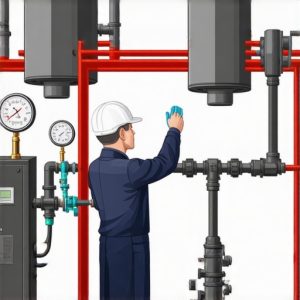
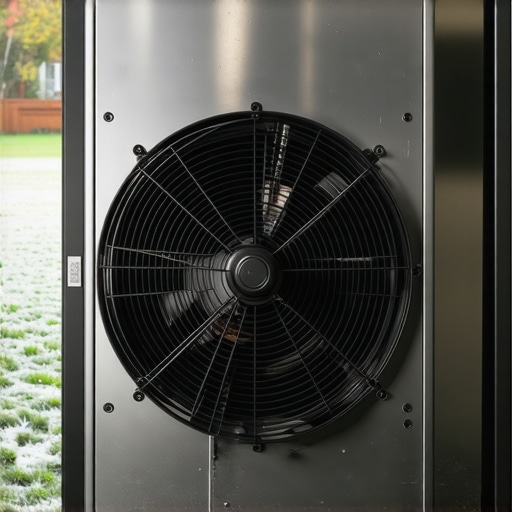
Don’t wait for the ‘Sparky’ or a ‘Tin Knocker’ to show up. You can do 90% of this yourself. First, kill the power. Don’t just turn it off at the wall; pull the plug. Open the door and pull the filters. If they look like a dryer lint trap, wash them or replace them. Next, the core itself. Most HRV cores can be slid out and sprayed down in a utility sink. If you see white mineral deposits, you’ve got hard water issues or a humidification problem. While the core is drying, check the drain line. This is where most rookies fail. Because an HRV produces condensate, it needs a clear path to a floor drain. If that line is kinked or plugged with ‘schmoo’ (that’s the technical term for algae slime), the water will back up, freeze, and crack the plastic housing. It’s no different than a hot water heater repair—if the water has nowhere to go, it makes its own exit.
The Exterior Inspection
Go outside. Find your intake and exhaust hoods. I’ve found everything from wasp nests to ‘Pookie’ (mastic) overspray blocking these. If the intake is blocked, your house goes into negative pressure. This can actually pull carbon monoxide back down your water heater flue—a process we call backdrafting. It’s why proper venting is more important than the AFUE rating on your furnace. If you’re worried about your heating system’s safety, check out these furnace repair myths debunked.
Integrating with Advanced Systems
Modern homes often use smart building management to tie the HRV into the furnace’s blower motor. If you have a two-stage furnace installation, your HRV needs to be balanced to match the lower CFM (cubic feet per minute) of the first stage. If the HRV is pulling 150 CFM but your furnace is only moving 600 CFM on low-fire, you’re going to create localized cold spots. This is also true for mini-split setups, which often lack integrated fresh air intakes. In those cases, the HRV is the lungs of the entire house. If you’re having trouble with your ductless system, see this mini-split troubleshooting guide. Even a garage heater installation can be affected by home pressure imbalances, as the ‘Big House’ air seeks equilibrium through the garage door seals.
“A building is a system. You cannot change one variable—like air tightness—without addressing the ventilation requirements of the occupants.” – Building Science Corporation
The Final Word on Frost Prep
Maintenance isn’t just about cleaning; it’s about observation. Listen to the motors. If you hear a high-pitched screech, that’s a dry bearing. If you hear a rhythmic thumping, the blower wheel is out of balance. Don’t let a minor thermocouple replacement or a dirty HRV core turn into a mid-winter catastrophe. Real HVAC work isn’t about selling boxes; it’s about mastering the air. If you treat your HRV right before that first frost hits, your furnace won’t have to work nearly as hard, and you won’t be waking up with a ‘stuffy nose’ that’s actually just CO2 poisoning. Stay warm, stay cynical, and keep your filters clean. If you’re stuck, you can always contact us for a real tech’s perspective, not a salesman’s pitch.