The Sound of the Basement Cannon: A Forensic Diagnosis
You’re sitting in your living room, the thermostat clicks, and three seconds later—BOOM. It sounds like someone fired a 12-gauge in your mechanical room. Most homeowners jump out of their skin, but to a guy who’s spent thirty years crawling through spider-infested crawlspaces in the dead of a Chicago winter, that sound tells a very specific, very mechanical story. It’s the sound of physics trying to overcome neglect.
My old mentor, a grizzly veteran who smelled permanently of PVC glue and stale coffee, used to scream at me, ‘You can’t cool what you can’t touch, and you can’t heat what you can’t move!’ This was his way of hammering home that airflow matters more than horsepower. When your furnace bangs, it’s usually because the airflow is restricted or the combustion sequence is out of sync. It’s not magic; it’s thermodynamics, and usually, it’s a sign that your system is screaming for emergency heating repair before it turns into a very expensive paperweight.
“The most expensive equipment in the world cannot overcome a bad duct system.” – Industry Axiom
The Anatomy of the ‘Boom’: Delayed Ignition
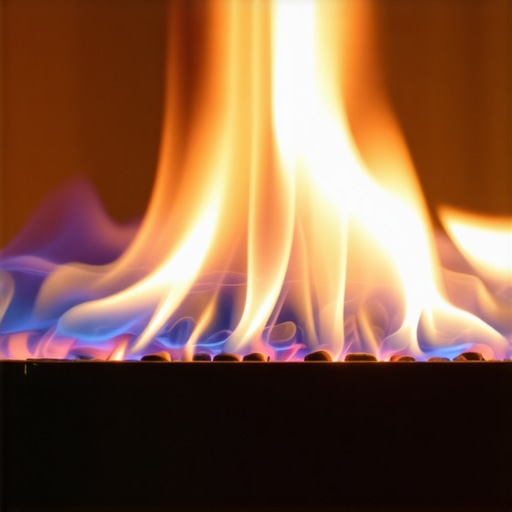
The most common cause of a loud bang is what we call delayed ignition. Think of your furnace like a tiny, controlled explosion. When the gas valve opens, the ‘gas’ (refrigerant guys call it gas, but here we mean natural gas or propane) flows over the burners. If those burners are covered in dust, rust, or carbon buildup, the gas doesn’t ignite instantly. Instead, it builds up in the combustion chamber. When it finally reaches the igniter or the pilot flame, you don’t get a smooth blue flame; you get a localized explosion. This is a primary reason for seeking out furnace tune-up services. Dirty burners are the enemy of efficiency and the father of the ‘basement bang.’
If you’re in the North, where the Polar Vortex turns your heat exchanger into a stressed piece of metal, this delayed ignition can actually crack the heat exchanger over time. A cracked heat exchanger isn’t just a repair; it’s a death sentence for the unit because it starts leaking carbon monoxide into your breathing air. This is why we don’t ‘top off’ systems; we fix the underlying thermodynamic failure.
Oil Canning: The Revenge of the Tin Knocker
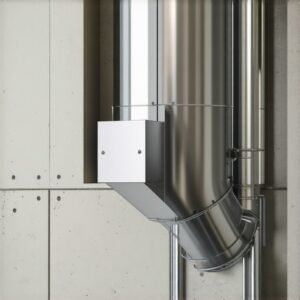
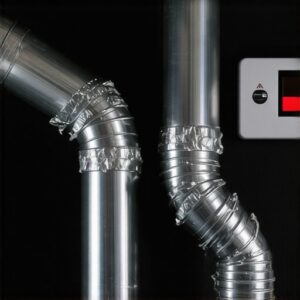
If the bang sounds more like a giant metal cookie sheet flexing, you’re dealing with ‘oil canning.’ This is an airflow issue, not a combustion issue. Your ductwork is the circulatory system of your home. If the Tin Knocker who installed your ducts didn’t use a heavy enough gauge of steel, or if your airflow measurement services reveal that your static pressure is too high, the metal will pop outward when the blower starts and snap back when it stops. This is often exacerbated by a furnace filter replacement that was ignored for six months. A clogged filter increases the vacuum effect on the return side, literally sucking the sides of your ductwork inward until they snap.
“Standard 62.1-2022 defines the requirements for ventilation and air quality, but it cannot account for the physical stress of undersized plenums on residential structures.” – ASHRAE Standards Reference
The North/Cold Climate Reality: Flame Rollout and Ice
In cold climates like the Northeast or Midwest, we deal with Sensible Heat challenges that the guys in Florida can’t imagine. When it’s -10°F outside, your furnace is working at its absolute thermal limit. If you have a high-efficiency condensing furnace, that bang could also be related to a frozen condensate line. If the water can’t drain, it backs up into the secondary heat exchanger, messing with the pressure switch and causing the inducer motor to struggle. If you have a steam boiler repair need, the bang is likely ‘water hammer,’ which is an entirely different beast involving steam hitting cold pockets of water.
Why Load Calculations Matter (Even for Old Systems)
I see it every week: a homeowner gets a ‘Sales Tech’ who quotes them $15,000 for a new system without ever pulling out a tape measure. If they aren’t performing HVAC load calculation services (Manual J), they are guessing. An oversized furnace will ‘short cycle,’ heating the air so fast that the ductwork doesn’t have time to expand evenly, leading to those loud pops and groans. Furthermore, with the R-454B refrigerant transition services coming in 2025, the industry is changing. We are moving toward mildly flammable refrigerants in heat pumps, which makes proper installation and airflow even more critical. You don’t want a ‘Sparky’ (electrician) or a hack tech messing with these new A2L systems.
The Solution Matrix: From Thermostats to Humidifiers
Sometimes the fix is simple. Programmable thermostat programming can prevent the system from trying to recover 10 degrees in one hour, which puts immense stress on the metal. Adding a humidifier installation can also help; moist air holds heat better and prevents the wood in your home (and the dust in your ducts) from becoming a dry, static-filled mess that contributes to sensor failures. If you’re dealing with baseboard heater repair, the ‘bang’ is usually just thermal expansion of the copper fins, which can be mitigated with nylon spacers.
Before you assume you need a whole new system, read up on furnace repair myths debunked. Most of the time, that bang is a symptom of a system that hasn’t been looked at by a pro in three years. You wouldn’t drive your truck for 50,000 miles without an oil change; don’t treat your furnace any differently. Check out hvac repair secrets to understand how a simple cleaning can stop the noise and drop your gas bill by 20%.